A Beginner’s Guide to Fishing Lure Types
Learn the main types of fishing lures with this beginner-friendly guide covering soft plastics, spinners, spoons, crankbaits, jerkbaits, surface lures and more.
2 September 2026
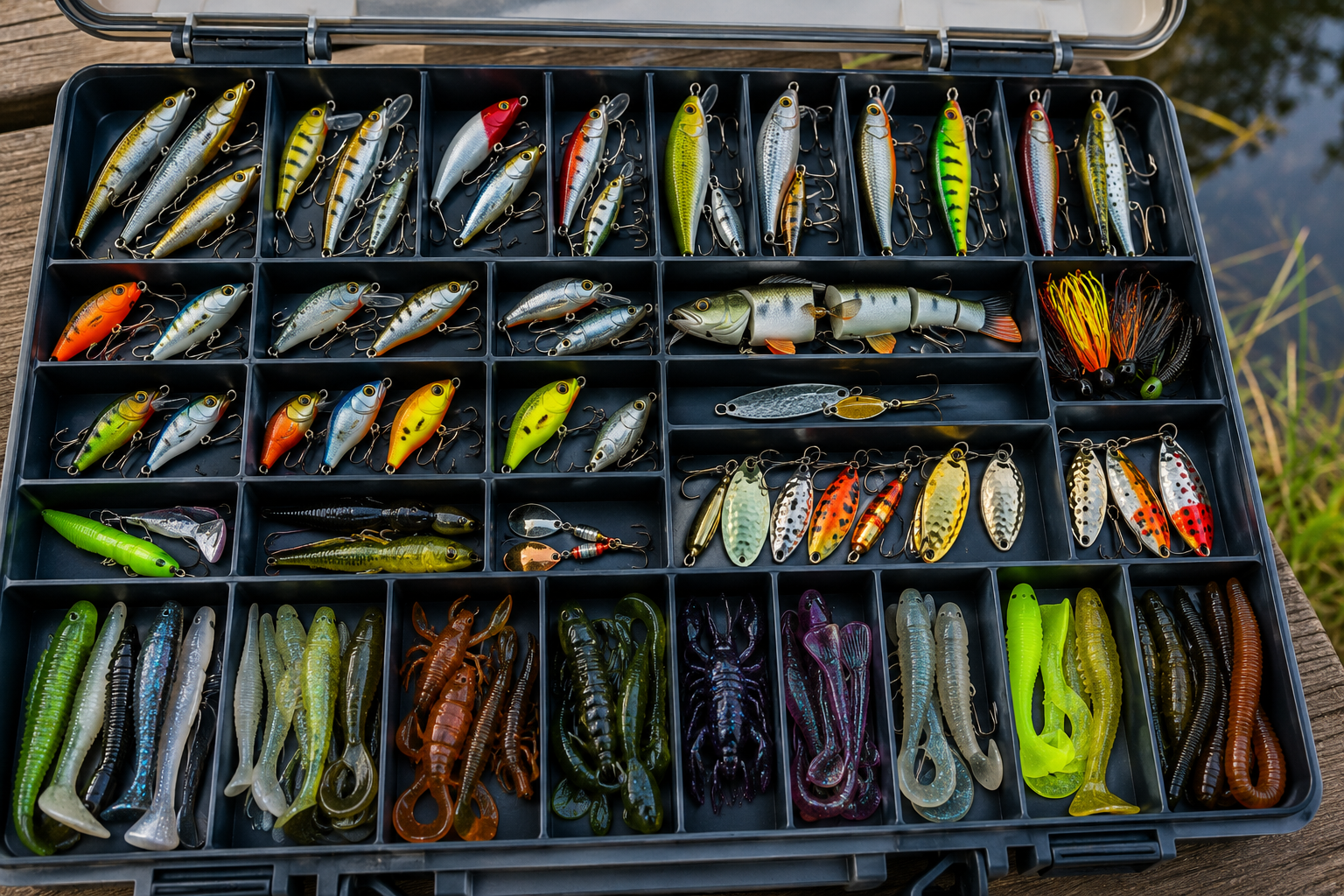
Walk into a tackle shop and the choice of fishing lures can be overwhelming. There are spinners, spoons, crankbaits, jerkbaits, soft plastics, surface lures and dozens of variations of each.
For a beginner, it can be difficult to know where to start.
The good news is that you don't need a huge collection of lures to catch fish. Understanding what the main lure types do, where to use them and how to retrieve them is far more useful than owning hundreds of different designs.
In this beginner's guide, we'll look at the main types of freshwater fishing lures and how you can use them to catch species such as perch, pike, chub and zander.
What Is a Fishing Lure?
A fishing lure is an artificial bait designed to encourage a predatory fish to strike.
Some lures closely imitate natural prey such as small roach, perch or minnows. Others rely more heavily on movement, vibration, flash or colour to attract attention.
Predatory fish don't necessarily attack a lure because they believe it is a perfect copy of a real fish.
Movement can trigger a reaction. A lure suddenly changing direction, flashing in the water or appearing to struggle can be enough to encourage a predator to attack.
This is why learning how to retrieve your lure is just as important as choosing its colour.
Tackle worth buying
Shop rods, reels, terminal tackle and more at Total Fishing Tackle.
Soft Plastic Lures
Soft plastics are among the most versatile fishing lures available and are an excellent choice for beginners.
They're manufactured from flexible material and come in countless shapes and sizes.
One of the most popular designs is the paddle tail or shad.
The lure has a small paddle-shaped tail which moves from side to side as it's retrieved. This produces both movement and vibration in the water.
You can simply cast a paddle tail and steadily wind it back, making it one of the easiest lures to start with.
Soft plastics can be particularly effective for:
- Perch
- Pike
- Zander
- Chub
They can be rigged on jig heads, weedless hooks and several other specialist rigs.
For a beginner, a simple jig head and paddle-tail combination is a good starting point.
Spinners
Spinners are another excellent beginner lure.
A spinner has a metal blade which rotates around a central wire as the lure moves through the water. This creates flash and vibration that predators can detect from some distance.
They are extremely simple to fish.
Cast out, allow the spinner to sink to the required depth and begin retrieving.
You need to retrieve quickly enough to keep the blade rotating, but don't assume faster is always better.
Spinners can be excellent for perch, pike and chub and are particularly useful when you're trying to locate active fish.
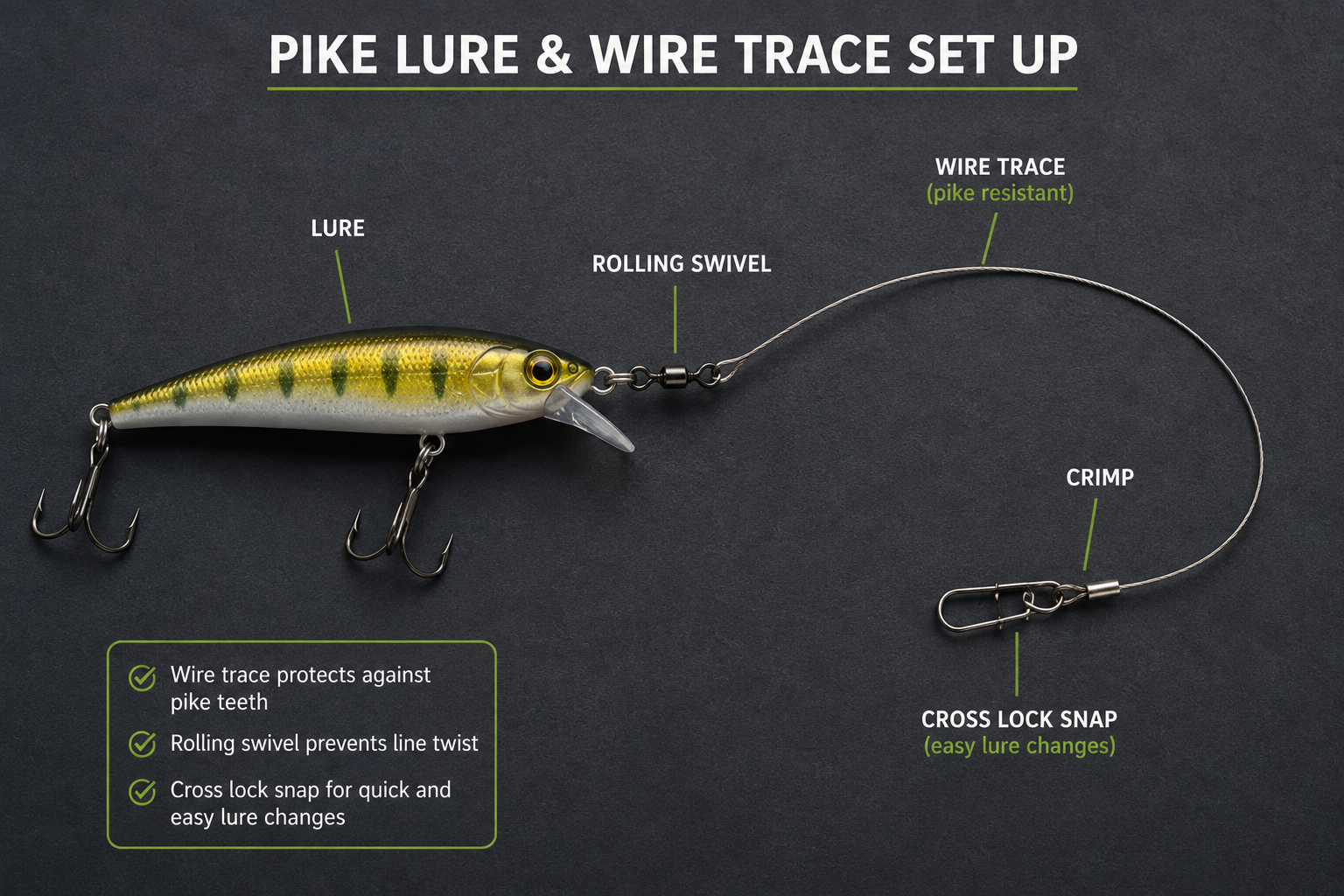
One disadvantage is that the rotating blade can cause line twist, so using a suitable swivel can help.
Spoons
The fishing spoon is one of the oldest artificial lure designs, but it remains highly effective.
A spoon is essentially a curved piece of metal which wobbles from side to side as it moves through the water.
That wobbling action can resemble a wounded or struggling prey fish.
Spoons are particularly associated with pike fishing, although smaller versions can catch other predators.
They can also be cast a considerable distance, making them useful when you need to cover a large area of water.
Try changing your retrieve speed and occasionally allowing the spoon to flutter down through the water.
A fish may attack as the lure falls.
Crankbaits
Crankbaits are hard-bodied lures usually designed to imitate small fish.
Many have a plastic lip extending from the front of the lure. This causes the lure to dive and wobble when retrieved.
The size and angle of the lip usually influence how deeply the lure dives.
You'll find shallow-running, medium-diving and deep-diving crankbaits.
This makes it possible to choose a lure that fishes at approximately the depth where you expect predators to be feeding.
Crankbaits are particularly useful for beginners because most of the action is built into the lure.
Cast it out and retrieve it steadily and the lure will wobble automatically.
They're excellent for perch, pike and chub.
Jerkbaits
Jerkbaits are particularly popular with pike anglers.
Unlike many crankbaits, some jerkbaits have relatively little action if they're simply retrieved in a straight line.
Instead, the angler uses short movements of the rod to make the lure dart or glide from side to side.
This can produce a very convincing impression of an injured fish.
Jerkbait fishing takes a little more practice than using a spinner or paddle tail, but it can be extremely effective.
Larger jerkbaits can also be quite heavy, so make sure your rod is rated to cast the weight of the lure.
Surface Lures
Surface or topwater lures are designed to fish on or immediately beneath the surface.
These include poppers, frogs, propeller lures and various imitation prey designs.
Surface lure fishing can be spectacular.
Rather than simply feeling a fish take your lure underwater, you may actually see a pike, perch or chub attack it.
They're particularly useful when predators are feeding close to the surface or when submerged weed makes fishing deeper lures difficult.
Surface fishing tends to be most productive during warmer conditions when prey fish and predators are active in shallower water.
If a fish misses your surface lure, resist the temptation to immediately strike wildly. Keep the lure working because the predator may attack again.
Creature Baits
Not every lure needs to look like a fish.
Creature baits are soft plastics designed to resemble animals such as crayfish, insects or other aquatic creatures.
Some don't resemble anything particularly identifiable at all.
They often have multiple legs, claws or appendages that move as the lure travels through the water.
Creature baits can be particularly effective for perch.
They can be worked slowly along the bottom around rocks, structures and other places where natural prey might live.
Worm-Style Lures
Soft plastic worms are simple but extremely versatile.
They can be rigged in many different ways and worked very slowly.
Rather than relying on lots of vibration or flash, their effectiveness often comes from subtle movement.
Small worm-style lures can be particularly useful when perch are reluctant to chase faster-moving baits.
They are also well suited to techniques such as drop-shotting, where the lure can be worked almost stationary in a productive area.
Swimbaits
Match the Lure to the Water
Choosing a lure shouldn't just be about which design looks best in the tackle box.
Think about the swim in front of you.
If you're fishing shallow water above weed, a deep-diving crankbait isn't particularly useful.
A shallow-running soft plastic or surface lure may be much better.
If predators are holding close to the bottom in deep water, a surface lure is unlikely to reach them. A jigged soft plastic may be the better option.
The question should always be:
What lure can I effectively fish through the area where I think the fish are?
Don't Retrieve Every Lure the Same Way
Whatever lure you choose, experiment with the retrieve.
Try:
- Faster retrieves
- Slow retrieves
- Short pauses
- Longer pauses
- Sudden bursts of speed
- Allowing the lure to sink
- Changing direction
Predators frequently follow lures without immediately attacking them.
A sudden pause or change of speed can be the trigger that turns a following fish into a hooked fish.
Don't Buy Too Many Lures
It's very easy for lure fishing to become lure collecting.
A beginner doesn't need fifty different patterns.
A sensible first lure box might contain a couple of paddle-tail soft plastics, two spinners, a spoon, a shallow crankbait, a deeper crankbait and perhaps a surface lure.
That's enough to fish a wide variety of situations.
Spend your first few sessions learning what those lures actually do.
Watch them in clear water. Discover how quickly they sink, how slowly you can retrieve them and how they react when you pause or twitch the rod.
That knowledge will catch you far more fish than simply buying another box of lures.
Final Thoughts
There is no single best fishing lure.
Different lure types are simply tools designed to fish in different ways.
Spinners provide flash and vibration. Spoons wobble and flutter. Crankbaits allow you to search different depths. Soft plastics offer enormous versatility, while surface lures provide some of the most exciting fishing you'll experience.
Start with a small selection and learn how to use each one properly.
Once you understand how different lures behave underwater, choosing what to attach to your line becomes much easier.
And when a predator suddenly appears from nowhere and attacks a lure you've worked perfectly through the swim, you'll understand why lure fishing can become so addictive.
The monthly catch-up
One email a month: new guides, tackle worth buying and waters we've fished.
Related guides
A Beginner’s Guide to Fly Fishing for Grayling
New to grayling fishing? This beginner’s guide explains the essential tackle, flies and techniques you need to start fly fishing for grayling on rivers, from finding fish to making a natural drift.
26 Sept 2026 · 7 min read
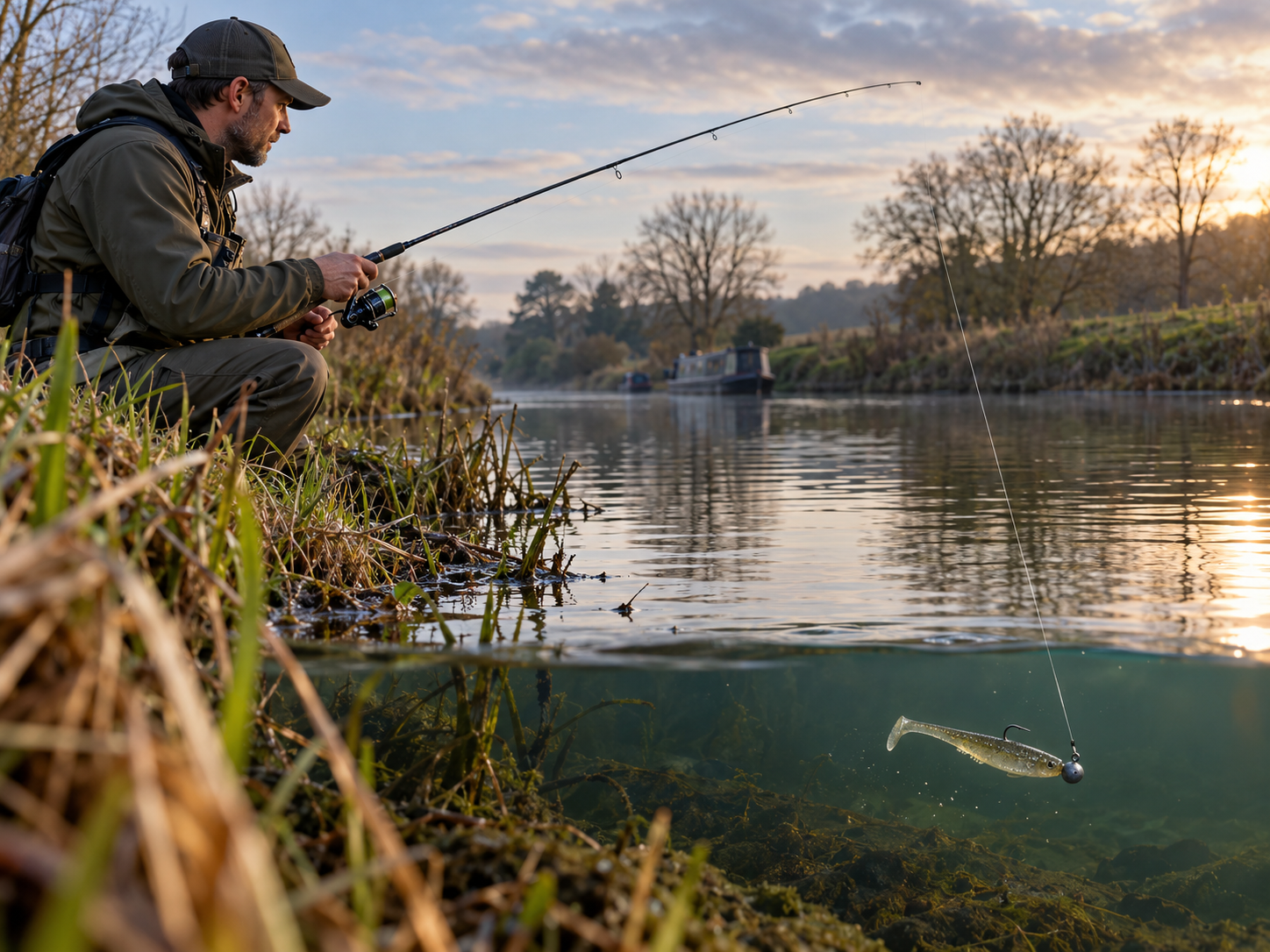
How to Fish Soft Plastic Lures: A Beginner’s Guide
A beginner-friendly guide to fishing soft plastic lures, covering depth control, jigging, steady retrieves, working the bottom and adapting your presentation to catch more predatory fish.
24 Sept 2026 · 6 min read
A Beginner’s Guide to Zander Fishing
New to zander fishing? This beginner’s guide explains where to find zander, how to fish soft plastics and deadbaits, what tackle to use and how to improve your chances of catching this fascinating predator.
24 Sept 2026 · 6 min read