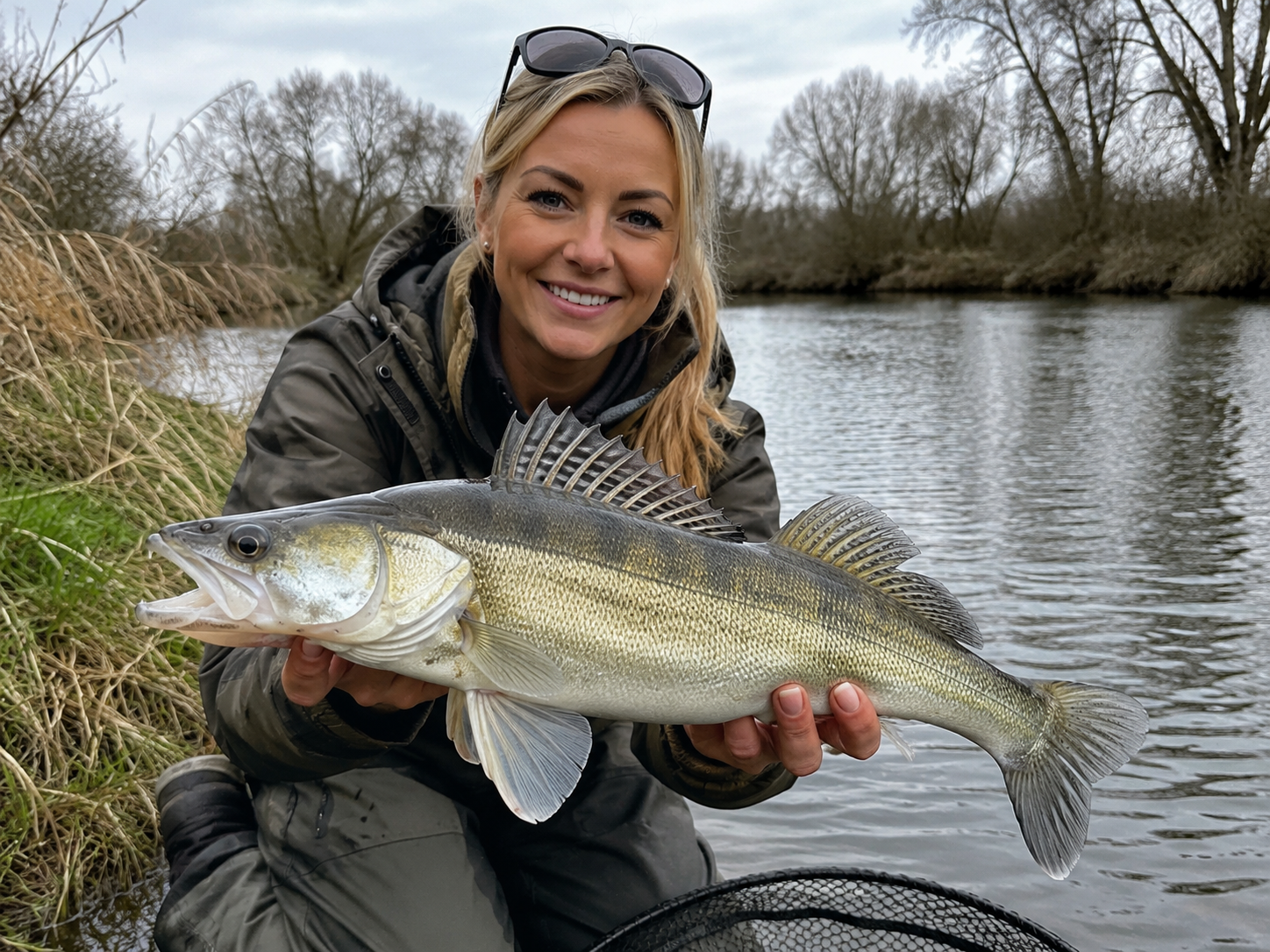
Grayling are one of the most rewarding river fish to target with a fly rod. They live in some of Britain’s cleanest, most attractive rivers, fight surprisingly hard for their size and remain active at times of year when trout fishing has slowed considerably. For an angler taking their first steps into river fly fishing, grayling also provide an excellent introduction to reading moving water, controlling a fly and detecting subtle takes.
Although grayling can be caught on dry flies, much of grayling fishing revolves around presenting small nymphs close to the riverbed. That might sound complicated at first, but the basic principles are straightforward. Find suitable water, get your flies down to the fish and try to make them move through the current naturally.
You do not need a huge collection of equipment or hundreds of different fly patterns. A relatively simple setup, a handful of proven flies and a basic understanding of river currents are enough to begin.
Advertisement
Tackle worth buying
Shop rods, reels, terminal tackle and more at Total Fishing Tackle.
Understanding Grayling
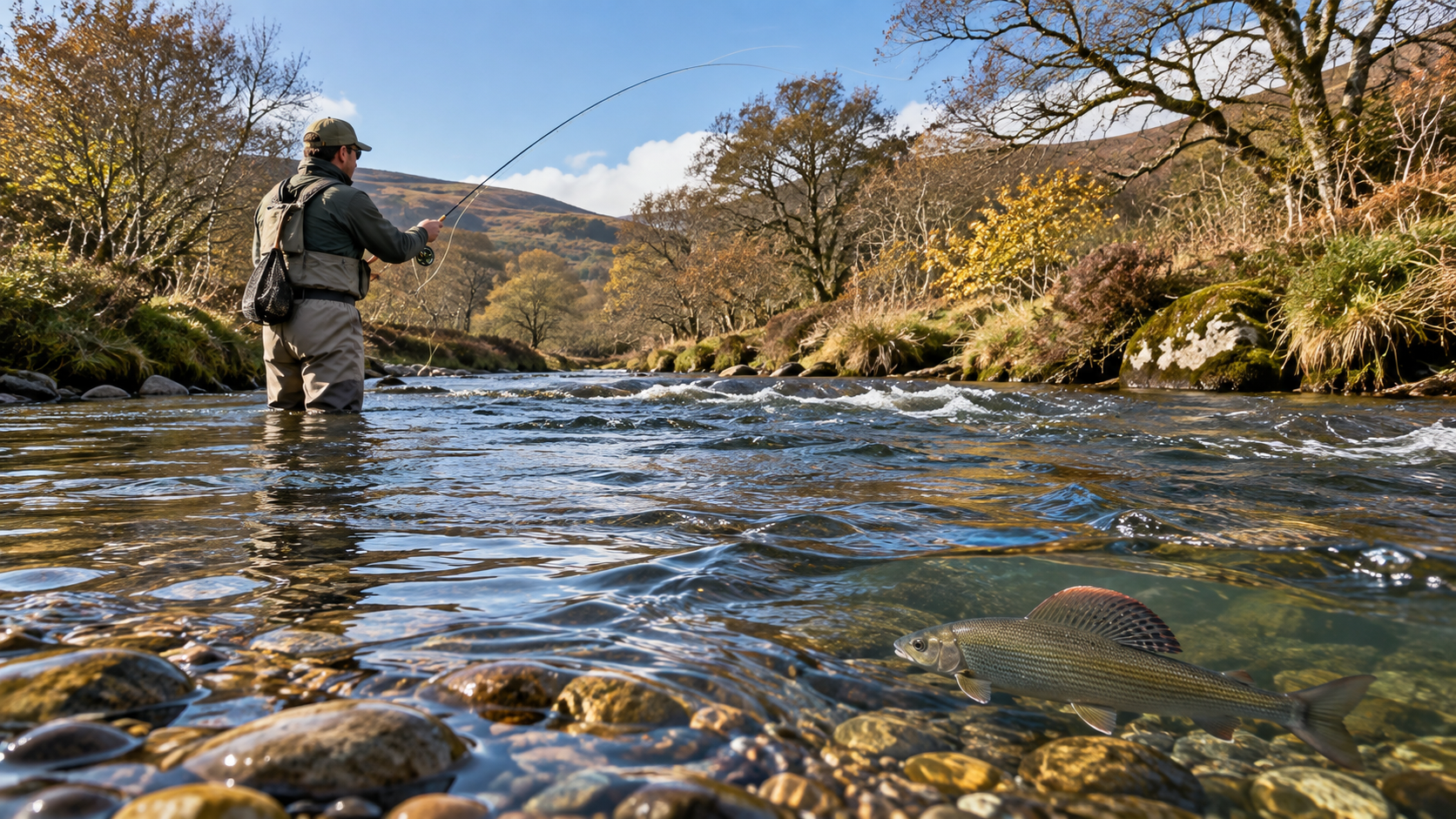
The European grayling, Thymallus thymallus, is easily recognised by its tall, colourful dorsal fin, silver-grey body and distinctive markings. It is closely associated with clean, well-oxygenated rivers and is particularly at home in flowing water.
Unlike many trout, grayling are often found in groups. Where you catch one fish there may be several more holding in the same run or pool. This makes locating them particularly important. Large sections of river can sometimes appear empty, while a relatively small area contains numerous fish.
Grayling commonly feed on aquatic insects including nymphs, larvae and emerging flies. Much of this food is carried downstream by the current, so grayling often position themselves where the river brings food directly towards them.
During warmer weather they may rise regularly to insects at the surface, but through autumn and winter much of their feeding happens close to the riverbed. For this reason, nymph fishing is one of the most reliable ways for beginners to catch them.
Choosing a Fly Rod and Reel
There is no need to buy specialist grayling equipment for your first few sessions. A general river fly rod will work perfectly well.
For many British rivers, a rod between around 9 and 10 feet rated for a 3, 4 or 5-weight fly line is a useful starting point. A slightly longer rod can make it easier to control the fly line and leader when nymph fishing, particularly when trying to keep unnecessary line away from faster currents.
A matching fly reel with a smooth drag is all that is required. Grayling are capable fighters, but you are unlikely to require a particularly powerful reel.
A floating fly line is the most versatile option. Even when fishing weighted nymphs, there is normally no need for a sinking fly line. The weight of the flies or leader is used to reach the required depth.
Your leader and tippet should be fine enough to allow small flies to behave naturally but strong enough to land fish safely. Something around 3–5 lb breaking strain will cover many situations, although the exact choice depends on water clarity, fly size and the likelihood of encountering larger fish.
Starting With Nymph Fishing
For a beginner, fishing nymphs is probably the easiest way to consistently find grayling.
Aquatic insects spend much of their lives underwater, and grayling regularly feed on them as they become dislodged from stones and gravel. Your aim is to imitate one of these small creatures drifting naturally downstream.
Weighted flies are commonly used to reach the correct depth. Patterns such as pheasant tail nymphs, hare’s ear nymphs, copper Johns and small bead-headed flies have accounted for huge numbers of grayling.
Perdigon-style nymphs have also become extremely popular because their slim bodies sink quickly and allow anglers to reach fish even in relatively fast water.
Do not become too concerned about having the perfect pattern. Getting the fly into the feeding zone and presenting it naturally will usually matter more than tiny differences in colour.
For a first session, carrying a few small nymphs in natural brown, olive and dark colours along with one or two brighter patterns gives you enough options to experiment.
Finding Grayling in a River
Learning where grayling are likely to be holding is one of the most useful skills you can develop.
Rather than simply casting into the middle of the river, look at how the current behaves. Grayling generally want access to flowing water carrying food, but they do not want to spend all day fighting the strongest current.
Runs below shallow riffles are excellent places to begin. Water rushing over stones becomes oxygenated and often carries insects downstream. Grayling can sit just behind the faster water and intercept food as it passes.
Deeper glides, the edges of strong currents and areas immediately downstream of larger rocks are also worth exploring. A rock can create a pocket of slower water behind it, allowing a fish to hold position while still having access to food.
During colder weather, grayling may move into slightly deeper and steadier sections of the river. This does not necessarily mean the deepest pool available, but they may avoid very shallow water when temperatures fall.
Move slowly and cover the river methodically. One of the biggest mistakes beginners make is repeatedly fishing the same piece of water when no fish are responding.
Making a Natural Drift
Presentation is central to grayling fishing. Once your nymph enters the water, you want it to travel downstream at roughly the same speed as the natural insects around it. Unfortunately, the fly line and leader can easily be caught by different currents and either pull the fly unnaturally or prevent it from reaching the right depth.
Try casting slightly upstream and allowing the fly to sink as it drifts back towards you. Keep enough contact with the leader to detect a take, but avoid dragging the fly towards you.
With practice, you will begin to recognise the difference between a natural drift and one where the line is pulling the fly.
An indicator can be useful when starting out. This is a small floating marker attached to the leader. If the nymph stops, slows or is taken by a fish, the indicator may pause or disappear beneath the surface.
Do not expect every take to be dramatic. Grayling can take a nymph and reject it very quickly. Any unusual movement of the indicator or leader is worth responding to with a gentle lift of the rod.
Dry Fly Fishing for Grayling
Few things in grayling fishing are more enjoyable than watching a fish rise and take a dry fly from the surface.
When grayling begin feeding on emerging or adult insects, you may see repeated rises in a particular part of the river. Rather than immediately casting directly at the fish, watch it for a short time. Grayling often feed in a rhythm, rising several times from almost exactly the same position.
Small dry flies such as CDC patterns, Klinkhammers, small sedges and traditional up-winged fly imitations can all work.
Presentation once again matters more than owning a huge collection of flies. Cast slightly upstream of the fish and allow the fly to drift naturally over its position.
Avoid immediately striking hard when a grayling rises. A short pause followed by lifting the rod is often more effective and reduces the chance of pulling the fly away before the fish has properly taken it.
Approaching the River
Grayling live in clear rivers and can be surprisingly easy to disturb. Approach the water quietly and avoid unnecessary movement on the skyline. Wading directly through an area you intend to fish can quickly ruin your chances, particularly in shallow water.
Whenever possible, begin fishing from the bank before stepping into the river.
If you do wade, use suitable waders and boots and carry a wading staff when conditions require one. Riverbeds can be uneven, slippery and much more powerful than they appear from the bank. Never take unnecessary risks to reach a particular section of water.
Polarised glasses are also useful. They reduce glare from the surface and can help you see underwater features, changes in depth and occasionally the fish themselves.
Playing and Handling Grayling
Grayling fight strongly and often use their large dorsal fin and the current to their advantage. Keep steady pressure on the fish rather than trying to land it too quickly. Light fly tackle is designed to absorb sudden movements, so allow the rod to do the work.
A soft-mesh landing net makes handling easier and helps keep the fish supported. Grayling should be handled carefully. Wet your hands before touching the fish and keep it over the water whenever possible. Avoid squeezing it and minimise the time it spends out of the river.
If you want a photograph, have everything ready beforehand rather than leaving the fish waiting while you organise equipment. Hold the grayling upright in the water when releasing it. Once it is strong enough to maintain its position and swim away normally, allow it to leave the net or your hands in its own time.
Your First Grayling Session
Your first grayling fishing session does not need to be complicated. A light fly rod, floating line, sensible leader and a small box of nymphs will take you a long way.
Concentrate on learning how the river behaves rather than constantly changing flies. Pay attention to changes in depth, current speed, seams between fast and slow water and the locations where fish are caught.
If one particular run produces a grayling, think about why the fish was there. Perhaps it was sitting behind a rock, below a riffle or beside a faster current. Finding similar water elsewhere can quickly lead you to more fish.
As your experience grows you can explore different techniques, including dry flies, traditional upstream nymphing, indicator fishing and modern tight-line approaches. There is always another refinement to learn, which is part of what makes grayling fishing so interesting.
Always check local fishery rules, access arrangements and regional fishing regulations before fishing, as seasons and permitted methods can vary between waters.
For a beginner, however, the most important thing is simply to spend time on the river. Grayling quickly teach you about current, presentation and the behaviour of river fish, and even a single fish caught on a fly you have carefully drifted through the right piece of water can make the entire session worthwhile.