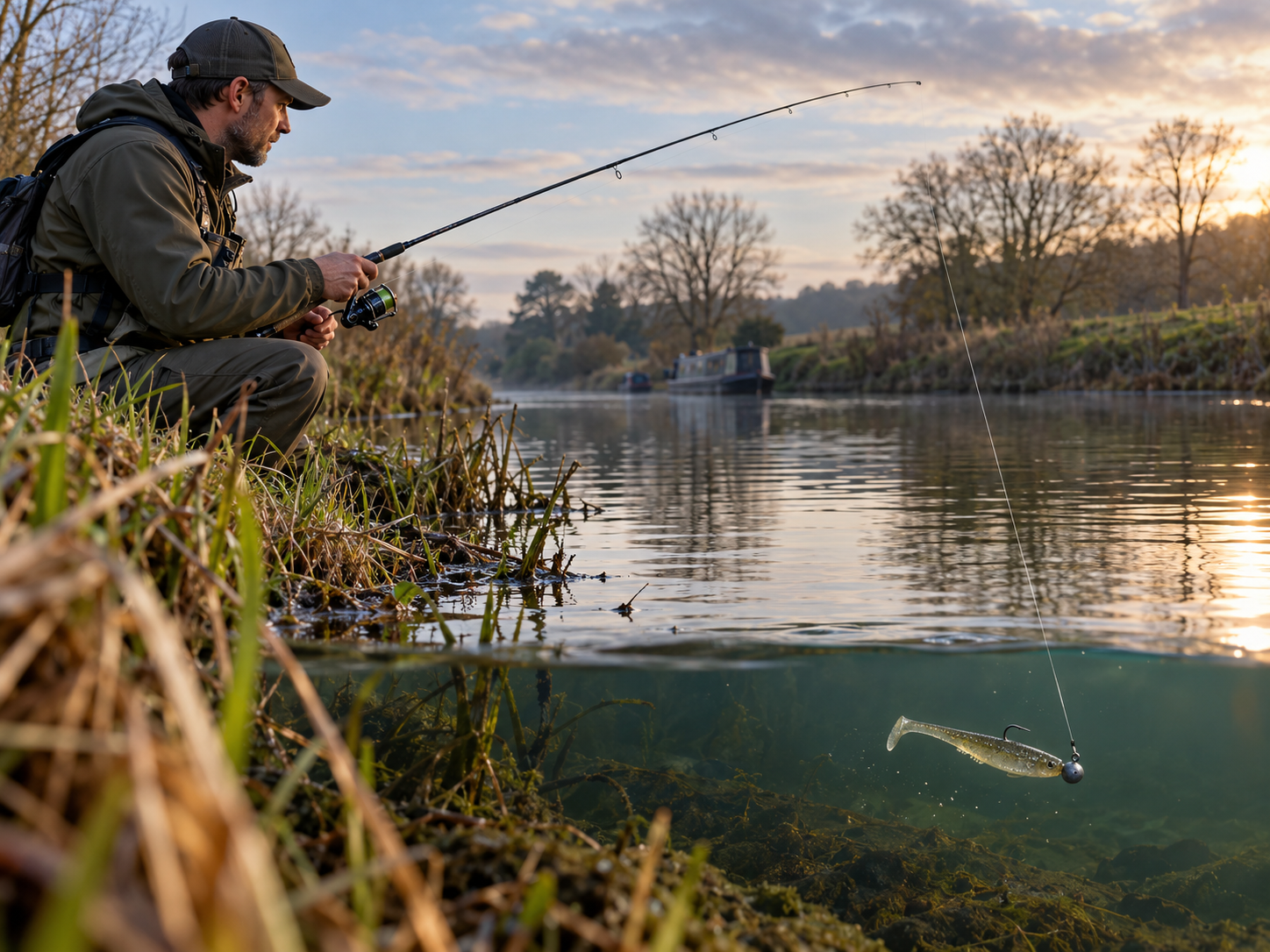
New to zander fishing? This beginner’s guide explains where to find zander, how to fish soft plastics and deadbaits, what tackle to use and how to improve your chances of catching this fascinating predator.
24 September 2026 · 6 min read
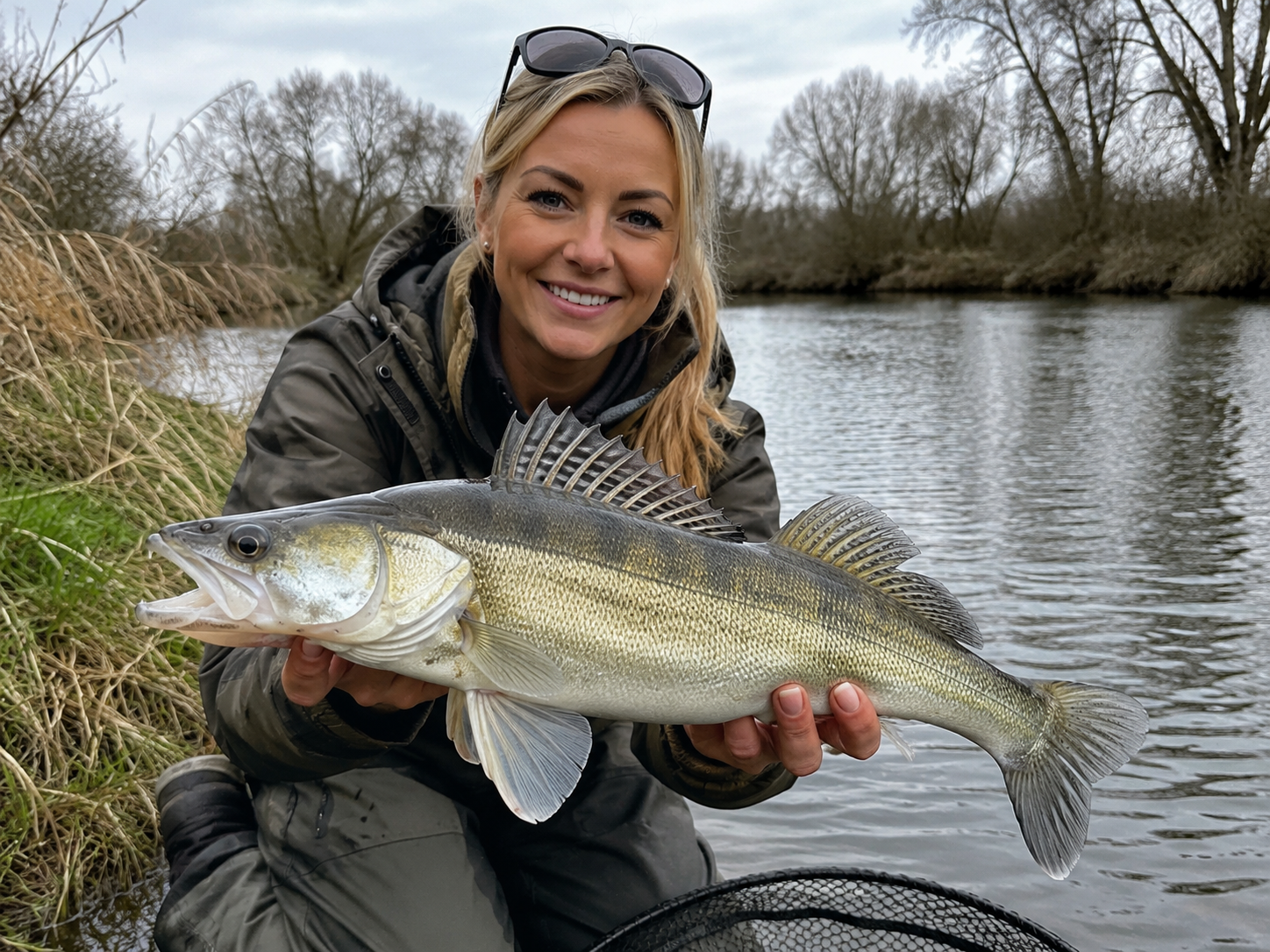
Zander are one of the most interesting predatory fish found in British waters. They have a distinctive appearance, with a long streamlined body, large glassy eyes and a mouth full of sharp teeth. Although they are often compared with pike because of their predatory nature, zander actually belong to the perch family and behave quite differently.
For anglers who have never targeted them before, zander can seem slightly mysterious. They are not found everywhere, and even on waters where they are well established they can sometimes be difficult to locate. Much of successful zander fishing comes down to understanding where they are likely to be holding and presenting a bait or lure close enough for them to find it.
Fortunately, you do not need a huge amount of specialist tackle to get started. A straightforward lure setup, a few suitable soft plastics and a willingness to move around and search the water can be enough to catch your first fish.
Advertisement
Tackle worth buying
Shop rods, reels, terminal tackle and more at Total Fishing Tackle.
Zander are particularly well adapted to hunting in deep, coloured and low-light conditions. Their unusually large eyes help them locate prey when visibility is poor, which is one reason they have become so successful in many rivers, canals and reservoirs.
They feed mainly on small fish and will often stay close to areas where prey naturally gathers. On a river this might mean a deeper channel, a bridge, a lock cutting or an area where the current changes pace. On canals, places such as turning bays, moored boats, locks and wider sections can all be worth investigating.
Depth is often important. During bright conditions zander frequently spend time close to the bottom or in deeper water, although they may move much shallower when actively feeding. Dawn and dusk can be particularly productive because the reduced light gives them an advantage over many of the small fish they hunt.
This does not mean that every deep area will hold zander. Finding the prey fish is often just as important. If you see small silverfish gathering near structure or suddenly scattering at the surface, there is a good chance that predators are nearby.
Starting with Lure Fishing
For most beginners, lure fishing is probably the easiest way to start targeting zander. It allows you to cover plenty of water, explore different depths and quickly move on if you cannot find fish.
A medium spinning rod of around 7 to 9 feet is suitable for most situations. Pair it with a small or medium-sized fixed-spool reel and braided main line. Braid is particularly useful because it has very little stretch, making it easier to feel what the lure is doing and detect the often quite subtle takes produced by zander.
Soft plastic shads are a reliable place to start. A fish-shaped lure somewhere around 7 to 12cm long will catch zander of many different sizes. These are commonly mounted on jig heads and worked close to the bottom.
The weight of the jig head should be heavy enough for you to maintain contact with the lure without making the presentation unnecessarily clumsy. On a canal or slow-moving water you may only need a relatively light jig head, while deeper rivers with a strong flow will require something heavier.
If pike are present, it is also important to use a leader capable of dealing with them. Zander themselves have sharp teeth, but an unexpected pike can make very short work of an unsuitable leader.
Learning to Work a Lure Properly
One of the simplest ways to catch zander is to cast a soft plastic lure out, allow it to sink to the bottom and then retrieve it using a series of short lifts.
Once the lure reaches the bottom, lift it with the rod or a couple of turns of the reel, then allow it to fall again. Continue repeating this as the lure makes its way back towards you.
This produces a hopping action that keeps the lure close to the bottom while repeatedly lifting it into the water column. Zander often attack during the drop, so it is worth paying close attention whenever the lure is sinking.
Some takes are very obvious and feel like a solid knock through the rod. Others are much less dramatic. The line may suddenly twitch, go slack or stop before the lure should have reached the bottom. If something feels unusual, it is usually worth striking.
Working a lure like this also helps you understand the water you are fishing. If the lure suddenly takes much longer to hit bottom, you may have found a deeper channel. If it reaches the bottom quickly, it may have moved onto a shallower shelf.
These changes in depth can be extremely important because zander frequently use drop-offs and underwater features as hunting areas.
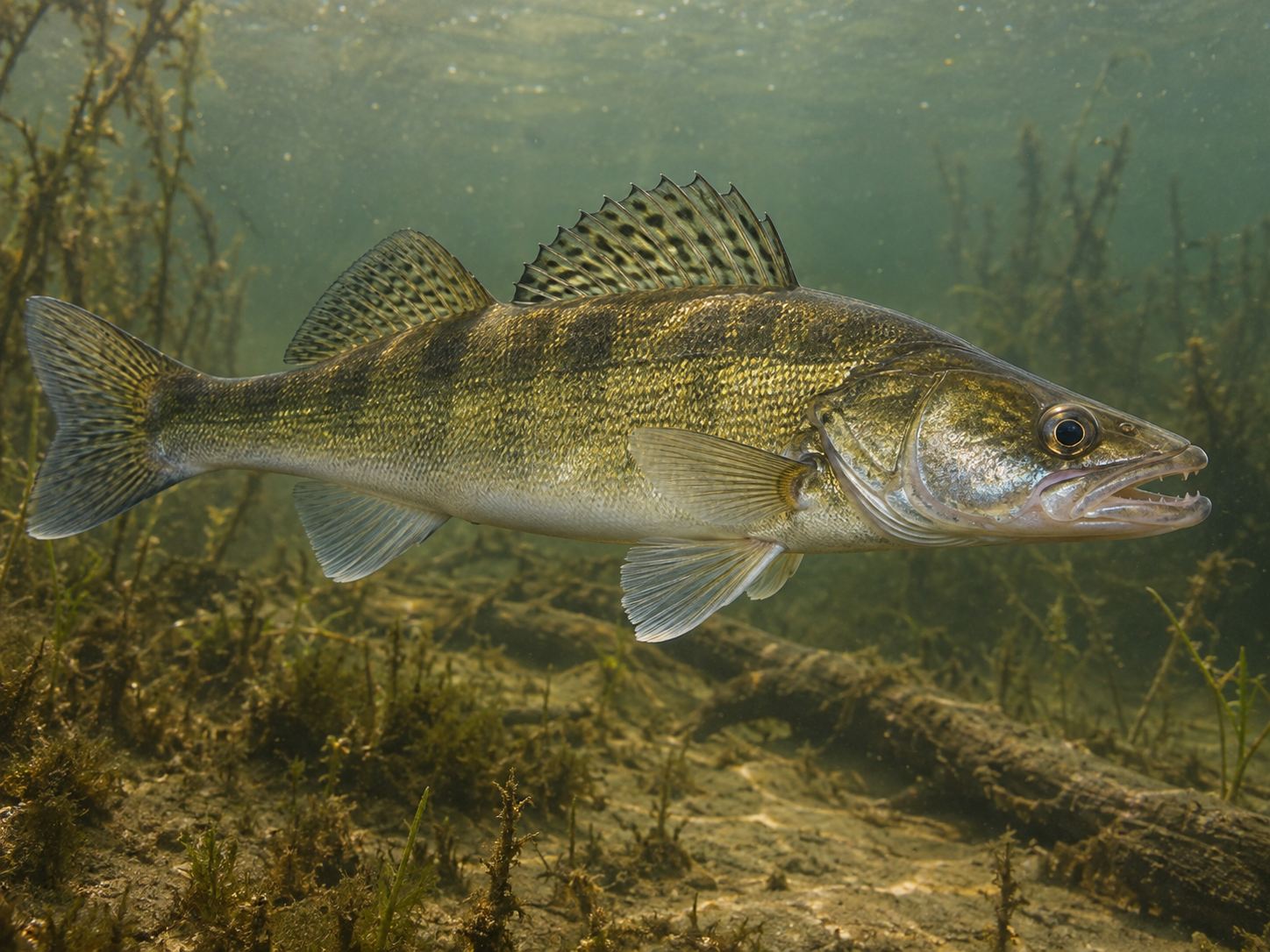
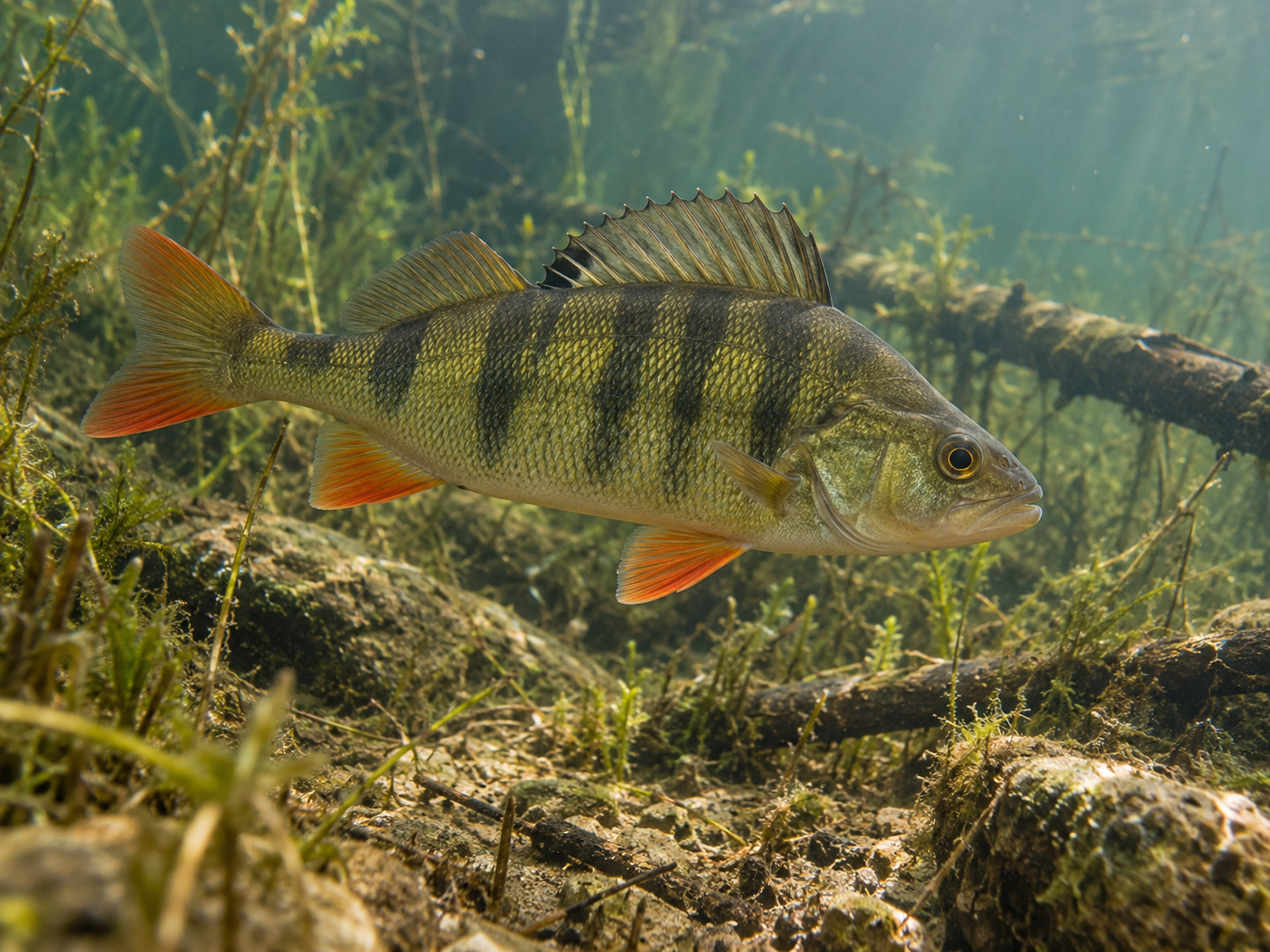
A zander moving through its underwater habitat, where low light and structure provide ideal conditions for ambushing prey.
Finding Fish Rather Than Waiting for Them
One of the biggest mistakes beginners can make is staying in the same place for too long. Zander fishing is often more productive when approached as an active search. Make several casts through an area, cover different angles and vary the distance you are fishing. If you do not find anything, move along the bank and repeat the process.
This is particularly effective on canals and rivers where you can gradually work your way through a series of likely-looking areas.
Bridges are always worth attention because they provide shade and structure. Lock approaches often have changes in depth and flow. On rivers, inside bends, deeper margins and slack areas beside the main current can all hold fish.
Over time you begin to notice subtle features that you may previously have ignored. A small depression in the bottom, an old piling or a slightly wider section of canal can sometimes be enough to concentrate prey fish and attract zander.
The lure itself is only part of the equation. A perfectly presented lure in an empty swim will not catch anything, while an ordinary lure presented in front of feeding fish often will.
Fishing Through the Seasons
Zander can be caught throughout much of the year, but autumn and winter are particularly popular periods for targeting them. As temperatures fall, prey fish often begin gathering into larger shoals. Zander follow these concentrations of food, and this can make them easier to locate.
Cold water does not necessarily mean the fish stop feeding, but their behaviour can become more subdued. A fast retrieve that worked during warmer weather may produce nothing in winter. Slowing the lure down, using smaller movements and allowing it to spend more time close to the bottom can make a considerable difference.
Low-light conditions are usually worth taking advantage of at any time of year. Early morning, evening and overcast days can all produce good fishing.
On some waters the period around sunset can be particularly noticeable. A stretch that has seemed almost lifeless for several hours may suddenly come alive as small fish begin moving and predators start hunting.
Using Deadbaits for Zander
Lure fishing is not the only way to catch zander. Deadbaits can be extremely effective, especially during colder conditions when fish may be less willing to chase.
A small dead fish or section of fish can be presented close to the bottom where zander naturally spend much of their time. The scent released by the bait can help draw fish towards it, and the static presentation can appeal to predators that are feeding cautiously.
Bite indication needs to be sensitive because zander do not always tear away with a bait. Sometimes a take begins with little more than a slow movement of the line.
Anyone fishing with deadbaits should already have suitable unhooking equipment ready before casting. Long forceps, a decent landing net and a padded unhooking mat make handling fish far easier and safer.
Where pike are present, the tackle must also be capable of dealing with one should it pick up the bait.
Handling Your First Zander
Zander look formidable, but they can be handled quite easily once you understand where the sharp areas are.
Their teeth are obvious, but the spines on the dorsal fin also need some care. Using a large landing net allows you to keep the fish secure while preparing to unhook it.
Place the fish on a padded mat and remove the hooks using long forceps. There is no need to rush, but equally there is little benefit in keeping the fish out of the water longer than necessary.
Zander can sometimes appear quite subdued on the bank compared with a pike, but they should still be handled carefully and returned promptly.
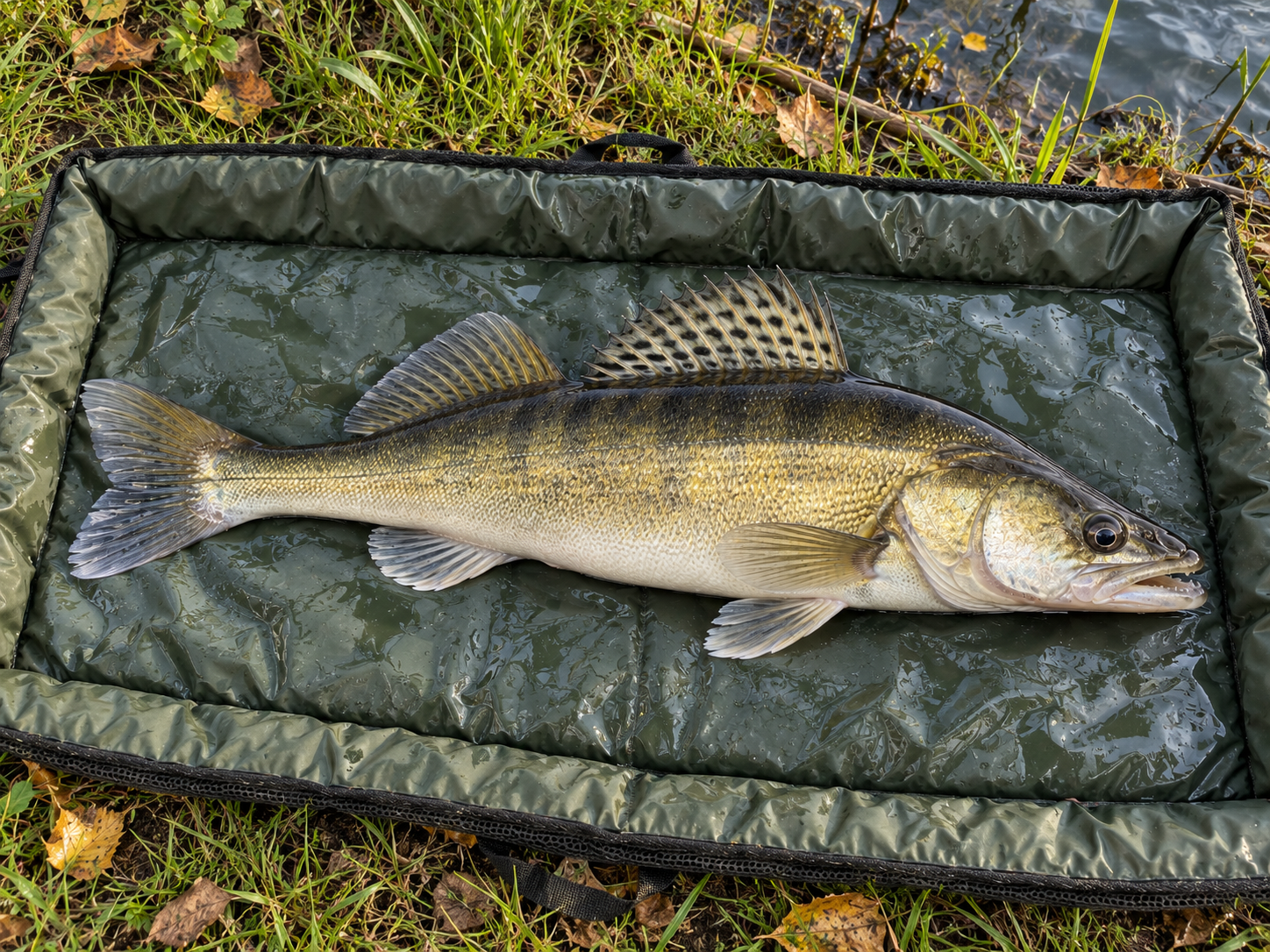
A freshly caught zander resting on a padded unhooking mat before being returned to the water.
Learning to Think Like a Zander Angler
The biggest improvement usually comes when you stop concentrating entirely on tackle and begin thinking more about the water itself.
Ask yourself where the small fish are likely to be. Look for deeper water, shade, structure and places where the current changes. Think about how changing light levels might alter where predators are feeding.
Every cast can give you a little more information.
You might discover that one area is significantly deeper than the rest of the swim. You may feel the lure moving over a harder bottom or passing through an underwater feature. Those small discoveries are often more useful than constantly swapping between different lure colours.
Once you locate zander, experimenting with lure size, retrieve speed and colour can certainly help. But first you need to put the lure where the fish are.
Zander fishing becomes much more enjoyable once you start approaching it this way. Instead of simply casting and hoping, you begin building a picture of the water in front of you and working out where a predator is most likely to be waiting.
For a beginner, that is probably the most useful skill of all.