A Beginner’s Guide to Lure Fishing for Pike
Learn how to catch pike on lures with this beginner-friendly guide covering tackle, lure choice, where to find pike, retrieval techniques and safe fish handling.
3 August 2026 · 8 min read
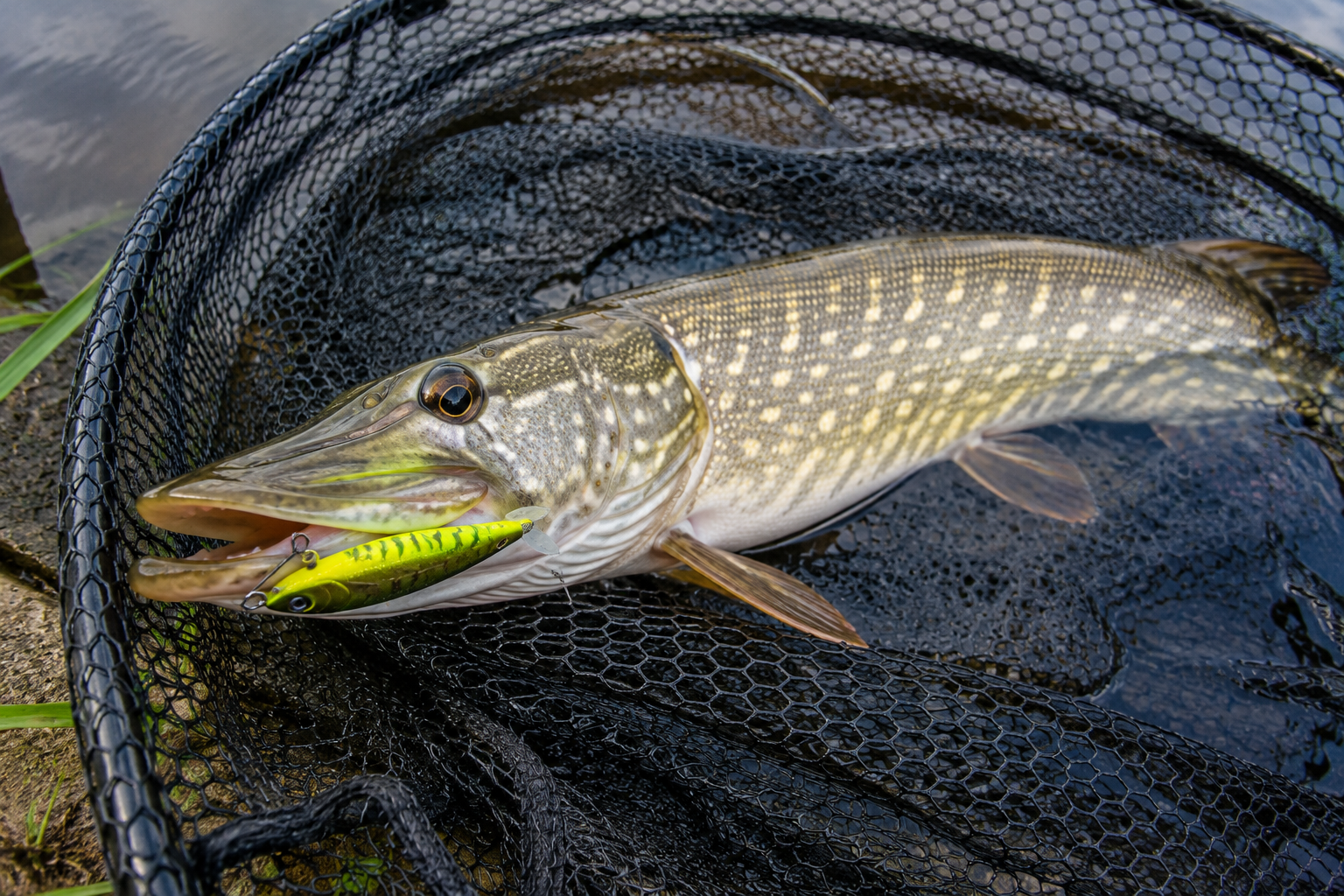
Pike are one of the most exciting freshwater predators to target in the UK. They grow large, strike lures aggressively and can be caught from rivers, canals, lakes and reservoirs.
Lure fishing is also one of the simplest ways to start pike fishing. You don’t need to carry large quantities of bait or complicated tackle. A suitable rod and reel, strong line, a wire trace and a small selection of lures are enough to get started.
There is, however, one important difference between pike fishing and many other forms of coarse fishing: you need to be properly prepared to handle and unhook a pike before you start fishing.
Here’s what you need to know.
Where to Find Pike
Pike are ambush predators. Rather than constantly chasing prey around a water, they will often position themselves somewhere that gives them an opportunity to attack passing fish.
This makes features particularly important.
Good places to look for pike include:
- Reed beds
- Weed lines
- Lily pads
- Overhanging trees
- Fallen branches
- Bridges
- Marina entrances
- Deeper holes
- Drop-offs
- River slacks and backwaters
- Areas where smaller fish are gathering
On canals, don’t overlook the margins. Pike can be surprisingly close to the bank, particularly around moored boats, bridges and vegetation.
On rivers, look for changes in current. Pike often sit away from the strongest flow where they can intercept prey without constantly fighting the current.
Tackle worth buying
Shop rods, reels, terminal tackle and more at Total Fishing Tackle.
What Tackle Do You Need for Pike Lure Fishing?
Your tackle needs to match the size and weight of the lures you are using.
For general pike lure fishing, a rod around 7–9ft is a sensible starting point. Something capable of casting approximately 20–60g or 30–80g covers a useful range of medium-sized pike lures.
If you later move onto very large swimbaits and jerkbaits, you will need considerably heavier tackle.
Pair the rod with a robust fixed-spool reel.
Braided main line is particularly useful for lure fishing because its low stretch provides excellent contact with the lure. Around 30–50lb braid is commonly used for pike fishing, depending on your tackle and the conditions.
That might sound excessive, but heavy braid isn’t simply about the size of the fish. It also gives you a better chance of retrieving a snagged lure and avoids unnecessarily prolonging a fight.
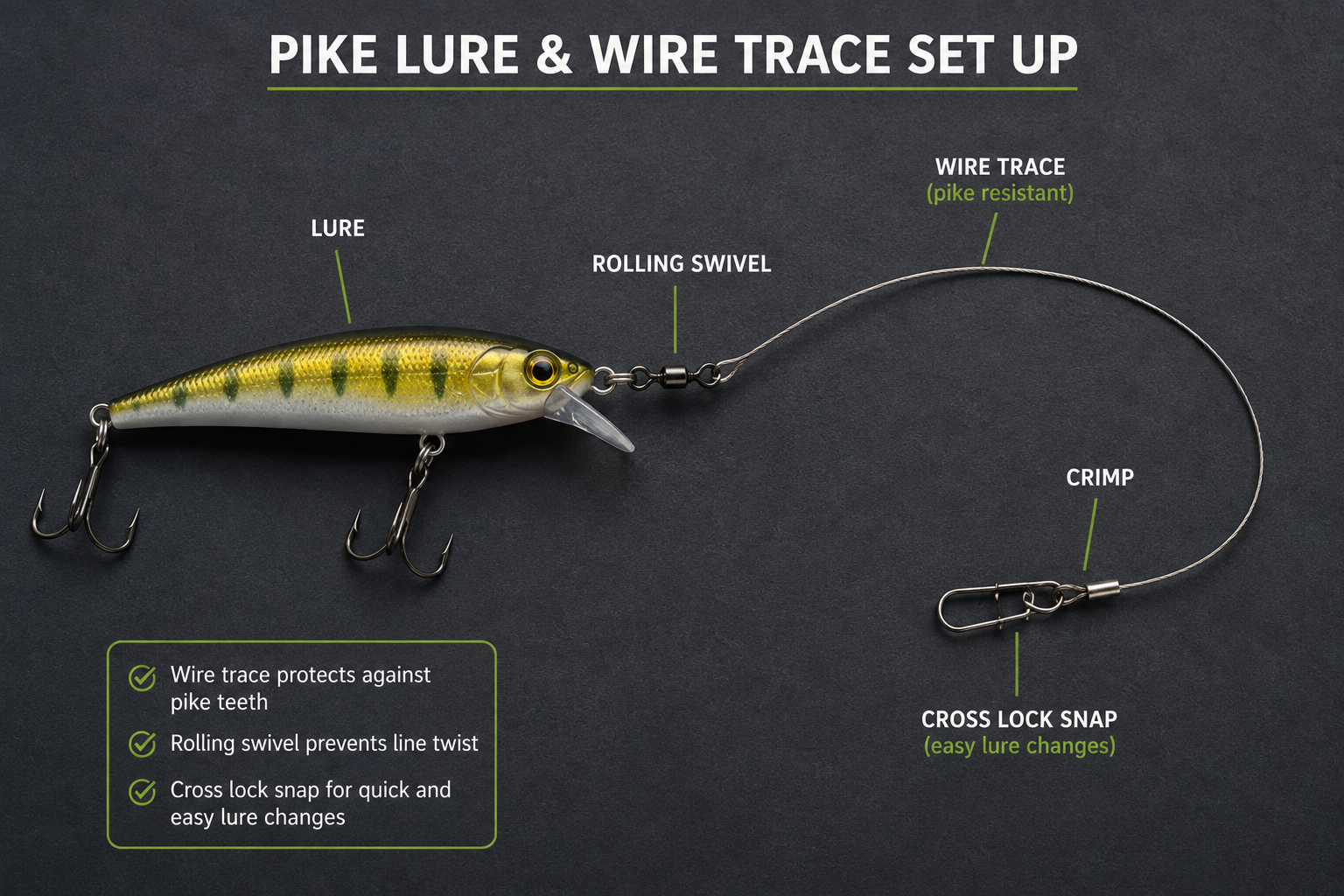
You Need a Pike-Safe Leader
Never attach your lure directly to ordinary monofilament or braid when deliberately fishing for pike.
Pike have extremely sharp teeth and can easily cut through normal fishing line.
A suitable wire trace is the traditional solution, although purpose-designed pike-resistant leaders made from appropriate materials are also available.
For a beginner, a good-quality ready-made wire trace with reliable swivels and clips keeps things simple.
Check your trace regularly for damage and replace it when necessary.
Losing a lure is frustrating. Leaving a pike swimming around with a lure attached is considerably worse.
Essential Pike Unhooking Equipment
Before making your first cast, you should have a large landing net, a large padded unhooking mat, long forceps, long-nose pliers and side cutters capable of cutting hooks.
Keep all of your unhooking equipment somewhere you can reach it immediately.
Side cutters are particularly important. If a treble hook becomes awkwardly positioned, cutting the hook can sometimes be considerably safer than struggling to remove it intact.
Fish welfare should always take priority over saving a hook.
Which Pike Lures Should Beginners Use?
Walk into a modern tackle shop and the selection of predator lures can be overwhelming.
You don’t need dozens.
Start with a handful of different lure types and learn how to use them properly.
Soft Plastic Lures
Paddle-tail soft plastics are an excellent beginner lure.
Their tail creates movement during a simple steady retrieve, meaning you don’t need an elaborate technique to make them work.
Cast out, allow the lure to reach your chosen depth and retrieve it steadily.
Try varying the speed and depth until you find what the pike want.
Spinners
Spinners have caught pike for generations.
The rotating blade produces vibration and flash, making them particularly useful when covering water and searching for active fish.
They are also very easy to use. Cast the spinner, allow it to reach the required depth and retrieve it quickly enough to keep the blade working.
Spoons
Fishing spoons are another traditional but highly effective pike lure.
Their side-to-side movement resembles an injured or struggling fish. They can be particularly useful when fishing around weed because some designs can be worked relatively slowly.
Crankbaits and Jerkbaits
Hard lures can also be extremely effective.
Crankbaits usually produce plenty of action with a straightforward retrieve, while jerkbaits are designed to dart from side to side as the angler works the rod.
For your first few sessions, concentrate on easier-to-use lures before building a large collection of specialist jerkbaits.
How to Retrieve a Pike Lure
One of the biggest mistakes beginners make is retrieving every lure at exactly the same speed.
Experiment.
Try a steady retrieve for several casts and then slow down. Add pauses or briefly speed the lure up before allowing it to slow again.
Predatory fish often react to sudden changes in movement. A pike may follow a lure for several metres before attacking when it pauses or suddenly changes speed.
In colder water, slowing everything down can be particularly effective.
You should also experiment with depth. If nothing is happening close to the surface, allow your lure to sink and explore deeper water.
Cover Plenty of Water
Lure fishing is an active style of fishing.
If nothing is happening, don’t automatically spend three hours casting into the same swim.
Make several casts in different directions and explore different depths. If you don’t get a response, move.
This approach is particularly effective on canals and rivers where you can travel light and fish numerous likely-looking areas during a session.
You are trying to find the pike rather than waiting for one to eventually find you.
Always Watch the Lure Near the Bank
Don’t mentally finish the cast when your lure gets close to you.
Pike frequently follow lures right into the margins.
Watch behind your lure as it approaches the bank. You may suddenly see a large shape following it.
Rather than immediately lifting the lure from the water, continue the retrieve where possible. A following pike can sometimes be tempted into striking by changing the lure’s direction or speed.
This is also why it is worth making a few casts parallel to the bank rather than always casting towards the middle of the water.
Playing a Pike
When a pike takes your lure, keep steady pressure on the fish.
Don’t deliberately prolong the fight.
Your tackle should be strong enough to bring the fish under control reasonably quickly while still allowing the rod and reel’s drag to absorb sudden runs.
Be particularly careful close to the net. Pike often make one final powerful run when they see the bank or landing net.
Once landed, leave the pike in the net in the water while you organise yourself.
How to Handle a Pike Safely
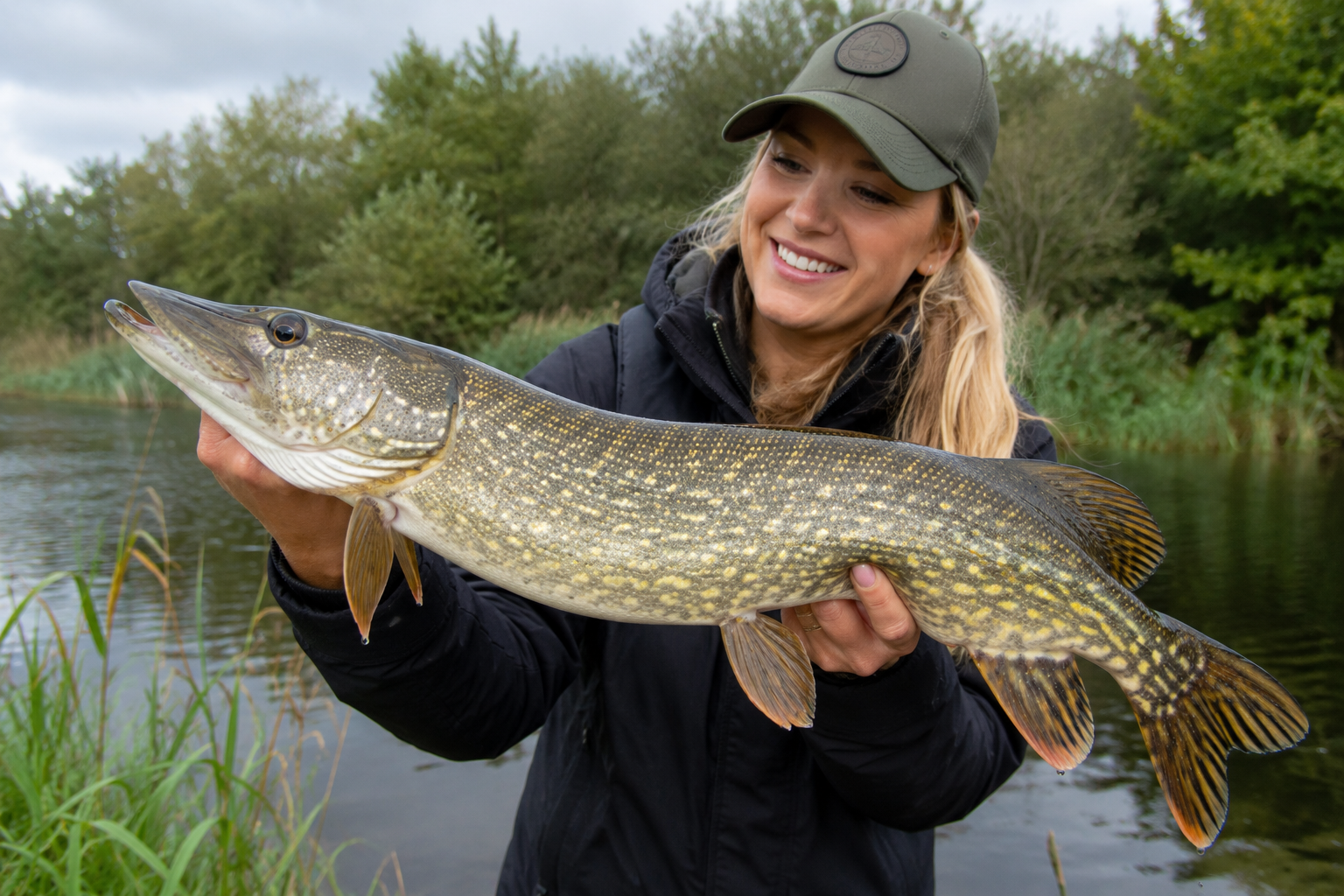
Pike look intimidating, but they can be handled safely when you know the correct technique.
Never put your fingers inside a pike’s mouth.
Experienced pike anglers commonly use a careful chin grip from underneath the gill plate while avoiding the delicate gill rakers themselves.
If you have never handled a pike before, going with an experienced pike angler for your first session is a sensible idea. Learning the correct technique in person is much easier than trying to work it out when your first pike is already in the landing net.
Keep the fish low over a wet unhooking mat while removing the hooks.
Use long forceps or pliers and use your cutters if necessary.
Once unhooked, return the fish as quickly as practical. Support it in the water until it is able to swim away strongly.
When Is the Best Time to Lure Fish for Pike?
Pike can be caught on lures throughout much of the year, but autumn and winter are traditionally associated with pike fishing in the UK.
As temperatures fall, vegetation begins dying back and many anglers turn their attention towards predators.
Autumn can provide particularly enjoyable lure fishing because pike may feed actively as conditions cool.
During very warm weather, however, extra care is sensible. Pike can become stressed after being caught in high water temperatures, so many anglers avoid deliberately targeting them during particularly hot conditions.
Don’t Ignore Small Lures
Pike are capable of eating surprisingly large prey, but that doesn’t mean you always need an enormous lure.
Large pike regularly take relatively small lures.
If the water contains lots of small roach, perch or other prey fish, matching their approximate size can be very effective.
Likewise, don’t assume a large lure will only catch large pike. Small pike can be remarkably ambitious and will sometimes attack lures that appear far too large for them.
Keep Your First Pike Fishing Setup Simple
You don’t need a tackle box containing hundreds of pounds worth of lures to catch your first pike.
A suitable rod and reel, strong braid, quality wire traces and perhaps five or six carefully selected lures are enough.
Take a couple of soft plastics, a spinner, a spoon and one or two hard lures.
Then concentrate on finding the fish.
Work around weed beds, reeds, bridges, deeper water and other obvious features. Change your retrieve speed, explore different depths and keep moving until you find active pike.
Most importantly, buy your landing net, unhooking mat, long forceps and cutters before buying another ten lures.
Being able to hook a pike is only half the job. Being properly prepared to land, unhook and return it safely is what makes you ready to start lure fishing for pike.
The monthly catch-up
One email a month: new guides, tackle worth buying and waters we've fished.
Related guides
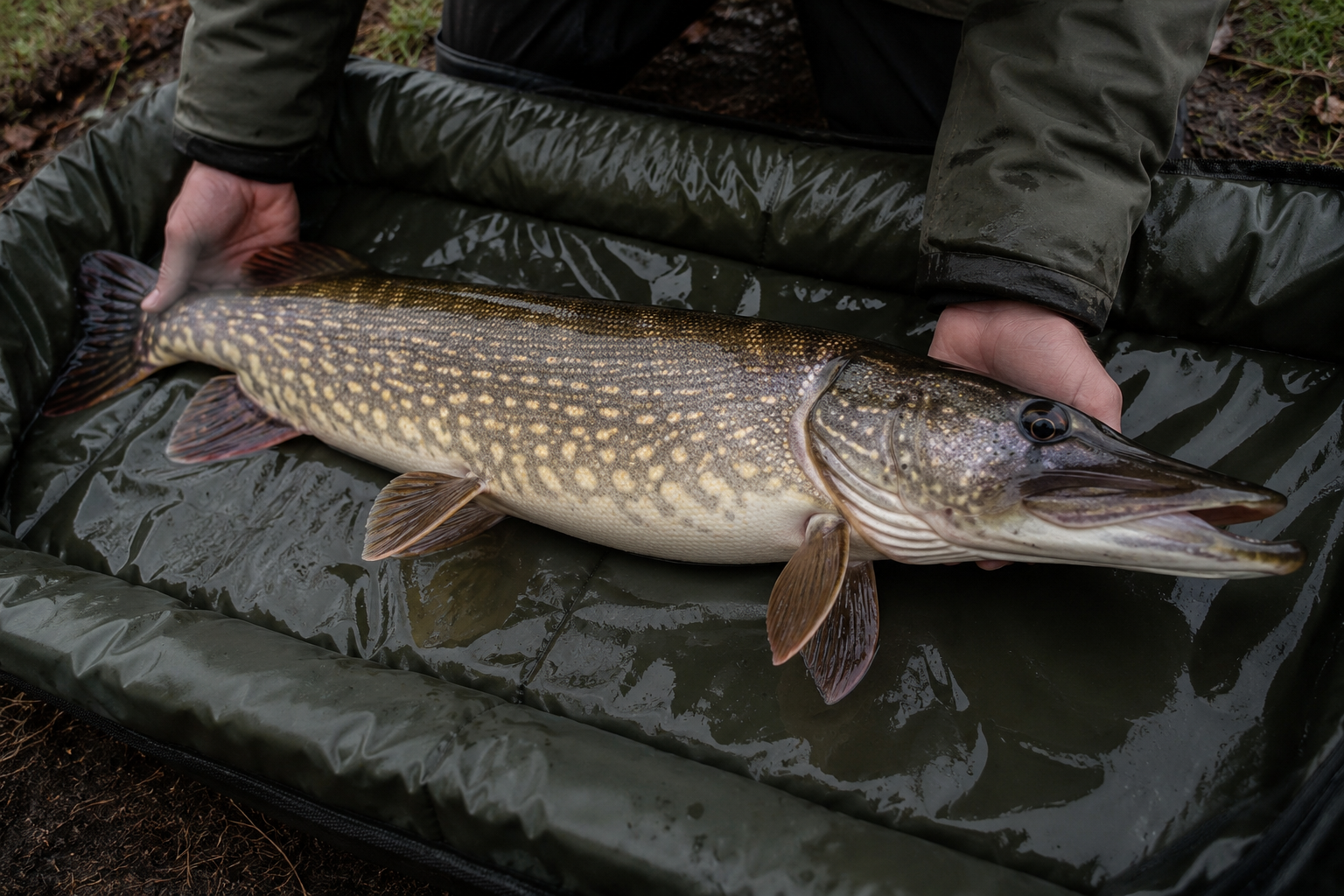
Is It Too Early to Start Pike Fishing?
Traditional wisdom says wait for the first frosts. Water temperature, not the calendar, should decide when you start piking - and how you handle the fish you catch.
18 Aug 2026 · 5 min read
A Beginner’s Guide to Fly Fishing for Grayling
New to grayling fishing? This beginner’s guide explains the essential tackle, flies and techniques you need to start fly fishing for grayling on rivers, from finding fish to making a natural drift.
26 Sept 2026 · 7 min read
How to Fish Soft Plastic Lures: A Beginner’s Guide
A beginner-friendly guide to fishing soft plastic lures, covering depth control, jigging, steady retrieves, working the bottom and adapting your presentation to catch more predatory fish.
24 Sept 2026 · 6 min read