A Beginner’s Guide to Perch Fishing
Learn how to catch perch with this beginner-friendly guide covering the best baits, tackle, locations and simple techniques for perch fishing in UK rivers, canals and lakes.
11 August 2026 · 6 min read
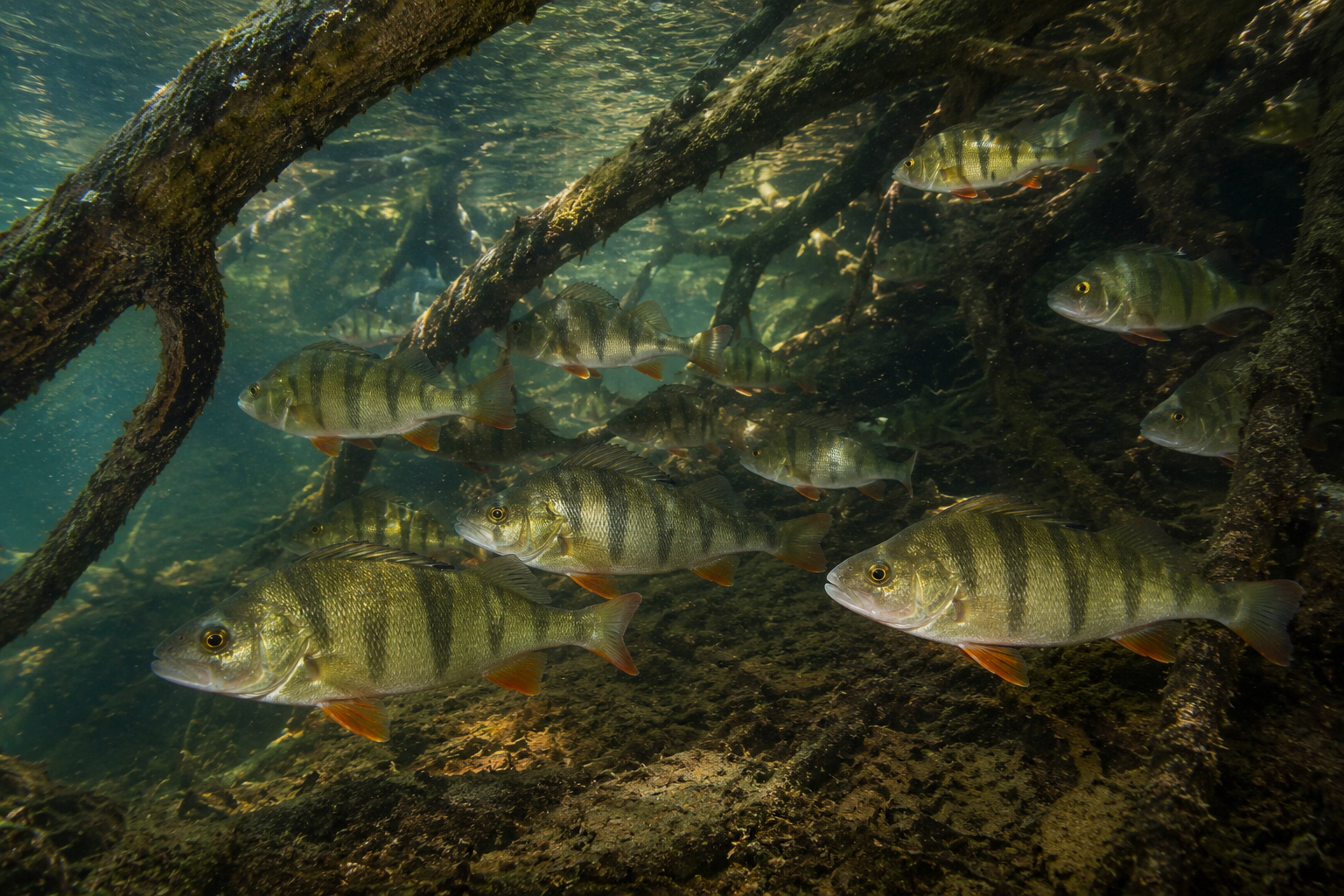
Perch are one of the most enjoyable fish to target in the UK. They can be found in rivers, canals, lakes and reservoirs, they readily take a wide range of baits and lures, and even relatively small perch can put up a surprisingly good fight on light tackle.
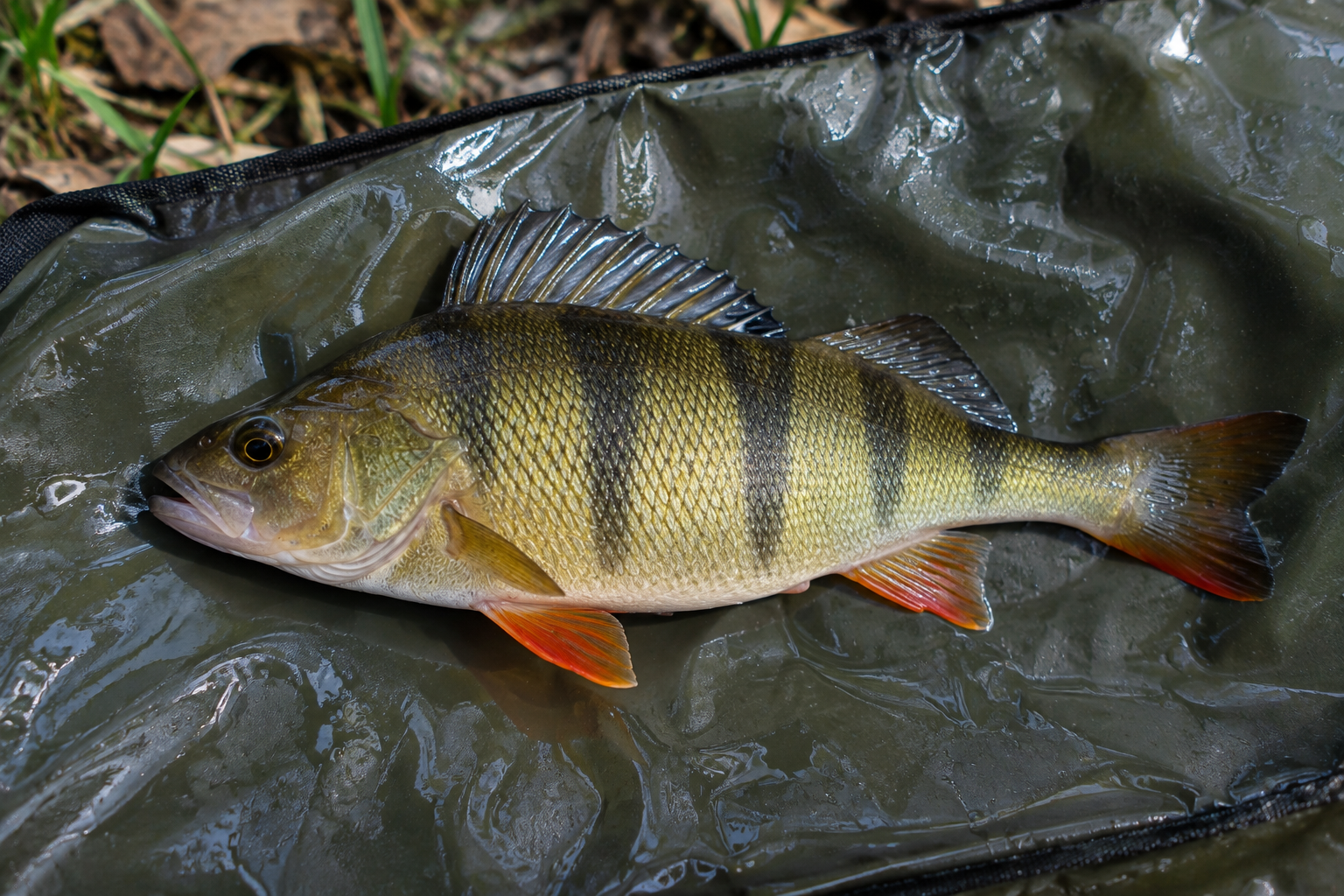
Their distinctive dark stripes, spiny dorsal fin and red-orange fins also make the European perch one of our most recognisable freshwater fish.
If you're new to perch fishing, the good news is that you don't need complicated tackle or expensive equipment. Learn where perch are likely to be hiding, use a suitable bait or lure, and you can enjoy some excellent fishing.
Where Can You Find Perch?
Perch are widespread throughout the UK and live in many different types of freshwater.
You can catch them from canals, rivers, commercial fisheries, gravel pits, reservoirs and small ponds. The key is finding the features that attract them.
Perch are predators and frequently use cover to ambush smaller fish. Good places to try include:
- Bridges and lock gates
- Overhanging trees
- Reed beds
- Lily pads
- Boats and moorings
- Deep margins
- Drop-offs and deeper channels
- Fallen trees and submerged branches
Don't automatically cast towards the middle of the water. On many venues, particularly canals and commercial fisheries, perch can be surprisingly close to the bank.
Tackle worth buying
Shop rods, reels, terminal tackle and more at Total Fishing Tackle.
What Tackle Do You Need for Perch Fishing?
For general bait fishing, a light float or feeder rod is ideal. You don't need particularly heavy tackle.
A light 10–12ft float rod combined with a small fixed-spool reel is a good starting point. Around 4–6lb main line will handle most everyday perch fishing situations.
If you're lure fishing, a light spinning rod around 6–8ft long makes an excellent general-purpose setup. Match it with a small spinning reel and suitable line or braid.
Lighter tackle makes catching smaller perch much more enjoyable while still giving you enough power to land a better fish.
The Best Baits for Perch
One of the easiest ways to catch your first perch is with maggots.
Red maggots are particularly popular, although almost any colour will work. Fish one or two maggots beneath a small float and regularly introduce a few loose maggots around your hook bait.
The loose feed attracts small silver fish such as roach. Their activity can then attract larger perch looking for an easy meal.
Worms are another excellent perch bait.
A small section of worm will catch perch of almost any size, while a large lobworm can be particularly effective when you're trying to tempt a bigger fish.
Other useful perch baits include casters and prawns.
Float Fishing for Perch
Float fishing is probably the simplest way for a beginner to start targeting perch.
Use a sensitive float with enough split shot to cock it correctly. Fish your bait close to the bottom and try different depths until you start getting bites.
Don't ignore the margins.
Drop your float alongside reeds, bushes, platforms or other cover and allow the bait to settle naturally. Perch often patrol these areas looking for food.
Regularly feeding a few maggots can help keep fish interested, but avoid throwing in large quantities of bait. Little and often usually works better.
Lure Fishing for Perch
Perch are also excellent fish to target with artificial lures.
Small soft plastics are particularly effective. Paddle tails, creature baits and small worm-style lures can all catch perch.
Small spinners and crankbaits are another good choice for beginners because they're simple to use. Cast the lure beyond likely-looking cover and retrieve it steadily.
Don't retrieve every cast at exactly the same speed.
Try slowing down, speeding up or briefly pausing the lure. Perch will sometimes follow a lure for several metres before attacking it when it suddenly changes direction or stops.
When fishing soft plastics, allowing the lure to sink and slowly working it close to the bottom can be extremely effective.
How to Find Bigger Perch
Small perch often form large shoals, but bigger specimens can behave differently.
Large perch are predators capable of eating surprisingly substantial prey. They may patrol deeper water, structures and areas where shoals of smaller fish gather.
Look for sudden changes in depth, bridge supports, lock gates, submerged trees and areas where smaller fish are visibly active.
Early morning and late afternoon can be particularly productive periods, especially on clear waters where large perch may be reluctant to feed aggressively during bright daylight.
Autumn and winter can also produce some excellent perch fishing as the fish feed heavily on smaller prey.
Handle Perch Carefully
Perch have a large spiny dorsal fin and sharp points around their gill covers, so handle them carefully.
Wet your hands before touching the fish and support larger perch properly rather than holding them by the mouth or gill area.
If the dorsal fin is raised, don't force it down. Give the fish a moment to relax before carefully unhooking it.
A landing net and unhooking mat are sensible additions when targeting larger specimens.
Keep Moving
One of the most useful lessons in perch fishing is not to stay in an unproductive swim for too long.
Perch are predators, so finding the fish is often more important than waiting for them to find you.
This is particularly true when lure fishing. Try several casts around a feature, experiment with different depths and retrieves, and then move to the next likely area.
On a canal or river, covering plenty of water can dramatically increase your chances of finding a shoal.
Final Thoughts
Perch fishing doesn't need to be complicated.
For your first session, a light rod, small float and tub of maggots or worms may be all you need. Concentrate on fishing close to features and cover rather than simply casting as far as possible.
Alternatively, take a light spinning rod and a handful of small lures and explore your local canal, river or lake.
Once you begin to understand where perch like to hide and how they hunt, targeting them becomes much easier – and there's always the possibility that the next bite could come from a much bigger striped predator.
The monthly catch-up
One email a month: new guides, tackle worth buying and waters we've fished.
Related guides
The Best Baits for Chub: What to Use and When
Discover the best baits for catching chub and when to use them. From bread and maggots to worms, cheese and pellets, this guide covers proven chub baits for UK rivers.
13 Sept 2026 · 5 min read
A Beginner’s Guide to Chub Fishing
Learn how to catch chub with this beginner-friendly guide. Discover where to find chub, the best baits to use and simple float, ledger and surface fishing techniques.
13 Sept 2026 · 5 min read
Dace Fishing: A Simple Guide to Catching River Dace
Learn how to catch dace on rivers with this simple guide covering the best baits, tackle, swims, feeding techniques and how to trot a float for this fast, hard-fighting coarse fish.
3 Sept 2026 · 5 min read