Drift Fishing for Plaice with Spoons from a Small Boat
A simple guide to drift fishing for plaice with spoons from a small boat, including rigs, baits, tackle and drift techniques.
6 September 2026 · 6 min read
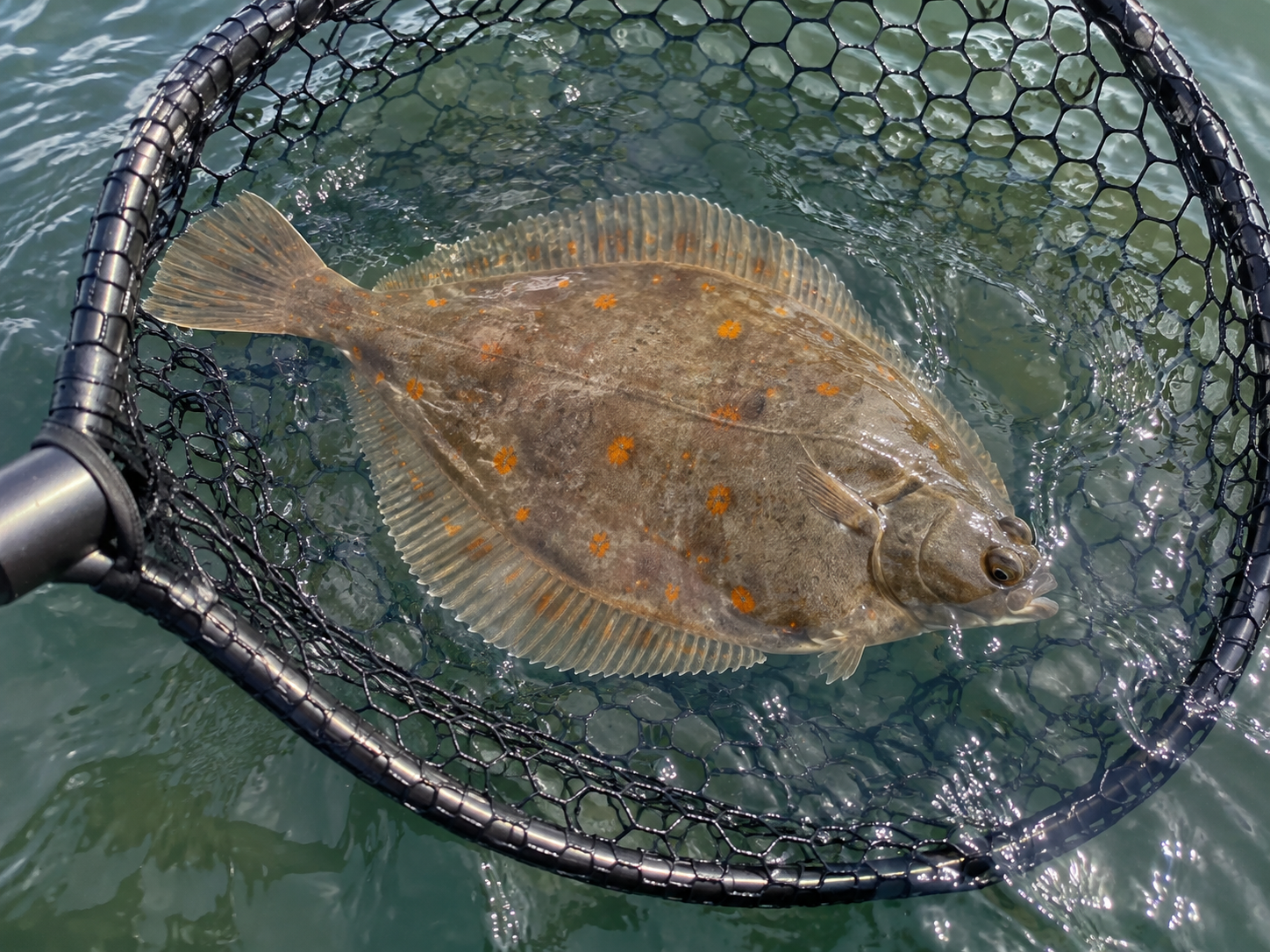
Plaice are one of the most recognisable flatfish around the UK coast, with their smooth brown upper surface and distinctive orange spots. They are also a particularly enjoyable species to target from a small boat because you don't necessarily need complicated tackle or heavy equipment to catch them.
One of my favourite approaches is drift fishing with a baited spoon. Instead of anchoring and waiting for plaice to find the bait, the boat's movement carries the rig across the seabed. The spoon flashes and moves as it travels, helping attract the attention of nearby fish before they find the bait trailing behind it.
It's a simple method, but getting the drift, tackle and presentation right can make a considerable difference.
Advertisement
Tackle worth buying
Shop rods, reels, terminal tackle and more at Total Fishing Tackle.
Finding plaice is the first challenge. They spend much of their time on or partly buried in the seabed, and some areas can hold far more fish than others. Clean sand is an obvious starting point, but I particularly like areas containing a mixture of sand, fine gravel, shingle and shell.
Changes in the seabed are often worth investigating. The edge of a sandbank, a channel or a gradual change in depth can provide good feeding areas. Plaice may move through these areas with the tide looking for worms, small crustaceans and other food exposed by the moving water.
This is where fishing from a small boat has a real advantage. Rather than committing to one position at anchor, you can allow the boat to drift naturally across the ground and cover a much larger area.
A chartplotter becomes particularly useful once you start catching fish. If a plaice comes from a particular part of the drift, mark the position rather than simply continuing onwards. Finish the drift, motor back up and try to follow the same line again. Quite often, a productive area is surprisingly small.
It's also worth paying attention to the tide. Some movement is essential because it works the rig and allows you to cover ground, but a very fast drift makes it difficult to keep everything under control. The ideal conditions are those where the boat moves steadily enough to work the spoon without dragging the tackle uncontrollably across the bottom.
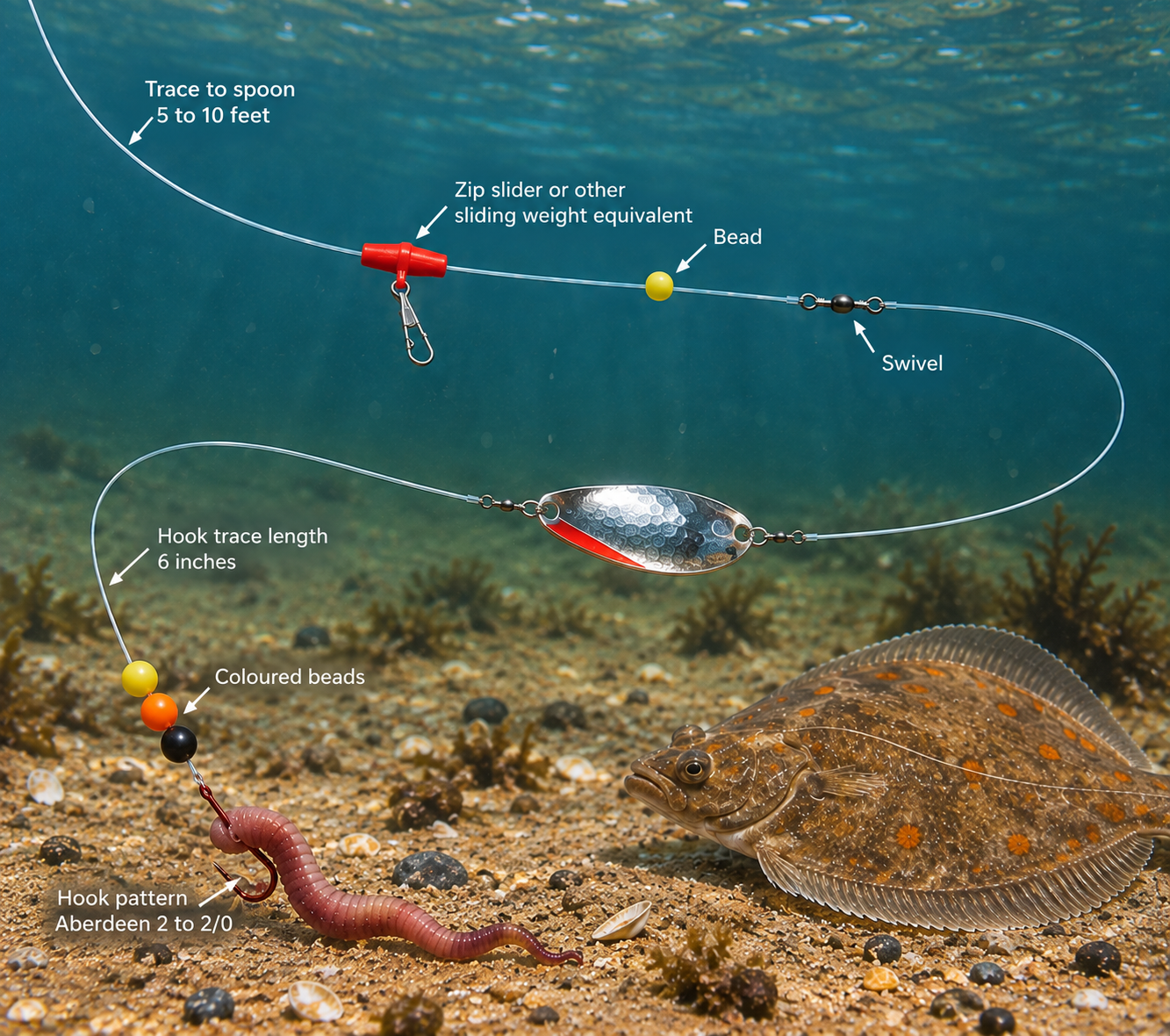
simple baited spoon rig for drift fishing for plaice, using a flashing spoon and coloured beads to attract fish towards the baited hook.
Setting Up a Baited Spoon Rig
A plaice spoon rig doesn't need to be complicated. In fact, keeping it relatively simple makes it easier to fish and reduces tangles.
A sliding weight setup works particularly well. A zip slider or similar sliding boom can run on the line, followed by a bead and swivel. From the swivel, I like a reasonably long trace of around 5 to 10 feet leading to the spoon. This gives the spoon plenty of freedom to move naturally behind the weight.
The spoon itself is essentially an attractor. A shiny spoon that flashes as it lifts and falls can draw a plaice's attention from considerably further away than a static bait sitting on the seabed.
Behind the spoon, use a short hook trace of approximately six inches. A few coloured beads immediately above the hook add another visual attraction. Yellow, orange and black are a good combination and stand out well without turning the rig into something unnecessarily elaborate.
An Aberdeen-style hook somewhere around size 2 through to 2/0 is suitable for most of the baits you're likely to use.
Weight choice depends heavily on the conditions. Something around 4–8oz may be sufficient in relatively shallow water and a moderate tide, while deeper water or stronger tidal movement can require considerably more. You're trying to use enough weight to keep the rig close to the seabed while still allowing it to move with the drift.
Baiting the Rig for Plaice
Although the spoon and beads attract attention, it's normally the natural bait that convinces the plaice to take.
Ragworm is one of the classic choices and works particularly well on this type of moving rig. Its natural movement complements the action of the spoon, and a lively worm trailing close to the seabed presents a very tempting target.
Lugworm is another excellent option, either used alone or as part of a cocktail. Small strips of squid can help make a softer worm bait more durable, particularly when you're repeatedly drifting over rougher patches of shell and gravel. Thin strips of mackerel can also work.
There's a temptation when fishing for flatfish to load the hook with an enormous bait, but bigger isn't automatically better. With a spoon rig, I want the bait to move naturally behind the spoon rather than becoming a heavy lump that twists the trace.
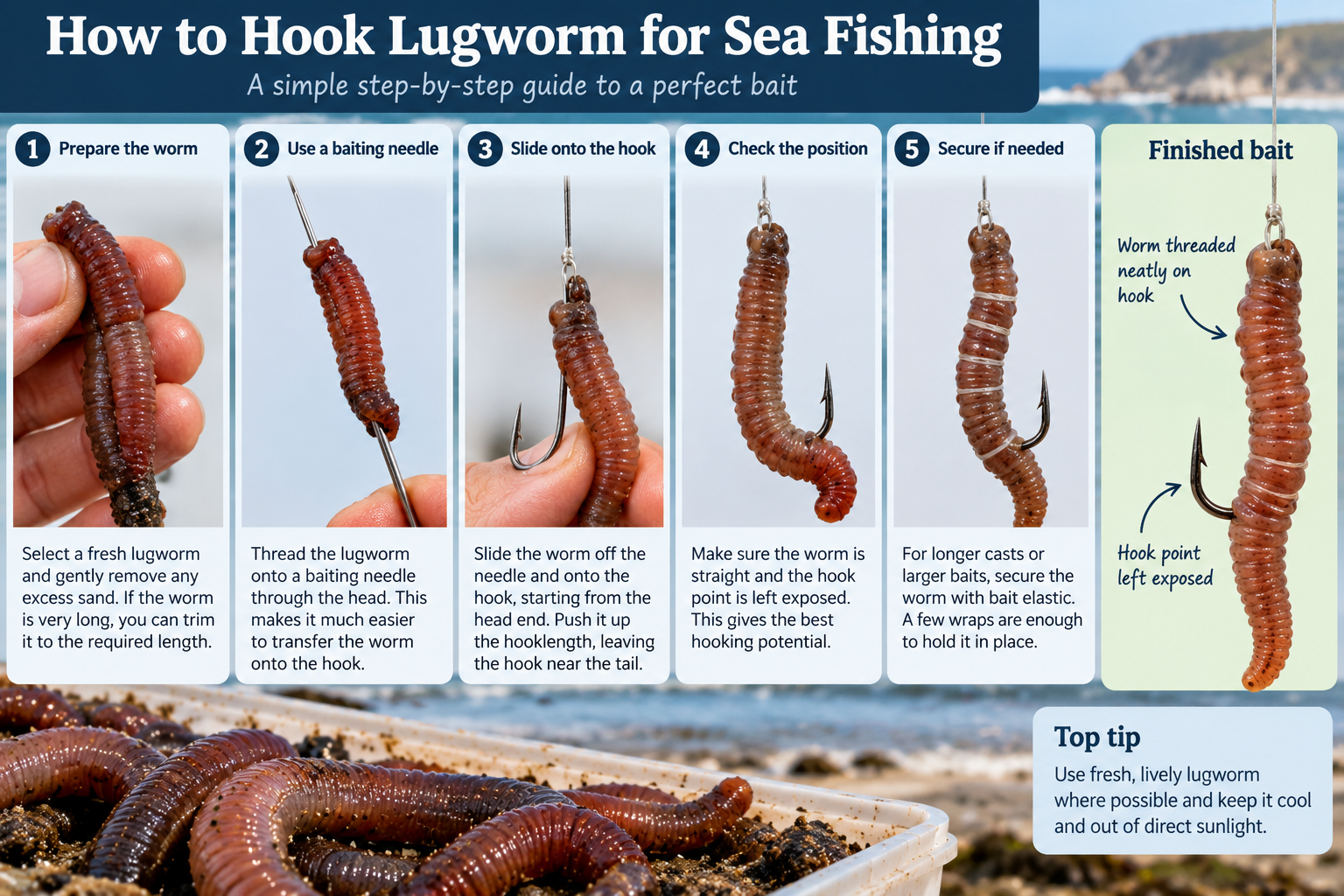
Threading part of a worm up the hook while leaving some movement at the end usually gives a better presentation. Make sure the hook point remains exposed.
Because the rig is constantly moving, check your bait regularly. A worm that looked perfect when it went over the side may be little more than an empty skin after a long drift, particularly if small fish or crabs are present.
How to correctly hook lugworm
Fishing the Spoon on the Drift
Once you're positioned at the beginning of the drift, lower the rig until the weight reaches the bottom. There's rarely any need to cast from a small boat, and lowering everything directly beneath or slightly behind the boat gives you much better control.
Keep the rod in your hand and maintain contact with the seabed.
The idea isn't simply to drag the weight continuously along the bottom. Instead, gently lifting and lowering the rod allows the rig to move in short stages. As you lift, the spoon rises and flashes. When you lower the rod, it flutters back towards the seabed and the bait follows behind.
These movements don't need to be dramatic. Small lifts are usually enough.
As the boat moves into deeper water, you may occasionally need to release a little more line to maintain bottom contact. If the water becomes shallower, recover some line. Keeping the line reasonably direct makes bites much easier to detect.
A light boat rod matched with braided main line is ideal for this style of fishing. Braid provides excellent feedback, allowing you to feel the lead touching the seabed and often making even relatively gentle plaice bites noticeable.
When a bite does come, don't immediately respond with a huge strike.
Plaice can initially produce a series of small knocks as they investigate and take the bait. Give the fish a moment and maintain contact. When the rod begins to load properly, lift smoothly into the fish.
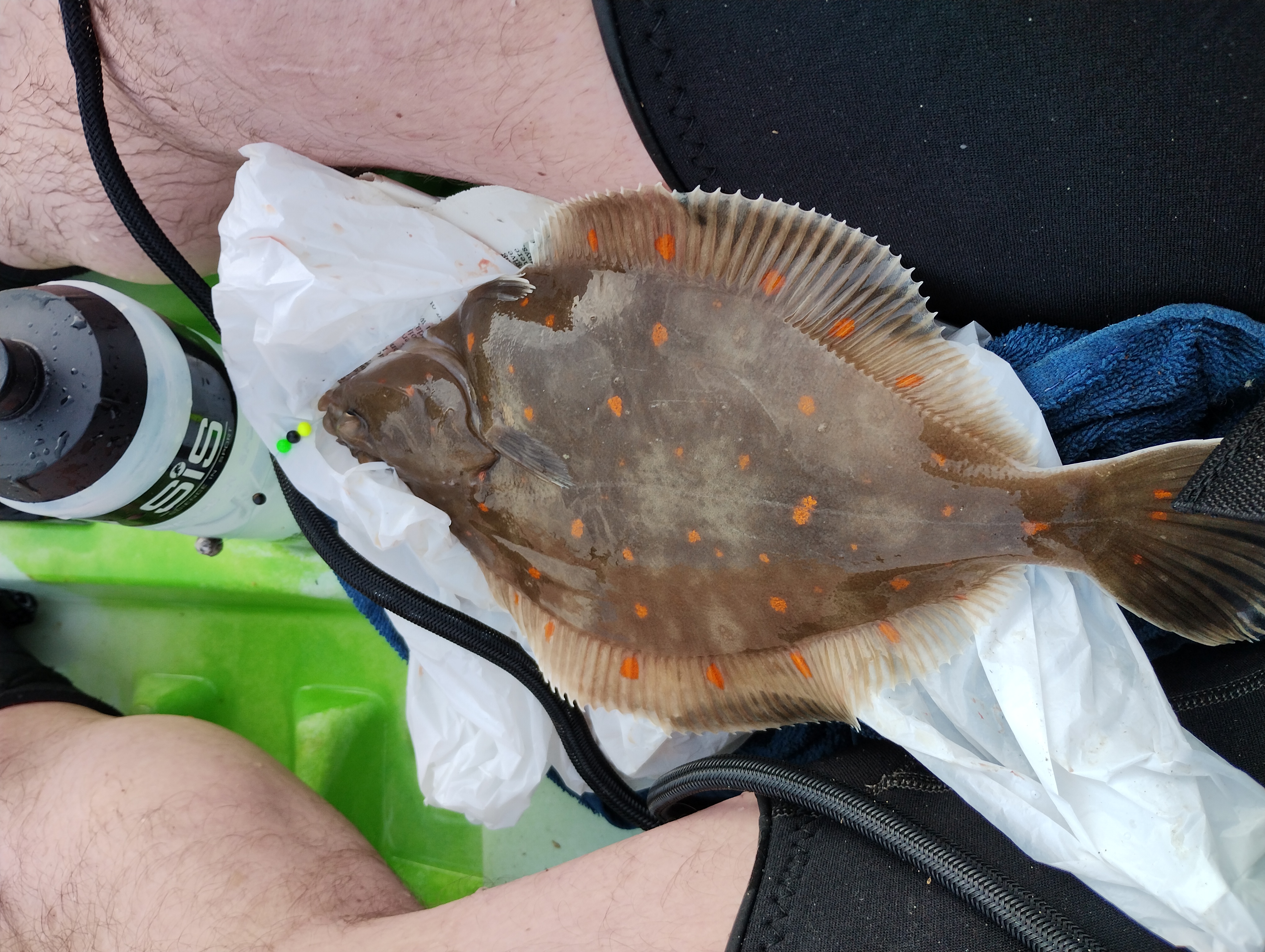
This plaice was caught drift fishing from a kayak less than 350m from the shore.
Making Each Drift Count
Successful drift fishing quickly becomes a process of building up information. Your first few drifts are partly about finding out what's happening beneath the boat.
Watch the depth, drift direction and speed. More importantly, remember exactly where bites occur.
If you catch a plaice halfway along a 500-metre drift, there may be little point repeatedly fishing the entire 500 metres. The fish could be concentrated around a relatively small change in depth or patch of suitable seabed. Once you've identified it, shorten your drifts and repeatedly cover that productive section.
Wind can complicate things because it may push a small boat in a different direction to the tide. If the boat starts travelling too quickly, increasing the weight may restore some control, but there is a limit. Sometimes the conditions simply become too fast to fish a spoon effectively.
Small-boat safety also has to take priority. While drifting, the boat is continually changing position, so regularly check your surroundings rather than concentrating solely on the rod. Keep clear of navigation channels, rocks, shallow ground and other vessels, and always wear a suitable lifejacket or personal flotation device.
On a suitable day, however, spoon fishing for plaice is one of those methods that suits small-boat fishing extremely well. You're actively searching for fish, learning the ground with every drift and keeping in direct contact with the tackle.
The rig itself is uncomplicated: a sliding weight, long trace, flashing spoon, short hooklength, a few coloured beads and a good natural bait. Once you find the right ground and get the drift speed right, that's often all you need.