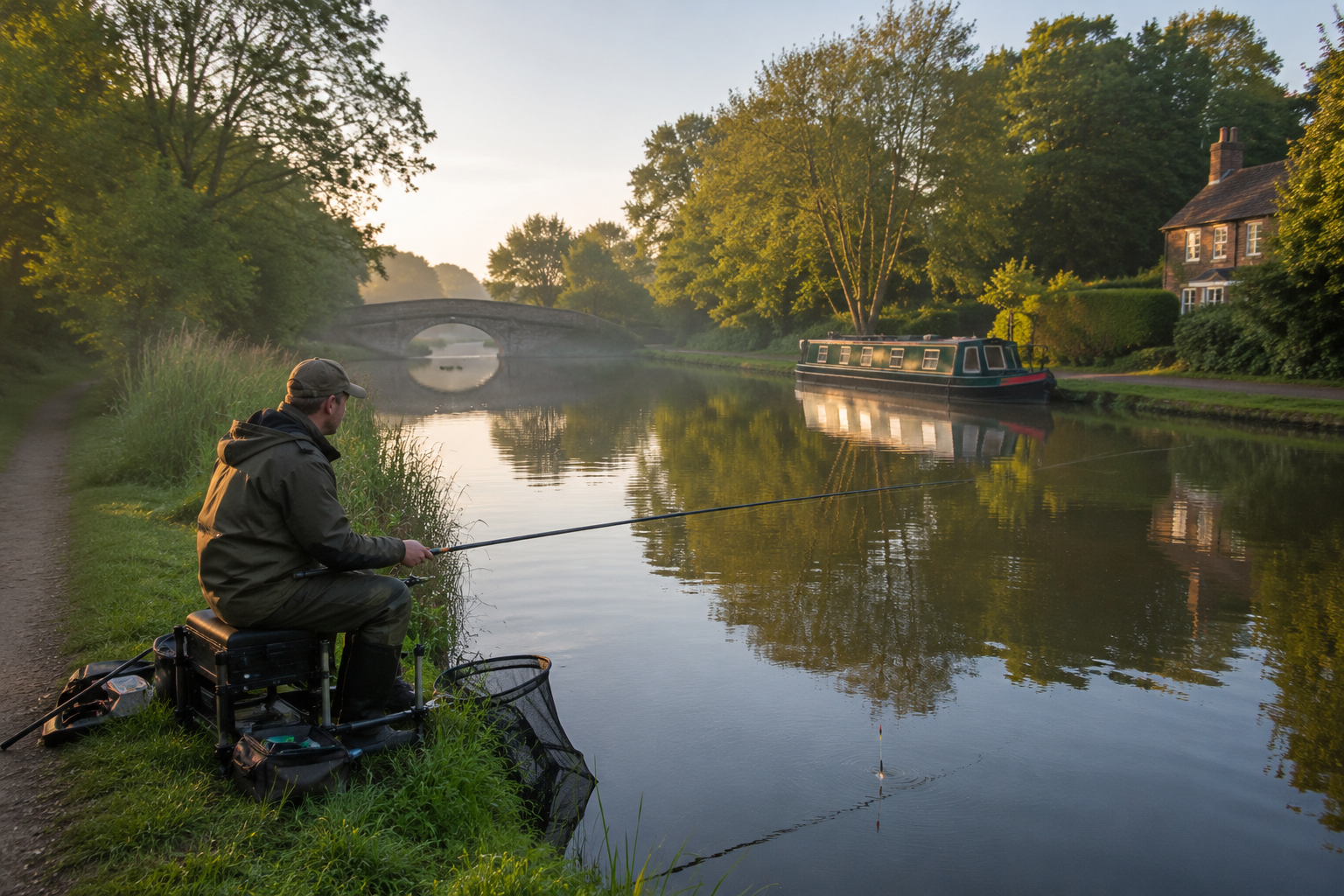
Canals are the most under used beginner venue in the country. One rod, one float and a pint of maggots is genuinely all you need.
12 August 2026 · 4 min read
Some links in this guide are affiliate links. If you buy through them we may earn a small commission at no extra cost to you — it never influences what we recommend.
Canals are excellent places to learn the basics of coarse fishing. They are usually relatively narrow, the water is often slow moving, and you don't need particularly heavy or complicated tackle to start catching fish.
For a beginner, float fishing is one of the simplest and most enjoyable ways to fish a canal. A small float, light tackle and a few maggots can put you in contact with roach, perch, gudgeon, skimmers and plenty of other species.
The key is to keep things simple. You don't need to cast to the horizon or introduce large quantities of bait. Instead, concentrate on accurate presentation, regular feeding and finding the depth at which the fish are feeding.
Advertisement
Tackle worth buying
Shop rods, reels, terminal tackle and more at Total Fishing Tackle.
A canal is particularly well suited to float fishing because you can usually reach several different areas of the swim with relatively light tackle.
There may be fish directly beneath your feet, along the bottom of the near shelf, through the central channel and against the far bank.
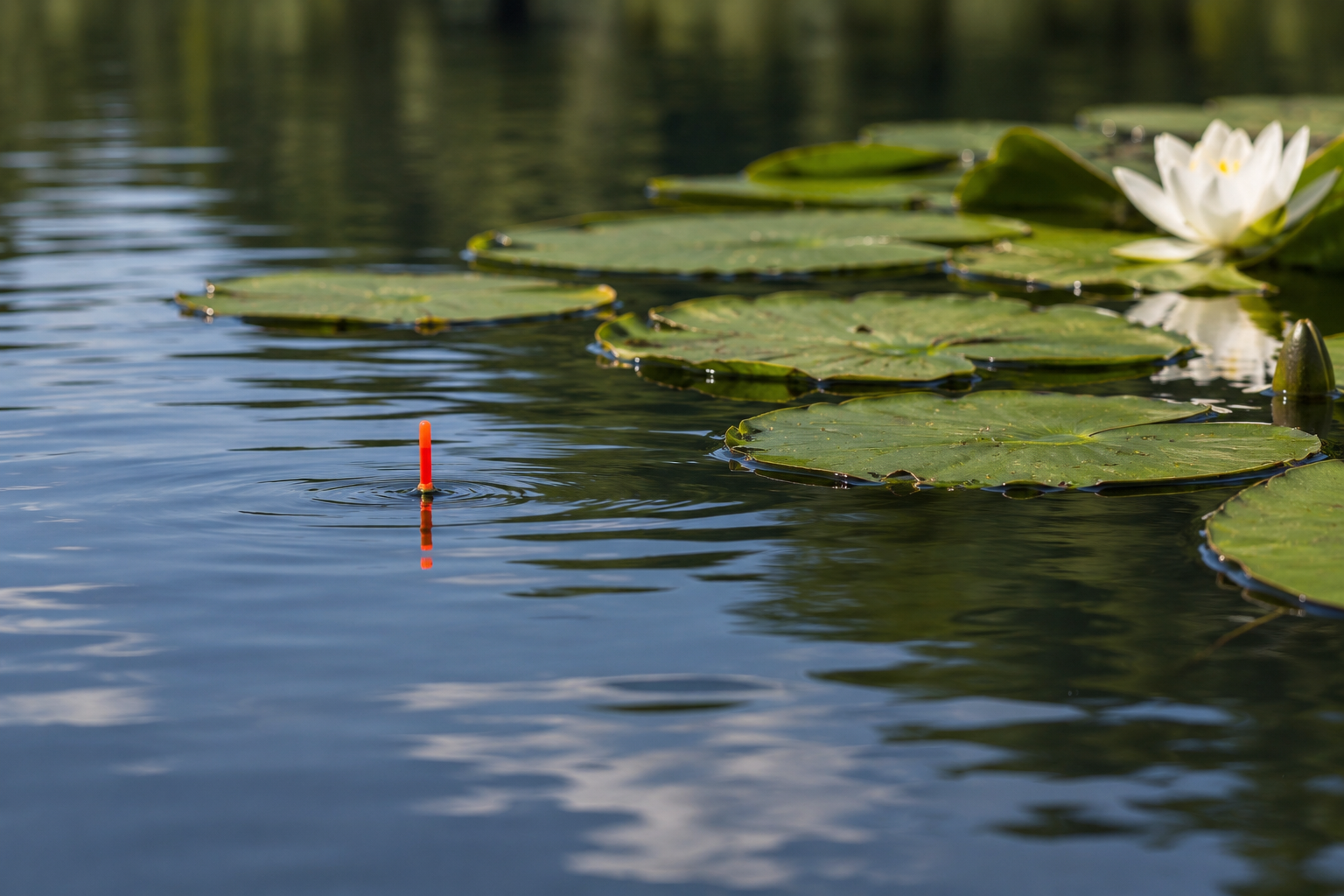
Float fishing allows you to explore these areas while giving you a clear indication when a fish takes your bait.
It's also an active method. You're regularly casting, feeding and watching the float, which makes it an ideal introduction to coarse fishing.
What Fish Can You Catch?
One of the attractions of canal fishing is that you rarely know exactly what your next bite will produce.
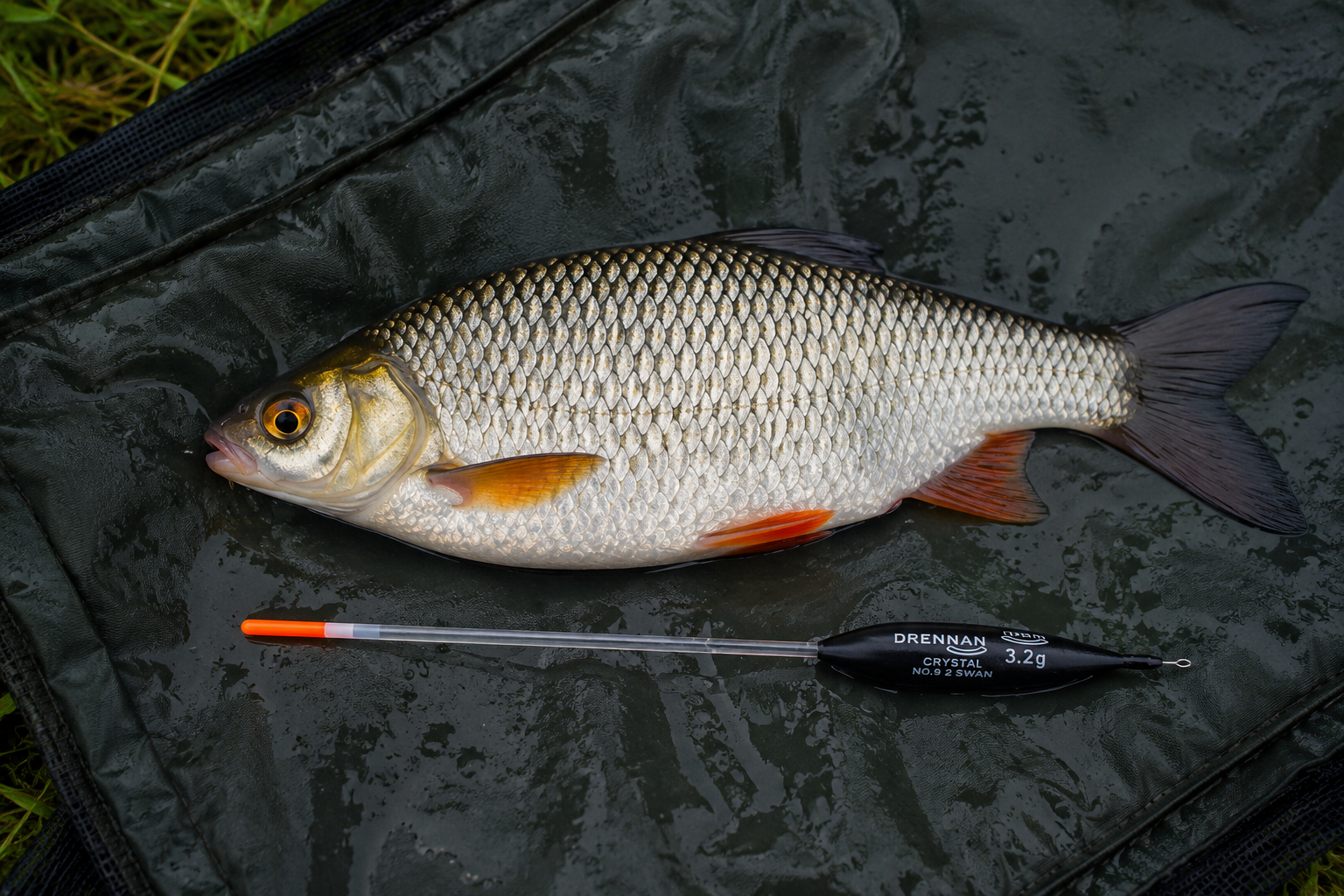
Roach are probably one of the most widespread canal species and can often be caught on maggots, bread and casters.
Perch are another common catch, particularly around bridges, locks, moored boats and other structures.
Fish close to the bottom and you may encounter gudgeon, while deeper canals can contain good populations of bream and skimmers.
Depending on the canal, you might also encounter rudd, tench, carp and other coarse species.
For your first few sessions, however, don't worry about targeting a particular species. Concentrate on getting bites and learning how the swim works.
A Simple Canal Float Fishing Setup
You don't need specialist equipment to begin.
A general-purpose float rod of around 10–13ft is suitable for most situations. Match it with a small fixed-spool reel loaded with relatively light line.
Around 3–4lb main line is a sensible starting point for general canal fishing, although you may want something stronger if there are lots of snags or larger fish present.
At the business end, keep things simple.
A small waggler or pole-style float, a few split shot and a hook around size 18 or 20 will cover plenty of situations.
If you're using maggots, a size 18 is an excellent starting point.
The float only needs to be large enough to cast comfortably and remain stable. Using an unnecessarily large float can make it more difficult to detect delicate bites.
Always Plumb the Depth
Before you start fishing properly, find out how deep your swim is.
This is one of the most important skills you can learn in float fishing.
Attach a plummet to your hook and carefully lower or cast the rig into different parts of the swim. Adjust the float until you know where the bottom is.
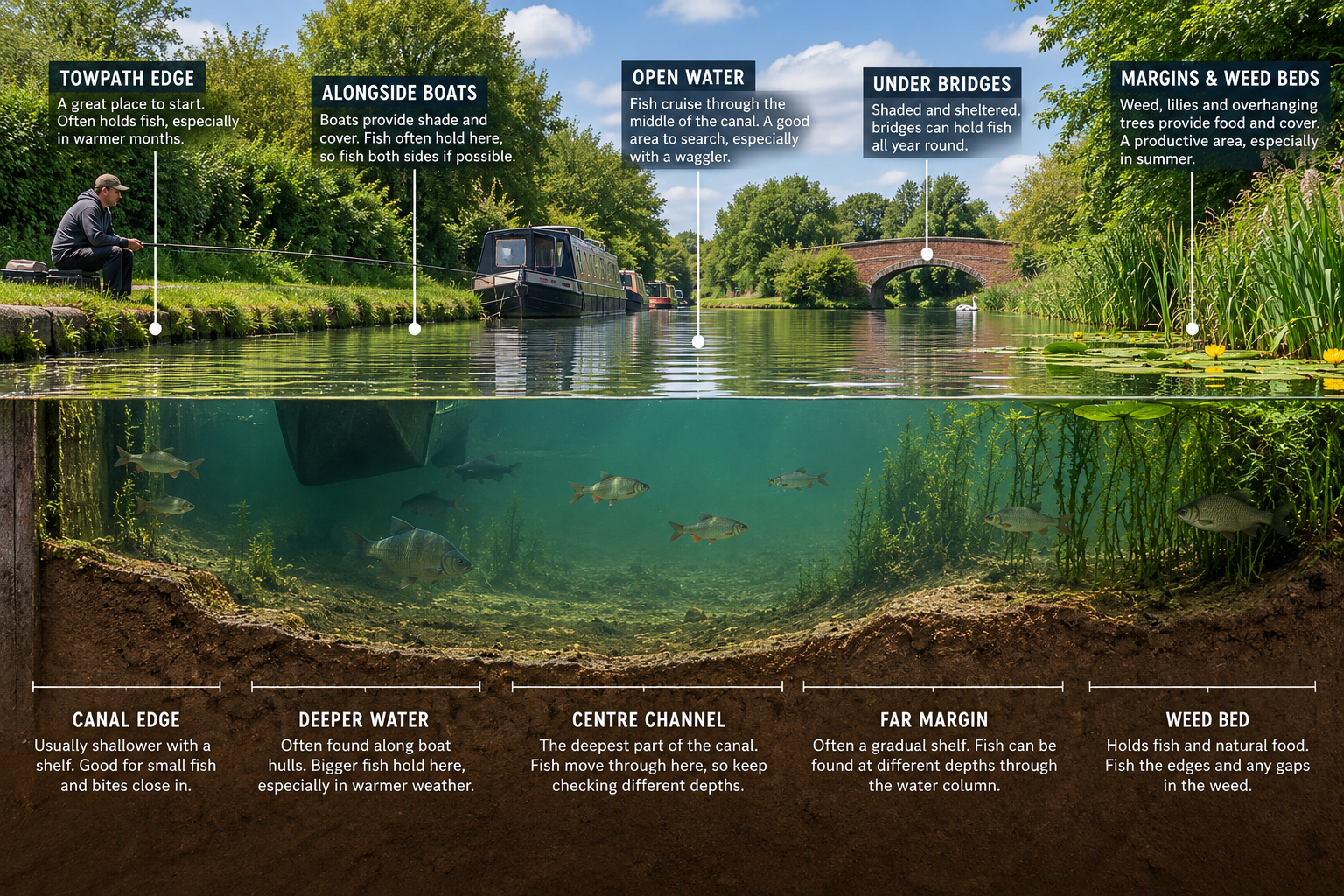
Don't just check one spot. Canals frequently have a distinctive profile. The water close to the bank may be relatively shallow before dropping down a shelf into the deeper central channel. A similar shelf may rise towards the opposite bank. These changes in depth are important because fish frequently patrol along them.
Once you've found the bottom, set your bait so it fishes close to it. Starting with the bait just touching or slightly above the bottom is a good general approach.
Where Should You Fish?
It can be tempting to immediately cast towards the opposite bank, but some of the best canal fishing can be surprisingly close. The near-side shelf is often worth investigating, particularly if there is vegetation or some depth close to the bank.
The bottom of the shelf where it meets the deeper channel can be an excellent feeding area.
The central channel is another obvious target, particularly during colder weather or when boat traffic regularly disturbs the canal.
Finally, investigate the far-bank shelf, especially if it has reeds, bushes, moored boats or other cover.
Rather than constantly casting everywhere, choose one or two promising areas and feed them accurately.
A canal cross-section showing several productive areas to target, from the near and far margins to deeper water, the central channel, weed beds, boats and bridges.
Maggots Are Hard to Beat
For simple canal fishing, it's difficult to look beyond maggots. A single red, bronze or white maggot presented on a small hook can catch almost anything swimming in a canal.
Start with one maggot. If you're getting plenty of bites or want to offer a slightly larger bait, try two.
Other useful canal baits include pinkies, casters, worms and bread. But beginners don't need to arrive with half a tackle shop's worth of bait. A pint of maggots can provide plenty of fishing while you learn the basics.
Feed Little and Often
One of the easiest mistakes to make is introducing too much bait. You are trying to encourage fish to compete for food without actually filling them up.
Start by feeding perhaps six to ten maggots around your float. Continue introducing small amounts regularly.
If you're getting lots of bites, you can increase the feeding slightly. If bites disappear, reduce it.
Accurate feeding is often more important than quantity. Ten maggots landing in a small area around your hook bait are usually more useful than 30 scattered across the canal.
A small amount of groundbait can also be useful, particularly when targeting roach and skimmers, but it isn't essential for your first canal session.
Reading the Float
Watching a float disappear is one of the simplest pleasures in fishing, but not every bite produces a dramatic indication.Sometimes the float will simply dip slightly. It may slowly sink beneath the surface, suddenly lift upwards or move sideways.
Strike when you see a positive movement that looks different from the normal movement of the water. The strike doesn't need to be aggressive. A controlled lift of the rod is usually enough to set a small hook.
You'll miss bites. Everyone does.
Learning which movements are genuine bites is part of becoming a better float angler.
Marvelist
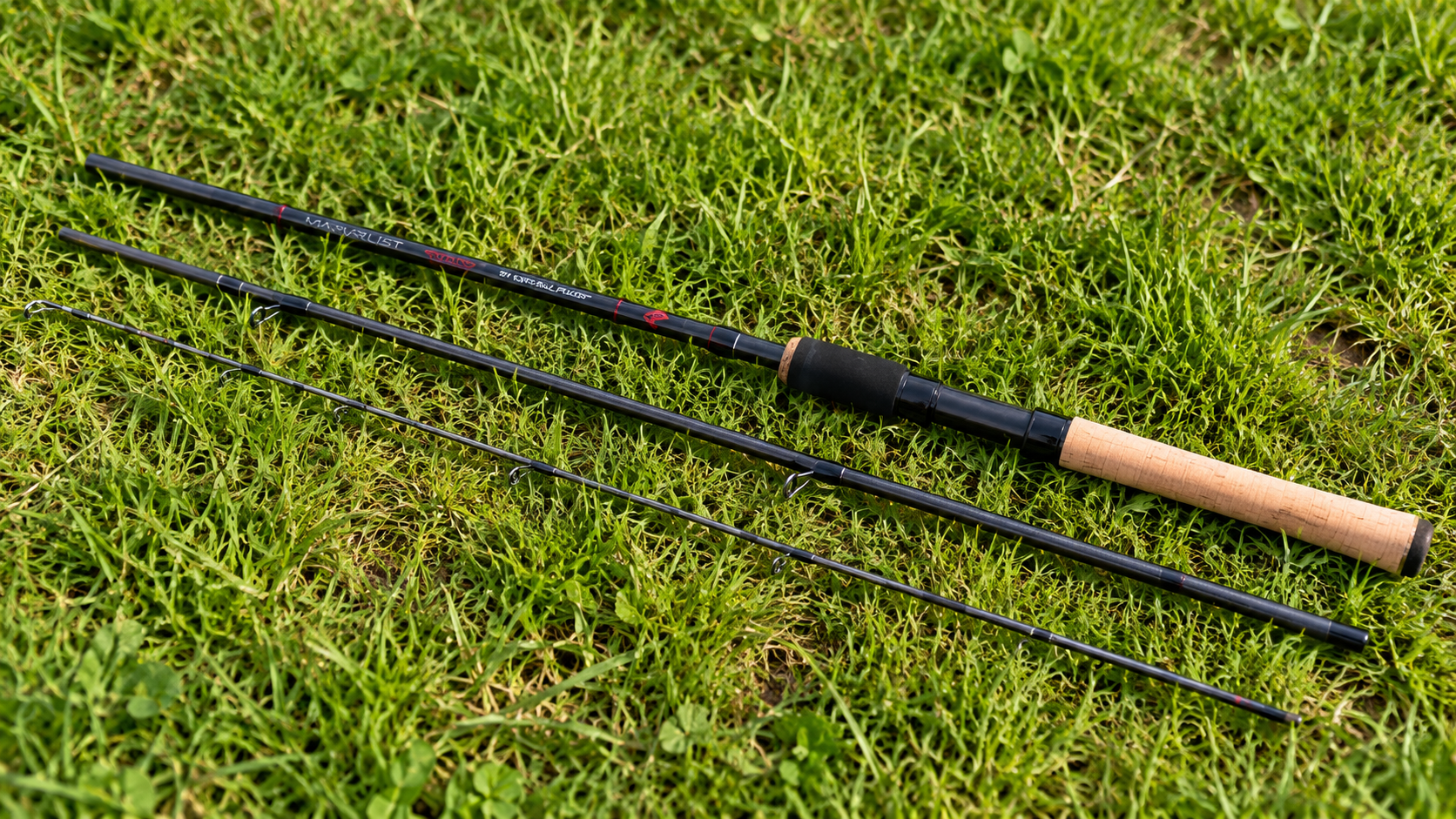
Nytro Marvelist Natural Float Rod
A slim and lightweight 40T carbon float rod developed in collaboration with former Float Fishing World Champion Tommy Pickering. Its crisp action provides excellent line and float control, while the softer tip cushions lighter hooklengths and helps reduce hook pulls when playing fish.
Best for: Traditional float fishing, silverfish, roach, dace, chub and light river or stillwater work
92/100Our verdict score
What we like
✓Slim, lightweight 40T carbon blank
✓Excellent line and float control
✓Crisp, responsive action
✓Soft tip helps protect lighter hooklengths
✓Reduced risk of hook pulls
✓Lightweight Minima-style guides
✓Developed with Tommy Pickering
✓Light and Medium actions available
✓- Good current value at £87.99
Worth knowing
−Not intended for particularly heavy float fishing
−More expensive than some entry-level float rods
−- Anglers regularly targeting carp or larger barbel may prefer a more powerful rod
Prices checked 4 Oct 2026. We may earn a commission if you buy through these links — it never changes what we recommend.
What About Boats?
If you're fishing a navigable canal, boats are simply part of the experience.
When one approaches, retrieve your tackle if necessary and allow it to pass safely. Don't assume the swim has been ruined.
A passing boat can temporarily disturb the bottom and move your feed around, but this can sometimes encourage fish to start searching for food.
Check your depth again if necessary and continue feeding carefully. Fish living in busy canals are accustomed to boat traffic.
Keep Moving If Nothing Happens
Canal fish can be tightly grouped together, particularly during colder weather. If you've fished carefully for a reasonable period without receiving a single indication, consider trying another area.
Moving 50 metres along the towpath can sometimes completely change the session.
Look for features such as bridges, locks, turning bays, reed beds, overhanging vegetation and changes in canal width.
Even subtle differences can concentrate fish
A Perfect Way to Learn Float Fishing
Canal fishing doesn't need to be complicated. Take a light rod, small reel, a few floats, some split shot, small hooks and a tub of maggots. Find a comfortable swim, carefully establish the depth and start feeding small quantities of bait.
Pay attention to what happens. If you're catching small roach, perch and gudgeon, don't immediately start changing everything in search of something bigger. You're already learning some of the most important skills in coarse fishing: presentation, feeding, depth control and bite detection. There will always be more sophisticated rigs and techniques to experiment with later.
For your first canal sessions, a small float and a few maggots are often all you need.