How to Set Up a Waggler Float for Fishing on the Drop
Learn how to set up a waggler float for fishing on the drop, including float choice, shotting patterns, depth, feeding and how to catch fish as your bait falls naturally through the water.
3 September 2026 · 5 min read
Some links in this guide are affiliate links. If you buy through them we may earn a small commission at no extra cost to you — it never influences what we recommend.
Tackle worth buying
Shop rods, reels, terminal tackle and more at Total Fishing Tackle.
What Does Fishing on the Drop Mean?
When you throw loose maggots, casters or other small particles into your swim, they don't immediately reach the bottom.
They slowly sink through the water.
Fish soon learn to intercept these falling baits, particularly when you're feeding small amounts regularly.
Fishing on the drop attempts to make your hook bait behave in a similar way.
Instead of dragging your bait quickly towards the bottom with heavy shot, you allow it to sink slowly through the feeding zone.
A fish can therefore take your bait at almost any depth.
Choosing the Right Waggler
A straight waggler is an excellent choice for this style of fishing.
You don't generally need a particularly large float. Choose one that's heavy enough to cast accurately to the area you're feeding while remaining sensitive enough to register delicate bites.
For relatively short-range stillwater fishing, a small straight waggler is usually ideal.
Insert wagglers can also work well when bites are particularly delicate.
The float should be attached bottom end only, which is the defining feature of a traditional waggler setup.
Attaching the Waggler
There are several ways to attach a waggler, but the simplest setup uses split shot.
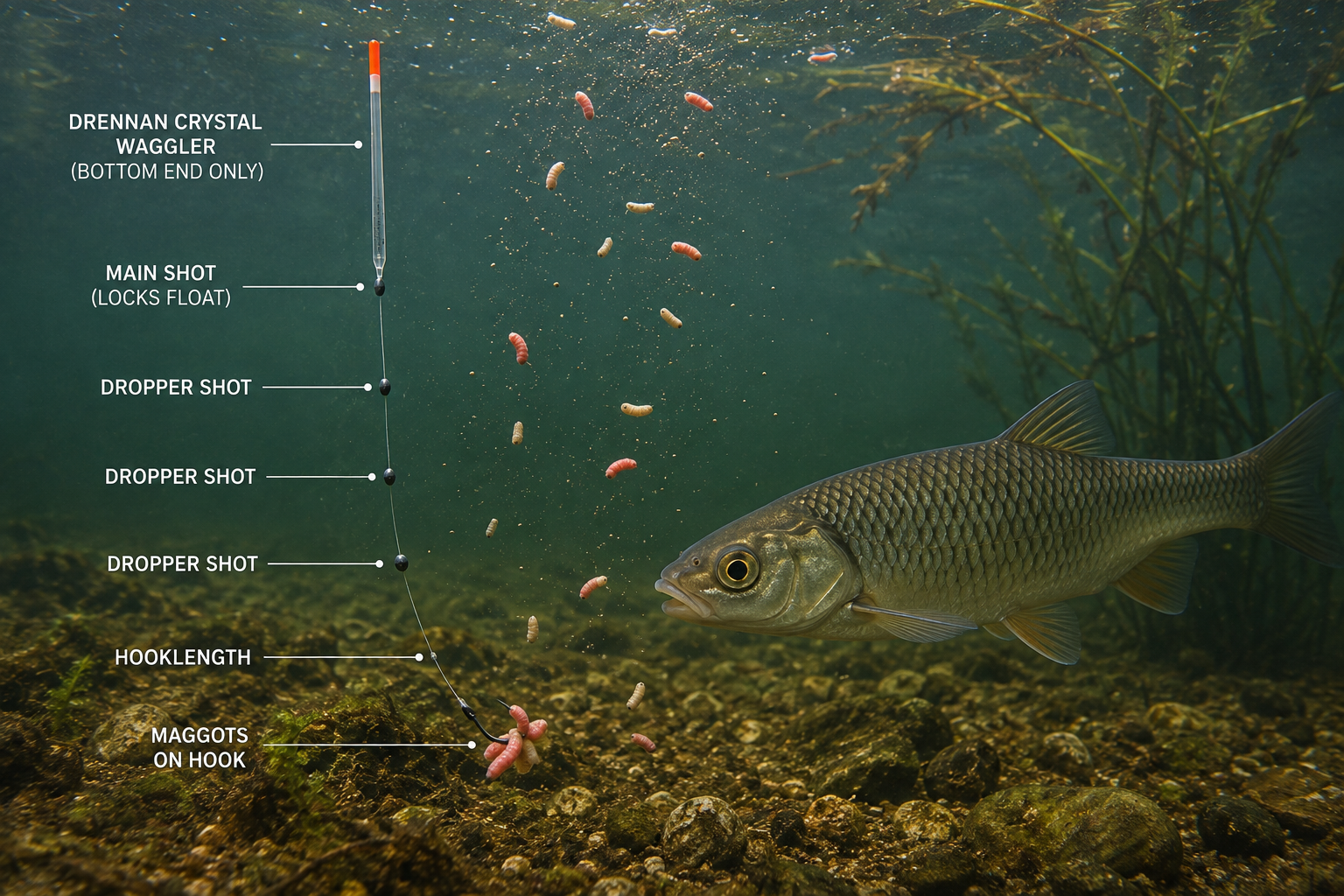
Place the float onto your main line and lock it in position using shot immediately either side of the float's bottom eye.
Most of the weight required to cock the float should be concentrated here.
This is important when fishing on the drop.
You want enough weight around the float to make casting easy while leaving only very small shot further down the line.
The hook bait can then descend slowly rather than being pulled rapidly towards the bottom.
Setting the Depth
Before you start fishing, establish the depth of your swim.
Use a plummet to find the bottom and adjust your float accordingly.
Even though you're deliberately fishing through the water, knowing the full depth gives you an important reference point.
For example, if your swim is six feet deep, you know exactly how much water your bait has to travel through before reaching the bottom.
Initially, set the rig so the bait can eventually reach close to the bottom.
You can then shorten the depth later if the fish are obviously feeding higher in the water.
The Shotting Pattern
The shotting pattern is what makes this rig different from a conventional bottom-fishing waggler setup.
After placing the bulk of the weight around the float, use a series of small split shot spaced down the line.
For example, you might have three or four small shot positioned at intervals between the float and hook.
The exact spacing isn't critical.
What matters is creating a gradual fall.
You can begin with the shot relatively evenly spaced and adjust the rig depending on how the fish respond.
The shot nearest the hook should be small.
This allows the final section of line and your hook bait to sink particularly slowly and naturally.
A Simple Starting Rig
A straightforward setup might look like this:
Waggler
↓
Main locking shot around float
↓
Small dropper shot
↓
Small dropper shot
↓
Small dropper shot
↓
Hooklength
↓
Size 18–20 hook with single maggot
The distance between each small shot can be around 12–18 inches as a starting point, normally shirt button style. Don't become obsessed with exact measurements you should be able to get it pretty close by eye. The objective is simply to produce a controlled, progressive fall through the water.
Use Light Hook Baits
Maggots are probably the easiest bait for learning this method. A single maggot on a small hook sinks relatively slowly and closely resembles the loose feed you're introducing. Casters are another excellent option. My faviorate bait is small pieces of bread, particularly for roach and rudd. Its cheap and easy to get hold of even late at night.
Avoid unnecessarily large hooks or heavy baits because they can change the rate at which the final part of the rig falls.
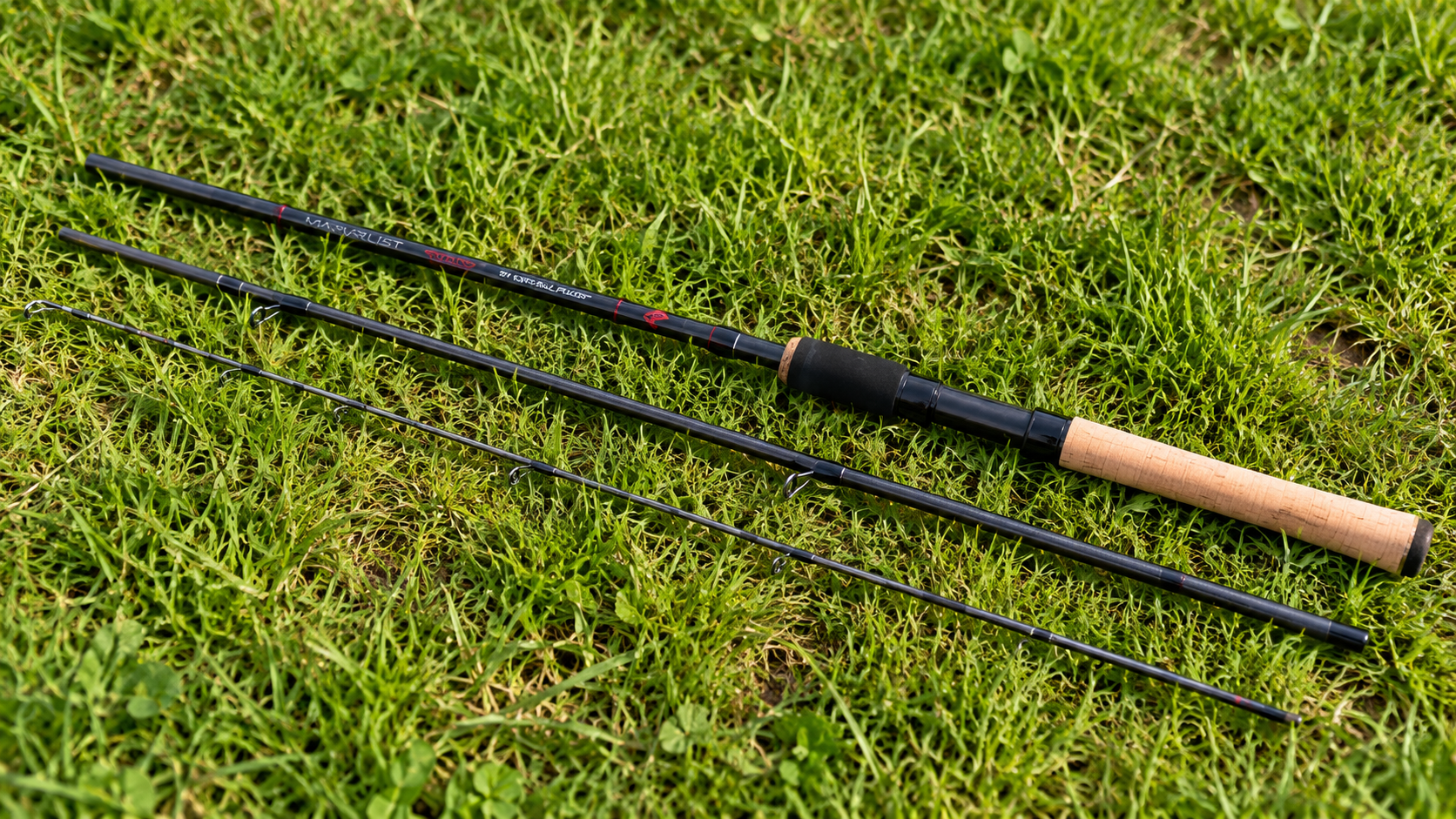
Nytro Marvelist Natural Float Rod
A slim and lightweight 40T carbon float rod developed in collaboration with former Float Fishing World Champion Tommy Pickering. Its crisp action provides excellent line and float control, while the softer tip cushions lighter hooklengths and helps reduce hook pulls when playing fish.
Best for: Traditional float fishing, silverfish, roach, dace, chub and light river or stillwater work
What we like
- Slim, lightweight 40T carbon blank
- Excellent line and float control
- Crisp, responsive action
- Soft tip helps protect lighter hooklengths
- Reduced risk of hook pulls
- Lightweight Minima-style guides
- Developed with Tommy Pickering
- Light and Medium actions available
- - Good current value at £87.99
Worth knowing
- Not intended for particularly heavy float fishing
- More expensive than some entry-level float rods
- - Anglers regularly targeting carp or larger barbel may prefer a more powerful rod
Prices checked 4 Oct 2026. We may earn a commission if you buy through these links — it never changes what we recommend.
Feeding Is Essential
Fishing on the drop works best when combined with regular loose feeding. Instead of introducing a large amount of bait at the beginning, feed small quantities frequently. Little and often works to get the fish moving.
With maggots, perhaps start with half a dozen or so every cast.Cast your rig into the feeding area and then introduce another small amount of bait around your float. You are trying to create a steady stream of individual food items falling through the water. What you are trying to do is get the group of fish competing for them.
Your hook bait is simply another maggot sinking among the loose offerings.
Accuracy matters with this method. Try to cast and feed the same area repeatedly rather than spreading bait across a large section of water. You spread the feed you spread the fish, less bites, less fish and more time for each fish to check the bait before it takes it.
Watch the Float Immediately
One of the biggest mistakes when fishing on the drop is casting out and then waiting for the rig to settle before paying attention. A fish may take your bait seconds after it hits the water. If you get the fish really going then the splash of the float is enough to get them charging over to get to the food first.
Watch your float from the moment it lands. Your dropper shot are sinking progressively, the float itself may take a little time to settle completely. Learn how long this normally takes. If the float suddenly stops cocking, disappears unexpectedly or behaves differently from normal, strike. A fish may have intercepted your bait on its way down.
Lift Bites
Not every bite pulls the float underwater. If a fish takes your bait and lifts one of the small dropper shot, the float may actually rise in the water. This is a classic lift bite.
You may see more of the float tip than usual or the float might suddenly lie at an unusual angle.
Strike.
Fishing on the drop is partly about recognising anything that interrupts the normal behaviour of your rig.
Adjusting the Rig as Fish Move
Fish don't necessarily remain at the same depth throughout a session. You may start catching close to the bottom before gradually getting bites halfway down. This often happens when regular feeding encourages fish to rise through the water.
If you're consistently getting bites before the bait reaches the bottom, consider fishing shallower. You can also spread your shot further apart to slow the fall. Add more shot around the float and remove droppers. If you are not getting bites and there are fish in the swim you need to find their depth and change things up.
Alternatively, if you're struggling with small fish attacking the bait near the surface and want to reach better fish underneath them, move your shot closer together. That gets the bait through the upper layers more quickly and down to to lower levels.
Keep It Simple
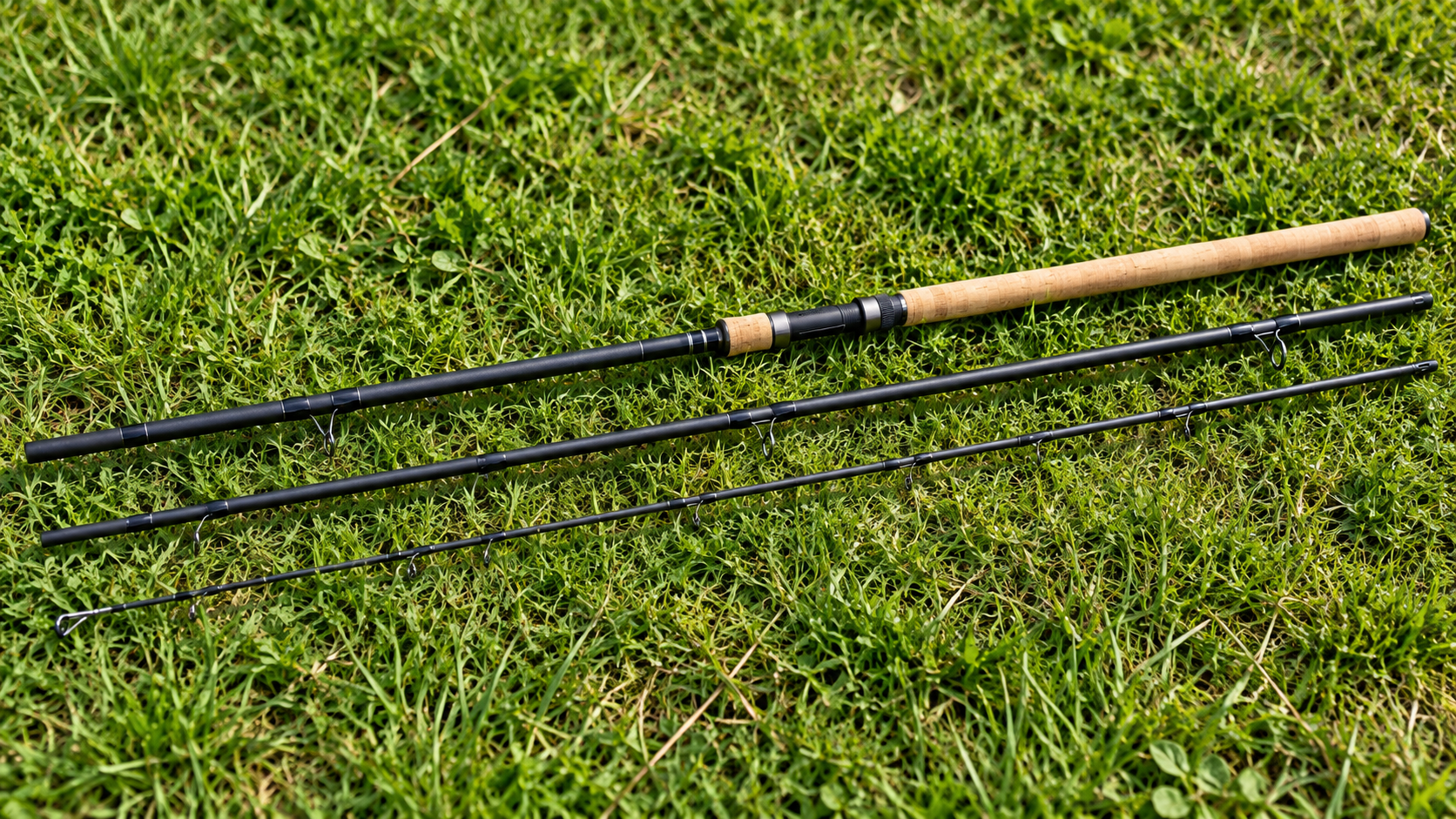
Korum Glide Power Float Rods
A powerful yet responsive float rod designed for anglers targeting larger fish on rivers and stillwaters. The combination of parabolic carbon through the butt and middle sections with a high-modulus carbon tip provides a forgiving fish-playing action while retaining the fast recovery needed for accurate casting and quick striking.
Best for: River trotting, power float fishing and targeting larger coarse fish
What we like
- Powerful but forgiving fish-playing action
- Suitable for rivers and stillwaters
- High-modulus carbon tip gives fast recovery
- Suitable for fixed-spool reels and centrepins
- Handles 4–10lb main lines
- Casting weights up to 18g
- Quality full cork handle
- Available in 13ft and 12–14ft configurations
- - Good value at around £74.99
Worth knowing
- More powerful than necessary for very light float fishing
- Anglers targeting predominantly small silverfish may prefer a lighter rod
- - Longer models require more transport and storage space
Prices checked 4 Oct 2026. We may earn a commission if you buy through these links — it never changes what we recommend.
The monthly catch-up
One email a month: new guides, tackle worth buying and waters we've fished.
Related guides
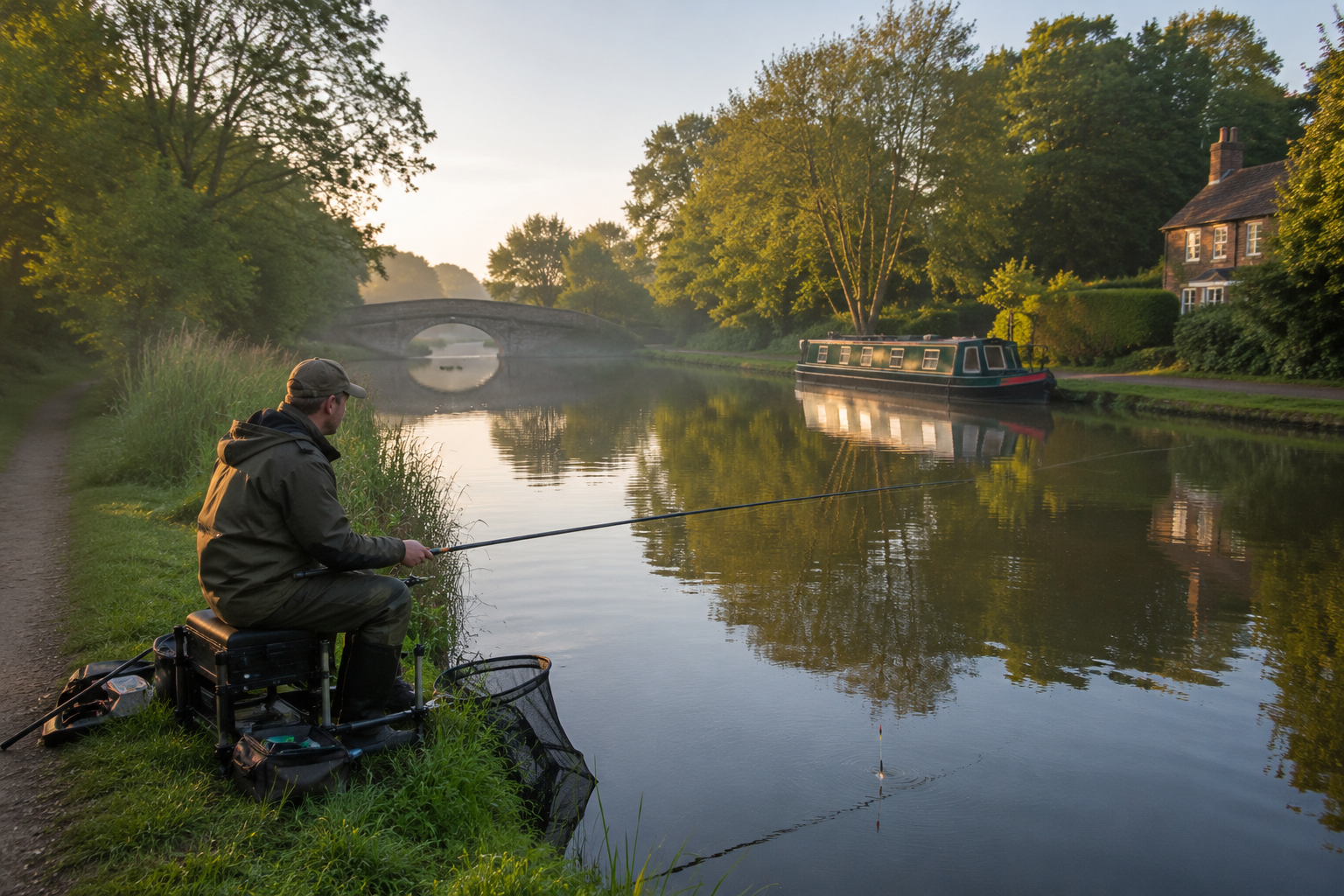
Float Fishing on Canals: A Simple Starting Method
Canals are the most under used beginner venue in the country. One rod, one float and a pint of maggots is genuinely all you need.
12 Aug 2026 · 4 min read
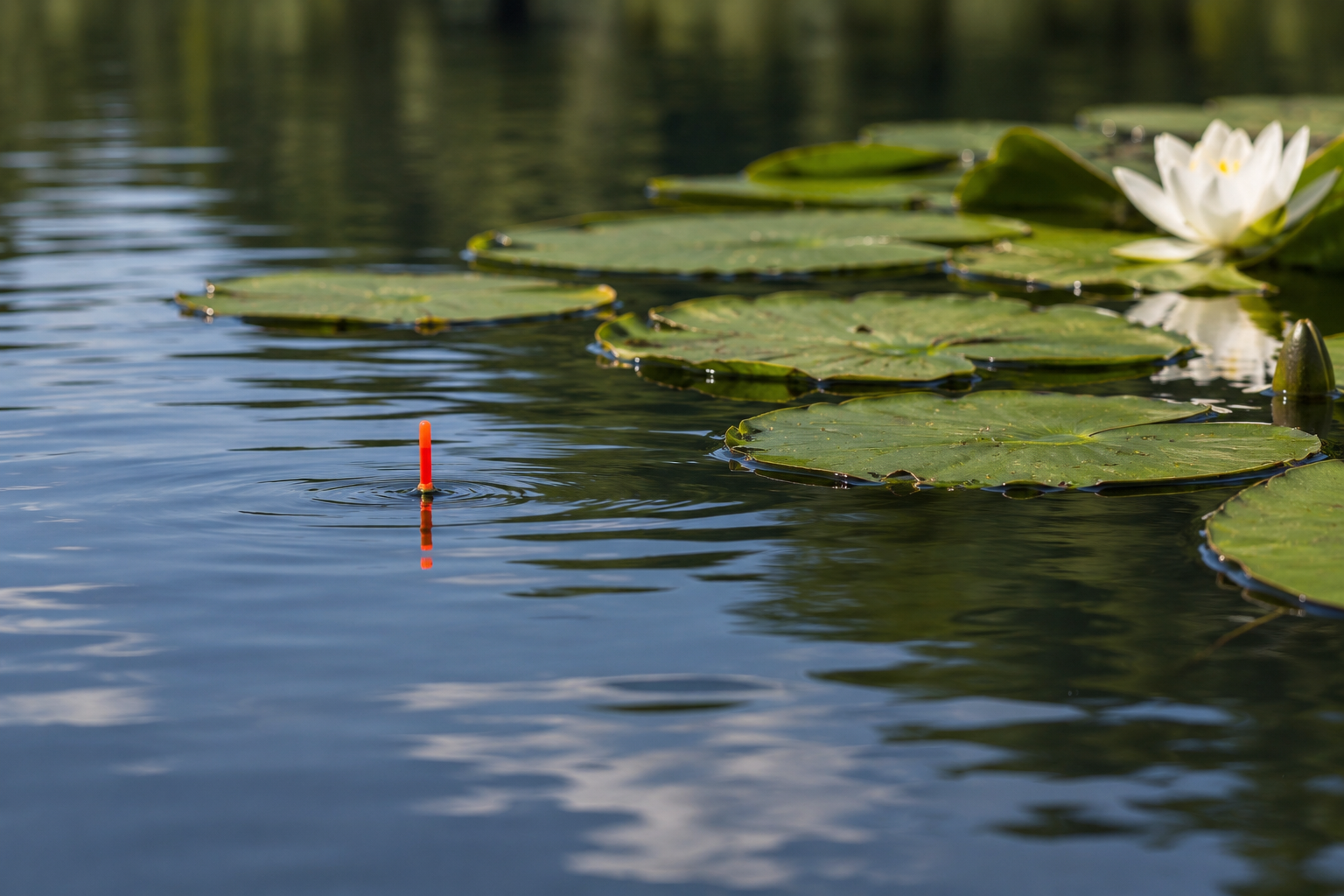
Waggler Fishing on Stillwaters: A Beginner’s Guide
Learn the basics of waggler fishing on stillwaters, from choosing the right tackle and setting the depth to feeding your swim, picking baits and spotting bites.
9 Jul 2026 · 5 min read
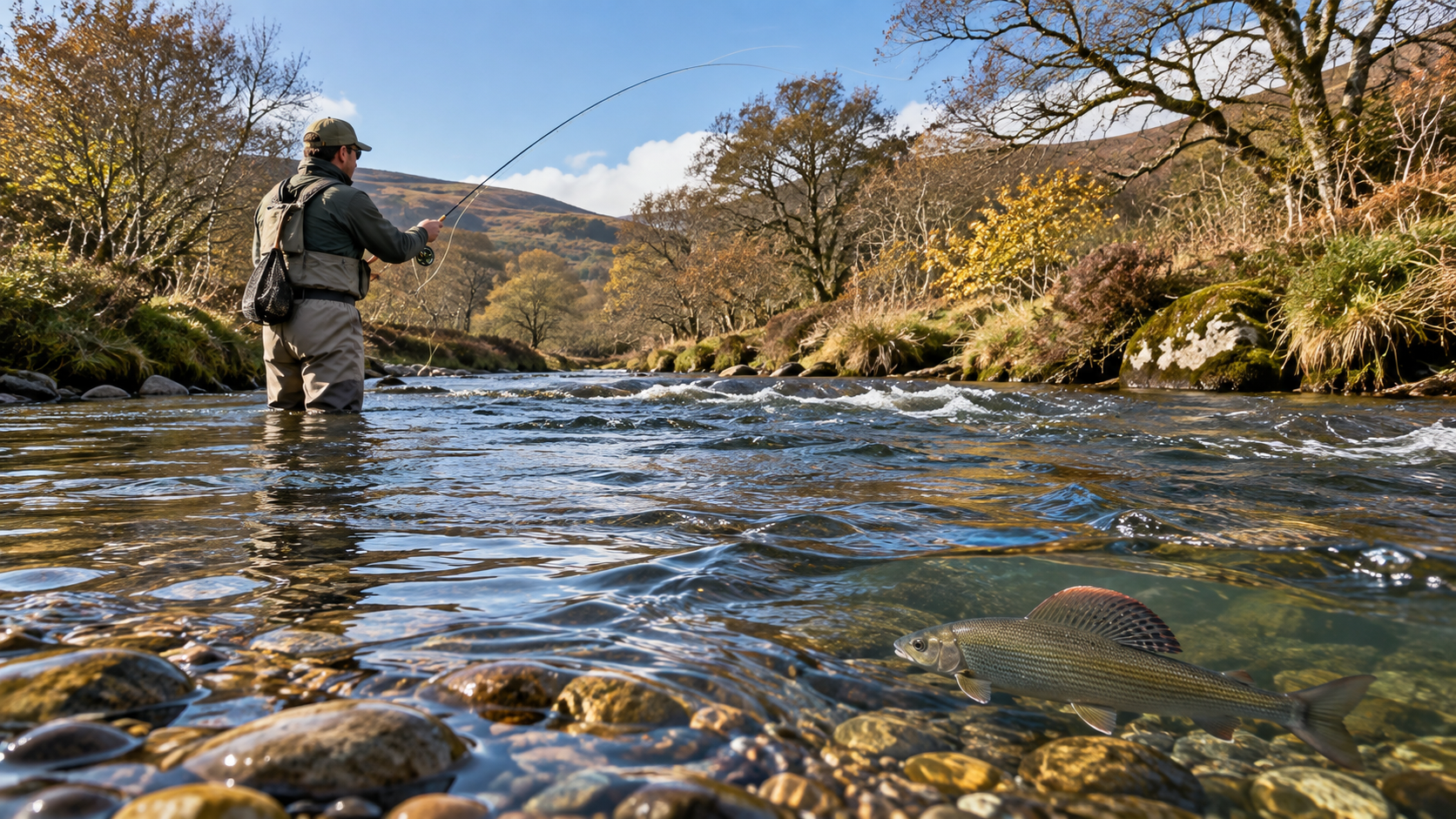
A Beginner’s Guide to Fly Fishing for Grayling
New to grayling fishing? This beginner’s guide explains the essential tackle, flies and techniques you need to start fly fishing for grayling on rivers, from finding fish to making a natural drift.
26 Sept 2026 · 7 min read