Fly Fishing for Beginners: A Simple Guide to Getting Started
New to fly fishing? Learn the essential tackle, flies, casting basics and simple techniques you need to start catching trout with confidence.
26 August 2026
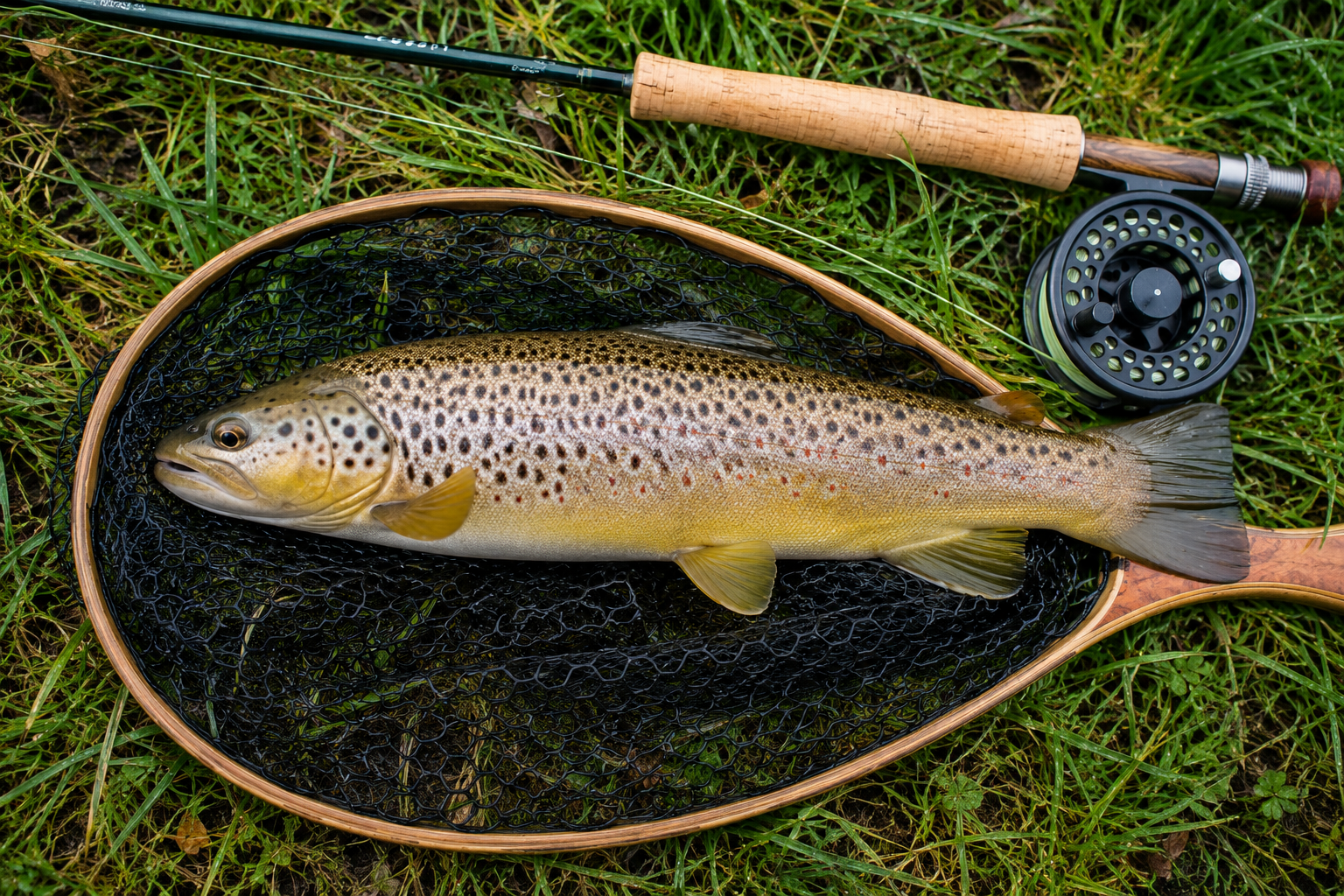
Fly fishing can look complicated when you first see an experienced angler casting a line across a river. There are different rods, lines, leaders and hundreds of artificial flies to choose from.
Fortunately, getting started is much simpler than it appears.
With a basic fly fishing outfit, a small selection of flies and a little casting practice, you can begin catching fish without spending a fortune on specialist equipment.
In the UK, fly fishing is most commonly associated with trout, but the same techniques can also be used for grayling and even coarse fish.
Tackle worth buying
Shop rods, reels, terminal tackle and more at Total Fishing Tackle.
What Is Fly Fishing?
Unlike conventional fishing, where the weight of a bait or lure helps you cast, fly fishing uses the weight of the fly line itself.
The artificial fly is usually extremely light. By moving the rod backwards and forwards, you use the heavier line to carry the fly towards the fish.
Artificial flies can imitate insects, larvae, small fish and other creatures that fish naturally eat.
Some float on the surface, while others are designed to sink.
Your First Fly Fishing Setup
Fly fishing tackle uses a numbered weight system. You'll see rods and lines described as #4, #5, #6 and so on.
For a beginner wanting a versatile setup for trout fishing, a 9ft #5 or #6 fly rod is a sensible starting point.
Match it with a reel and floating fly line of the same weight.
A balanced outfit makes learning to cast considerably easier.
You don't need an expensive reel for most freshwater fly fishing. Unlike some other types of fishing, the reel often spends much of its time simply holding your line.
A ready-made fly fishing starter kit can therefore be a good option for your first season.
Understanding Leaders
You don't attach the fly directly to the thick fly line.
Instead, a length of thinner line called a leader connects the fly line to your fly.
Most beginners will find tapered leaders easiest to use. These gradually become thinner towards the fly, helping the cast turn over and land more naturally.
The thin section attached to the fly is often called the tippet.
Don't become too concerned about complicated leader formulas when you're starting. A straightforward tapered leader is perfectly adequate for most beginner trout fishing.
Which Flies Do You Need?
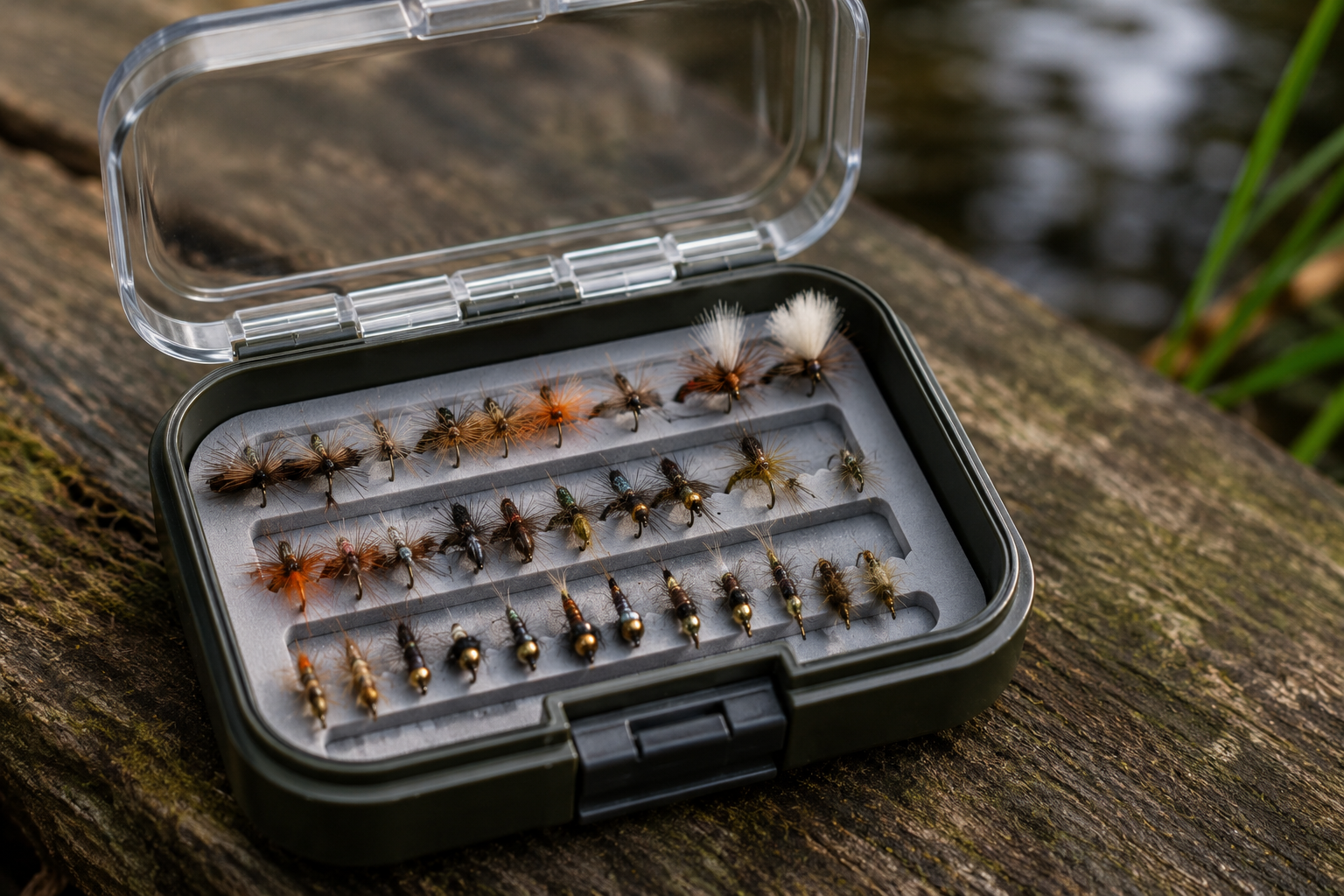
Fly selection can become incredibly complicated, but beginners don't need hundreds of patterns.
Most trout flies fall into three broad groups.
Dry Flies
Dry flies float on the surface and usually imitate adult insects.
Fishing a dry fly can be particularly exciting because you can actually see the fish rise and take it.
Nymphs
Nymphs are designed to imitate the underwater stages of aquatic insects.
Because trout spend a great deal of their time feeding beneath the surface, nymphs can be extremely effective.
Lures and Streamers
These are generally larger flies designed to imitate small fish or other prey, or simply provoke a fish into attacking.
For your first few trips, carry a small selection of different flies rather than filling several boxes with dozens of patterns.
Learning to Cast
Casting is usually the part of fly fishing that worries beginners most.
The good news is that you don't need to cast enormous distances to catch fish.
Start by practising a basic overhead cast somewhere with plenty of space behind you.
The key is allowing the line to straighten behind you before making the forward cast.
Trying to cast too quickly is a common beginner mistake.
Slow everything down.
You should feel the rod loading as the line moves behind you before smoothly accelerating forwards and stopping the rod.
Twenty minutes of casting practice on grass can be more useful than spending an entire fishing session struggling with your technique.
Where Should You Fish?
One of the easiest ways to begin is at a stocked trout fishery.
These waters usually contain a reasonable population of fish and often have plenty of open space, making casting easier.
Rivers can provide fantastic fly fishing, but flowing water adds another layer of difficulty. You'll need to think about currents, presentation and where trout are likely to hold.
If you're fishing a river, look for changes in current, deeper pools, undercut banks and areas around rocks or other features.
Remember that you'll normally need permission or a ticket to fish, and you should always check the rules for the water before starting.
Don't Ignore What's Happening Around You
Fly fishing is largely about observation.
Watch the water.
Are fish rising?
Can you see insects flying above the surface?
Are there insects sitting on the water?
If trout are regularly rising, trying a dry fly makes sense. If nothing is happening at the surface, fishing a nymph beneath the water may be a better option.
You don't need to identify every insect you see.
Simply noticing its approximate size and colour can help you choose a fly that looks similar.
Essential Equipment
Beyond your rod, reel and flies, there are a few items worth carrying.
You'll need a landing net, forceps for removing hooks and a pair of snips for cutting line.
Polarised sunglasses are particularly useful because they reduce glare from the water and can make it easier to spot fish and underwater features.
They're also an important piece of eye protection when you're learning to cast a hook backwards and forwards.
Keep Your First Sessions Simple
Fly fishing has an enormous amount of depth, but you don't need to understand everything immediately.
Start with a balanced rod and reel, floating line, tapered leader and a small collection of proven flies.
Concentrate on developing a smooth cast and learning how your fly behaves in the water.
Most importantly, watch what is happening around you.
With experience, you'll begin noticing insects, currents, feeding fish and subtle changes in the water that previously meant nothing.
That's one of the great attractions of fly fishing.
You're not simply trying to catch a fish. You're gradually learning to read the water and understand how the fish are feeding.
The monthly catch-up
One email a month: new guides, tackle worth buying and waters we've fished.
Related guides
How to Choose Your First Fly Fishing Rod
Choosing your first fly rod doesn’t need to be complicated. Learn which rod weight, length, action and fly line will give you the best setup for starting trout fishing.
1 Jul 2026 · 5 min read
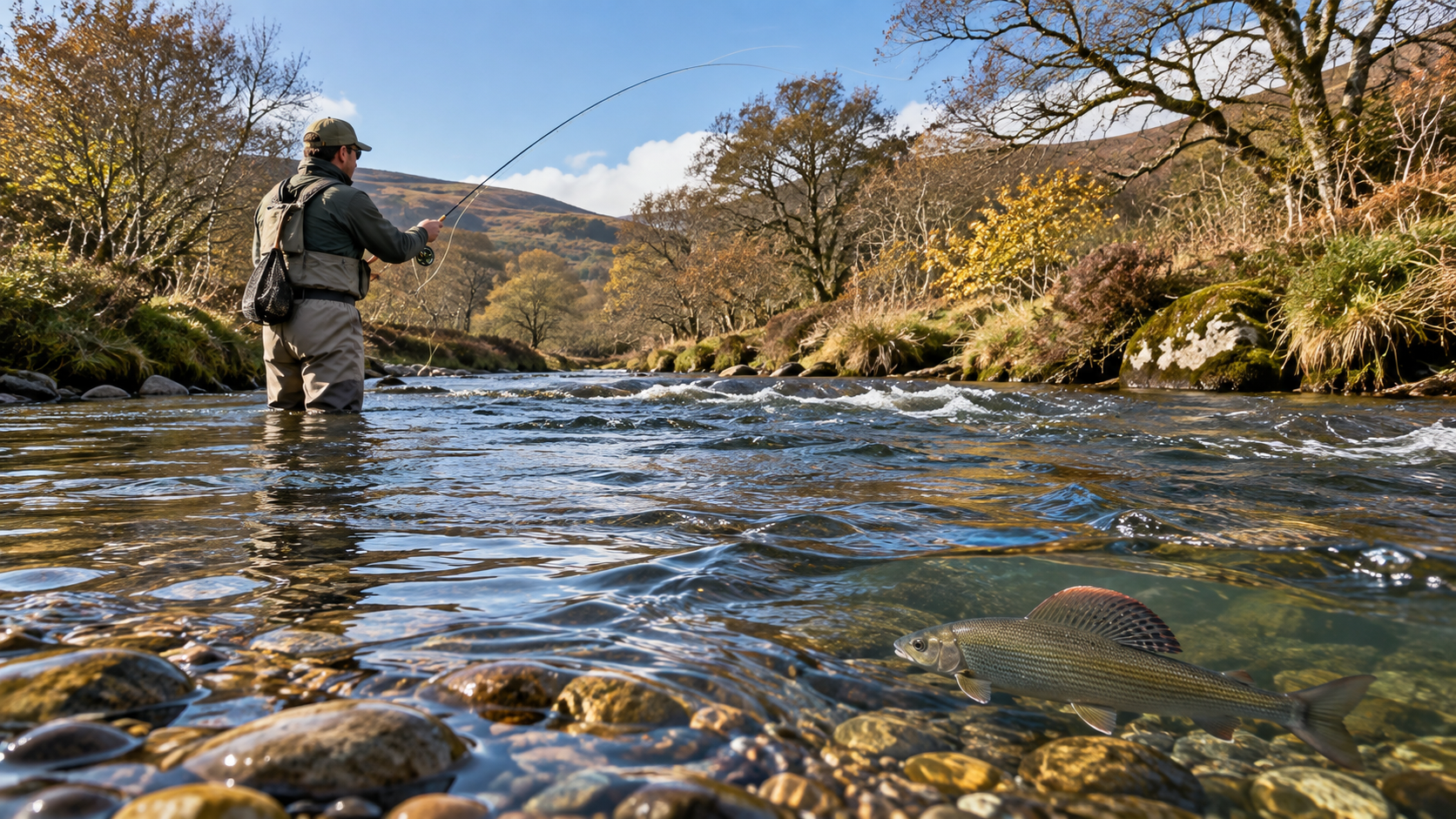
A Beginner’s Guide to Fly Fishing for Grayling
New to grayling fishing? This beginner’s guide explains the essential tackle, flies and techniques you need to start fly fishing for grayling on rivers, from finding fish to making a natural drift.
26 Sept 2026 · 7 min read
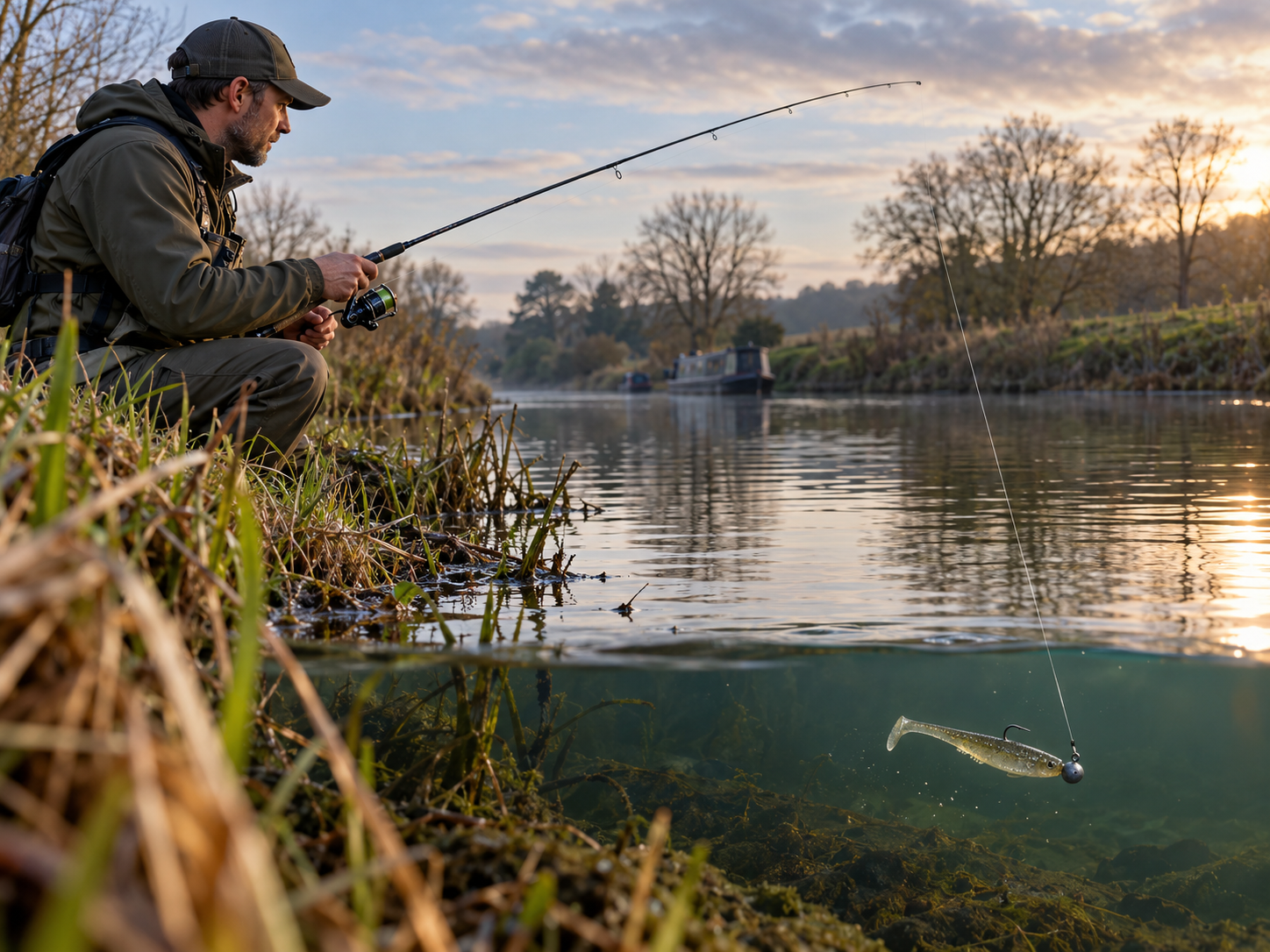
How to Fish Soft Plastic Lures: A Beginner’s Guide
A beginner-friendly guide to fishing soft plastic lures, covering depth control, jigging, steady retrieves, working the bottom and adapting your presentation to catch more predatory fish.
24 Sept 2026 · 6 min read