Gudgeon Fishing: A Guide to One of Britain’s Smallest Coarse Fish
The gudgeon may be small, but it remains one of Britain’s most enjoyable coarse fish to catch. Discover where to find gudgeon, the best baits and tackle to use, and simple float fishing methods for catching them on rivers, canals and stillwaters.
2 September 2026 · 4 min read
The gudgeon may be one of the smallest fish found in British rivers, canals and stillwaters, but it has played a surprisingly important role in coarse fishing. For generations of anglers, gudgeon were among the first fish they ever caught.
Small, willing to feed and often found in large numbers, gudgeon are ideal for beginners. They can also provide entertaining fishing for experienced anglers who simply want to enjoy a few hours catching fish on simple tackle.
Although few anglers deliberately target gudgeon today, finding them can often be a good sign that a river or canal supports a healthy population of small coarse fish.
What Is a Gudgeon?
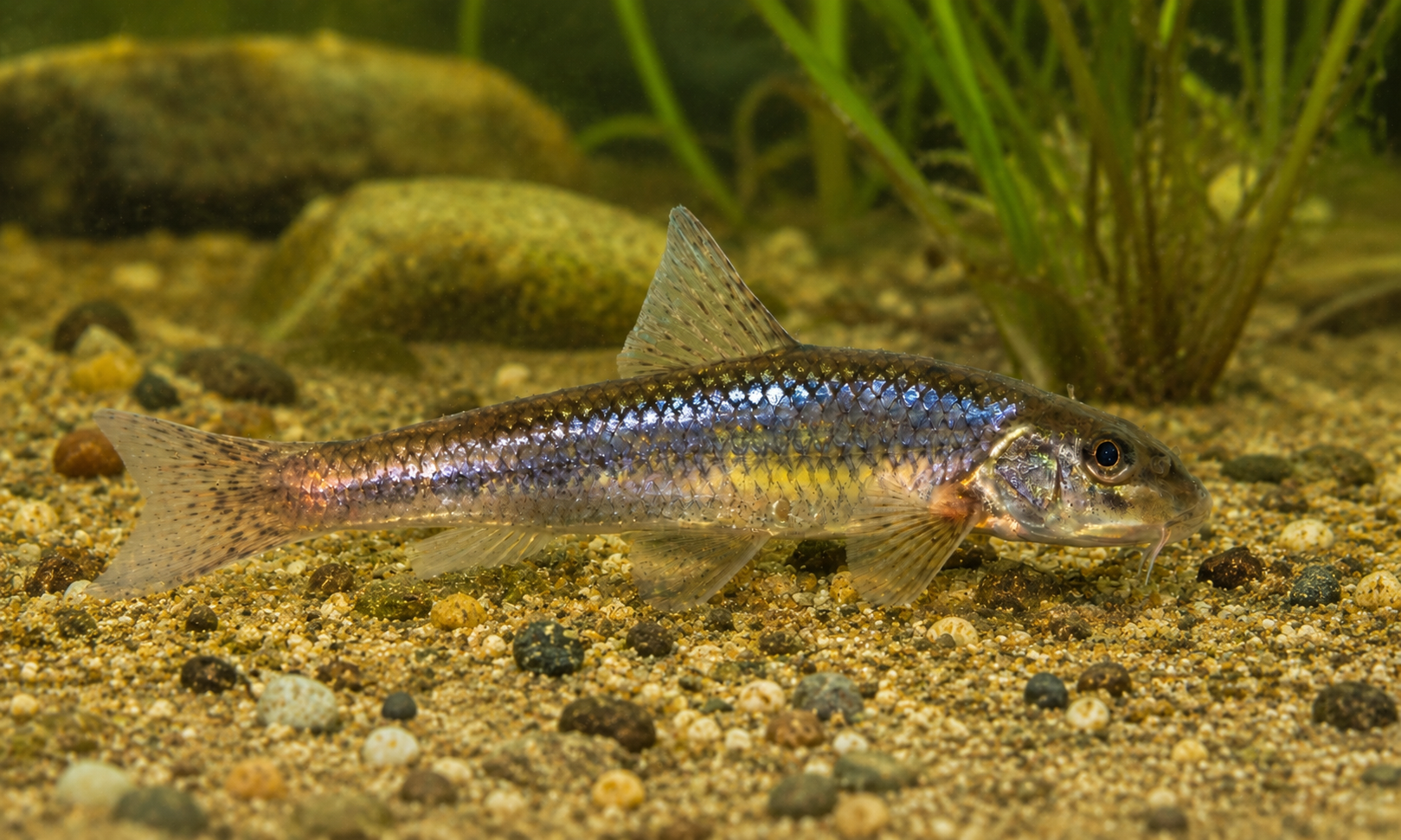
The gudgeon (Gobio gobio) is a small bottom-feeding member of the minnow family. It is native to Britain and is particularly associated with rivers and streams, although populations can also be found in canals, drains, lakes and other stillwaters.
Gudgeon have a distinctive appearance. Their bodies are generally brown or olive across the back, becoming lighter towards the belly, with a row of darker blotches running along the flanks.
One of their most recognisable features is the pair of small barbels positioned near the corners of the mouth. These help gudgeon locate food while searching across the bottom.
Most gudgeon caught by anglers are relatively small. A fish of 3–5 inches is typical in many waters, although considerably larger specimens are possible.
Despite their size, gudgeon are attractive little fish when examined closely, with patterned fins and subtle markings that provide excellent camouflage against gravel and stones.
Tackle worth buying
Shop rods, reels, terminal tackle and more at Total Fishing Tackle.
Where Can You Find Gudgeon?
Gudgeon are primarily bottom-dwelling fish and are commonly associated with clean gravel, sand and mixed riverbeds.
On rivers, good places to look include steady glides, deeper runs, areas below weirs and stretches where faster water begins to slow.
They can also be found close to bridges and other structures where changes in depth and flow create feeding opportunities.
In canals, gudgeon often live along the bottom of the central channel or around marginal shelves. They may also gather around locks and other areas where water movement disturbs natural food.
While gudgeon generally prefer reasonably clean water, they can survive in a wide variety of habitats.
What Do Gudgeon Eat?
Gudgeon spend much of their time searching along the bottom for small food items.
Their natural diet includes insect larvae, worms, tiny crustaceans and other aquatic invertebrates living among gravel, sand and silt.
This feeding behaviour makes gudgeon relatively straightforward to catch with conventional coarse fishing baits.
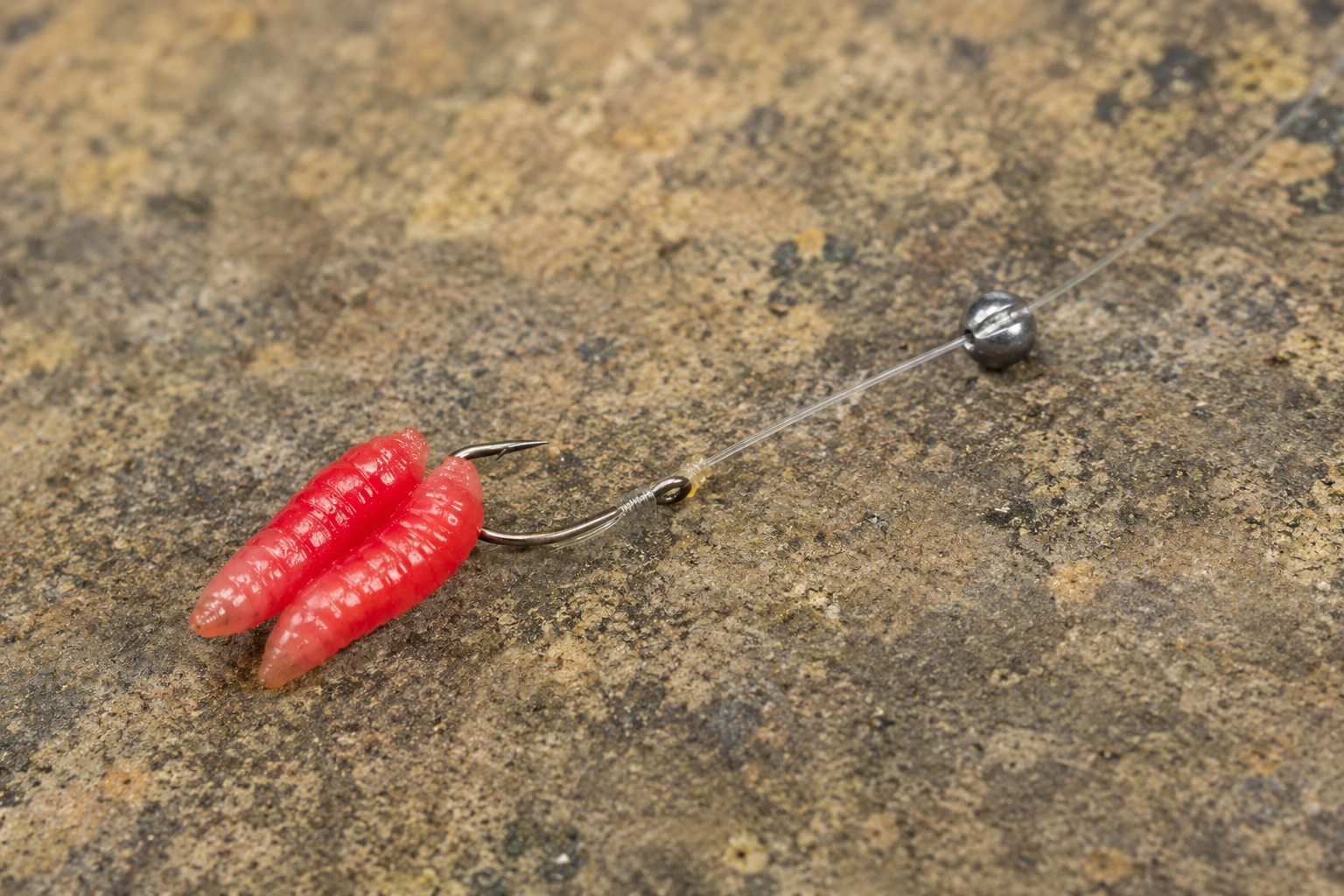
Maggots are probably the most reliable gudgeon bait. A single red or bronze maggot presented close to the bottom can produce bites very quickly when fish are present.
Other effective baits include pinkies, small pieces of worm and tiny pieces of bread.
When deliberately targeting gudgeon, small baits generally work better than large ones.
Tackle for Gudgeon Fishing
There is no need for heavy or complicated tackle.
A light float rod combined with a small fixed-spool reel is more than adequate. On small rivers and canals, a short lightweight rod can make the fishing particularly enjoyable.
Main line of around 2–3lb breaking strain is sufficient for dedicated gudgeon fishing, although most gudgeon are caught while anglers are using slightly heavier general coarse fishing tackle.
A small float should be selected according to the conditions.
On a slow river, canal or stillwater, a sensitive pole float or light waggler can work well. On flowing rivers, a small stick float allows the bait to be presented naturally through the swim.
Small hooks are normally best. Sizes around 18–22 are suitable when using maggots, pinkies and similarly small baits.
The important part of the setup is getting the bait close to the bottom.
Float Fishing for Gudgeon
Float fishing is one of the most enjoyable ways to catch gudgeon.
Begin by carefully plumbing the depth so you know exactly where the bottom is. The hook bait should normally be presented either touching the bottom or just dragging across it.
On a river, allow the float to travel naturally downstream while keeping control of the line.
Feed small quantities of loose maggots regularly rather than throwing large amounts of bait into the swim.
Gudgeon often respond quickly to loose feed.
Once a shoal moves into the area, bites can become almost continuous. The float may dip sharply, slowly disappear or simply hesitate as a fish picks up the bait.
Strike gently. Gudgeon have relatively small mouths and heavy strikes are unnecessary.
Fishing with a Whip or Pole
A pole or short whip is another excellent way to target gudgeon, particularly on canals and slow-moving rivers.
This method allows very precise presentation and makes it easy to repeatedly place a small bait over the same feeding area.
A simple light rig with a sensitive float, fine hooklength and small hook is usually all that's required.
Fishing this way can produce large numbers of fish when a good shoal of gudgeon is present.
It is also an excellent introduction to coarse fishing for children and beginners because bites can be frequent and the tackle is straightforward to use.
Feeding the Swim
Gudgeon rarely require large quantities of groundbait.
A small amount of fine groundbait can help attract fish, particularly when mixed so that it breaks down quickly on the bottom.
Loose-fed maggots are equally effective.
The objective is to create a small feeding area rather than provide the fish with a large amount of food.
Little and often is normally the best approach.
On flowing water, introducing a small amount of bait slightly upstream allows the current to carry particles towards the area where your hook bait is fishing.
Gudgeon as a Beginner’s Fish
There was a time when catching gudgeon was a familiar introduction to fishing for young anglers.
They are almost perfect for learning basic coarse fishing skills.
Gudgeon fishing teaches you how to plumb the depth, shot a float correctly, feed a swim, recognise bites and strike at the right moment.
More importantly, there is usually something happening.
Sitting behind motionless rods for several hours isn't always the best introduction to fishing. A productive gudgeon swim can provide regular bites and plenty of opportunities to practise handling fish correctly.
Handling Gudgeon
Although gudgeon are small, they should receive exactly the same care as larger fish.
Wet your hands before handling them and avoid keeping the fish out of the water unnecessarily.
Small fish can be particularly vulnerable to careless handling because they lose moisture quickly.
If you want to take a photograph, prepare everything beforehand, take the picture quickly and return the fish carefully to the water.
Gudgeon and Other Species
One interesting aspect of gudgeon fishing is that you never quite know what else might take your bait.
The same small maggot fished along the bottom can attract roach, dace, bleak, small perch and occasionally much larger fish.
On rivers, gudgeon frequently share swims with roach and dace.
This makes light tackle fishing particularly entertaining. You may spend half an hour catching three-inch gudgeon before suddenly hooking a decent roach or perch.
When Is the Best Time to Catch Gudgeon?
Gudgeon can be caught throughout much of the coarse fishing season, but warmer conditions generally produce the most consistent sport.
Summer and early autumn can be particularly productive, when the fish are actively feeding and large shoals may gather in suitable areas.
They can still be caught during colder weather, although feeding periods may become shorter and locating the fish becomes more important.
When river fishing in England and Wales, always check the relevant close-season rules and local fishery regulations before fishing.
Small Fish, Enjoyable Fishing
Gudgeon are unlikely to feature on many anglers' lists of dream catches.
They don't grow to impressive sizes and they certainly aren't going to strip 50 metres of line from your reel.
But fishing doesn't always have to be about catching the biggest fish.
A lightweight float, a handful of maggots and a productive river or canal can provide several hours of simple, enjoyable fishing.
For beginners, gudgeon offer an excellent introduction to coarse fishing. For experienced anglers, they can be a reminder that sometimes the simplest fishing is still some of the most enjoyable.
The monthly catch-up
One email a month: new guides, tackle worth buying and waters we've fished.
Related guides
The Best Baits for Chub: What to Use and When
Discover the best baits for catching chub and when to use them. From bread and maggots to worms, cheese and pellets, this guide covers proven chub baits for UK rivers.
13 Sept 2026 · 5 min read
A Beginner’s Guide to Chub Fishing
Learn how to catch chub with this beginner-friendly guide. Discover where to find chub, the best baits to use and simple float, ledger and surface fishing techniques.
13 Sept 2026 · 5 min read
Dace Fishing: A Simple Guide to Catching River Dace
Learn how to catch dace on rivers with this simple guide covering the best baits, tackle, swims, feeding techniques and how to trot a float for this fast, hard-fighting coarse fish.
3 Sept 2026 · 5 min read