Learn how to catch mackerel from a kayak using feathers, including the tackle, rigs and techniques you need to find fish and enjoy safe, productive kayak fishing.
6 September 2026
Fishing for mackerel from a kayak is one of the simplest and most enjoyable ways to catch sea fish during the warmer months. You don't need complicated tackle, expensive bait or a large boat. A set of feathers, a suitable rod and a small selection of weights can be enough to put you amongst the fish.
A kayak also gives you an advantage over shore anglers. You can quietly cover water, follow moving shoals and reach deeper areas that may only be a relatively short paddle from the coast.
For beginners to kayak fishing, mackerel are an excellent species to target. However, fishing from a kayak introduces risks that don't exist when fishing from the beach, so conditions and safety equipment should always come before catching fish.
Advertisement
Tackle worth buying
Shop rods, reels, terminal tackle and more at Total Fishing Tackle.
Around much of the UK, mackerel move closer inshore as the water warms. Fishing generally improves through late spring and summer, with good sport often continuing into early autumn.
Rather than concentrating entirely on the calendar, look for signs of feeding activity.
Diving gulls and terns are particularly useful because they often indicate small baitfish being pushed towards the surface. You may also see patches of disturbed or apparently boiling water as mackerel attack beneath them.
Don't automatically paddle directly into a feeding shoal. Stop short and drift towards the fish where possible. A kayak is quiet, but repeatedly paddling through a shoal can still disturb it.
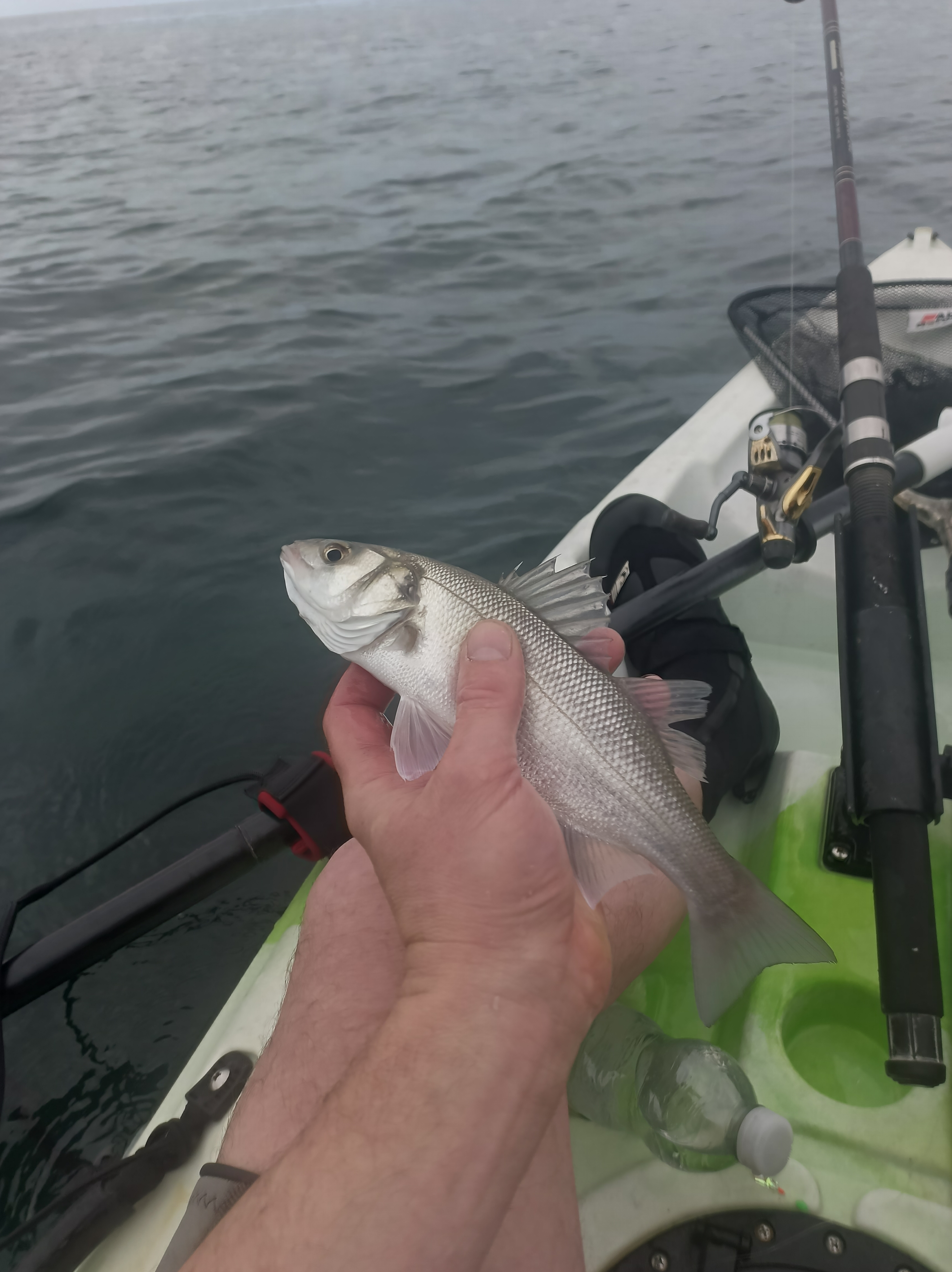
It's not always mackerel that take the feathers. School bass often get hooked
Tackle for Kayak Mackerel Fishing
Heavy boat-fishing equipment isn't necessary for most inshore mackerel fishing.
A relatively short rod is convenient because you're fishing in a confined space. Something around 6–8ft with enough power to handle the weight and several hooked mackerel is a sensible choice.
Pair it with a medium-sized fixed-spool reel loaded with braid or monofilament. Braid gives excellent bite detection and its thin diameter helps when fishing deeper water.
You'll then need a selection of mackerel feathers or small imitation fish lures and a few different weights.
Traditional feathers work perfectly well, although modern versions often use reflective material, coloured foil or fish-skin patterns. Mackerel aren't normally particularly fussy when they're feeding aggressively.
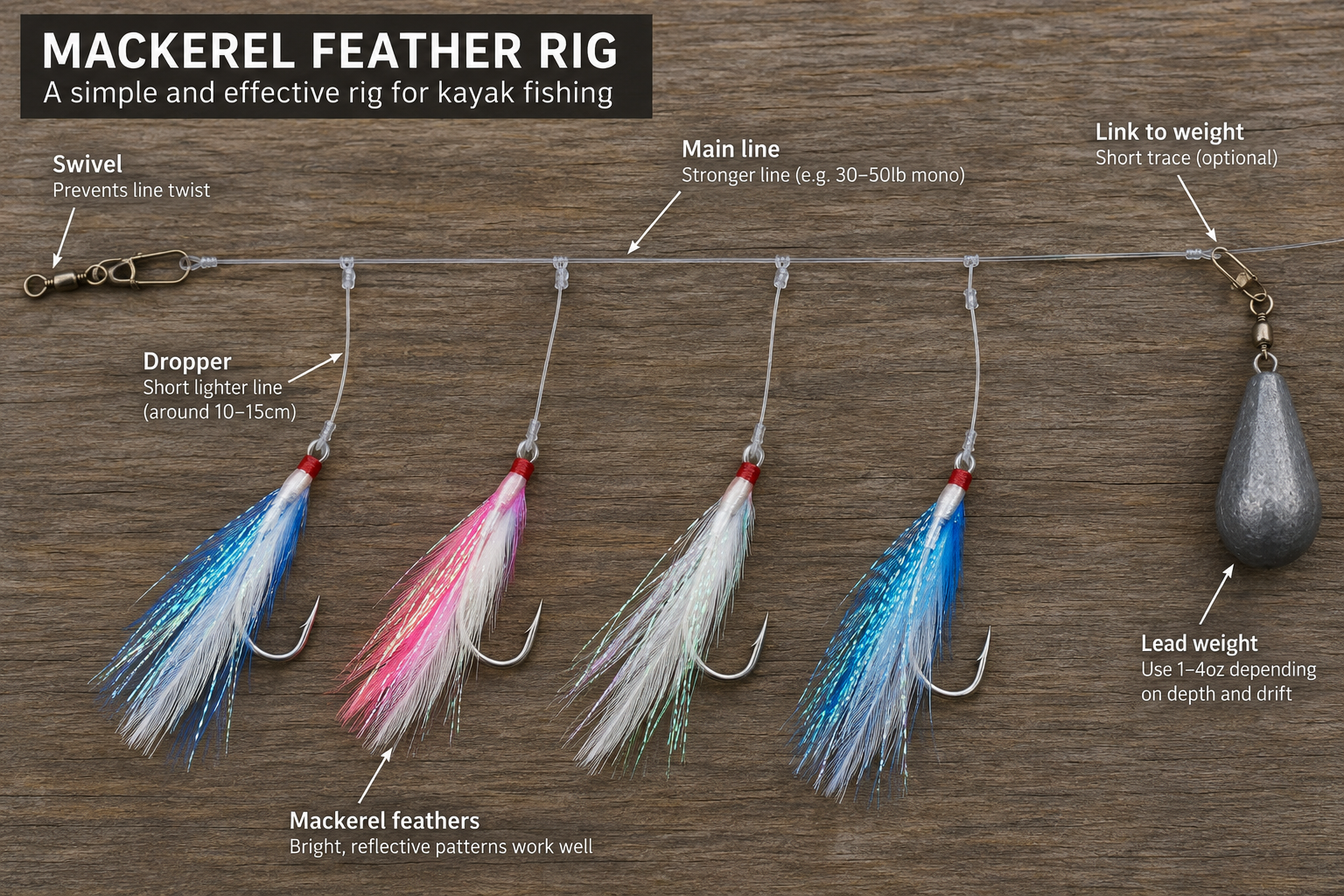
I prefer to keep the rig fairly simple. From a kayak, fewer hooks can actually make fishing easier. A full string of six feathers might catch more fish at once, but dealing with six lively mackerel covered in hooks while sitting in a kayak isn't particularly enjoyable.
Using three or four hooks is often much more manageable.
A simple mackerel feather rig with four feathered hooks, short droppers and a lead weight, ideal for kayak fishing.
Choosing the Right Weight
The weight needs to get your feathers down to the depth where the fish are feeding without making the tackle unnecessarily heavy.
In shallow water with little tide, a relatively light weight may be sufficient. Deeper water, stronger tide or a faster drift will require more weight.
You want the rig to remain reasonably close to the kayak rather than streaming a long way behind it.
Carrying several weights allows you to adjust as conditions change.
How to Fish Mackerel Feathers
Fishing feathers couldn't be much simpler.
Lower the rig into the water and allow the weight to descend. If you know the approximate depth, you can start by fishing close to the bottom before gradually working higher through the water.
Once the rig reaches the required depth, lift the rod smoothly and lower it again. The feathers dart and flutter as they move through the water, imitating a small group of fleeing baitfish.
Avoid violently jerking the rod. Smooth lifts are normally enough.
When a mackerel takes, you'll immediately feel the rod pull and vibrate. It can be tempting to reel straight away, but waiting a few seconds and continuing to move the feathers can sometimes result in another fish taking one of the remaining hooks.
That's when kayak mackerel fishing becomes interesting. Two or three mackerel pulling in different directions can feel surprisingly powerful on relatively light tackle.
Finding the Fish
One of the biggest advantages of a kayak is mobility.
If you're catching nothing, don't spend the entire session fishing the same patch of water. Move and try another drift.
Mackerel frequently patrol features where currents concentrate small fish. Headlands, rocky points, deeper channels and changes in seabed depth can all be productive.
A fish finder is useful but certainly isn't essential. Birds, surface activity and your own observations can often tell you just as much.
Once you catch a mackerel, remember exactly where it happened. Paddle back up-current and repeat the drift through the same area. A single fish often means there are plenty more nearby.
Landing Mackerel from a Kayak
The most difficult part isn't normally hooking the fish. It's dealing with several mackerel and several exposed hooks beside the kayak.
Keep everything controlled.
Bring the fish alongside before lifting the rig aboard and avoid allowing hooked fish to swing around your face or body. Long-nosed pliers make removing hooks much easier.
This is another reason I prefer shorter feather rigs when kayak fishing. Three mackerel are plenty to manage in a small cockpit.
If you're keeping fish for the table, dispatch them quickly and store them appropriately. Mackerel deteriorate quickly in warm weather, so keeping them cool is important.
Only take what you're genuinely going to use.
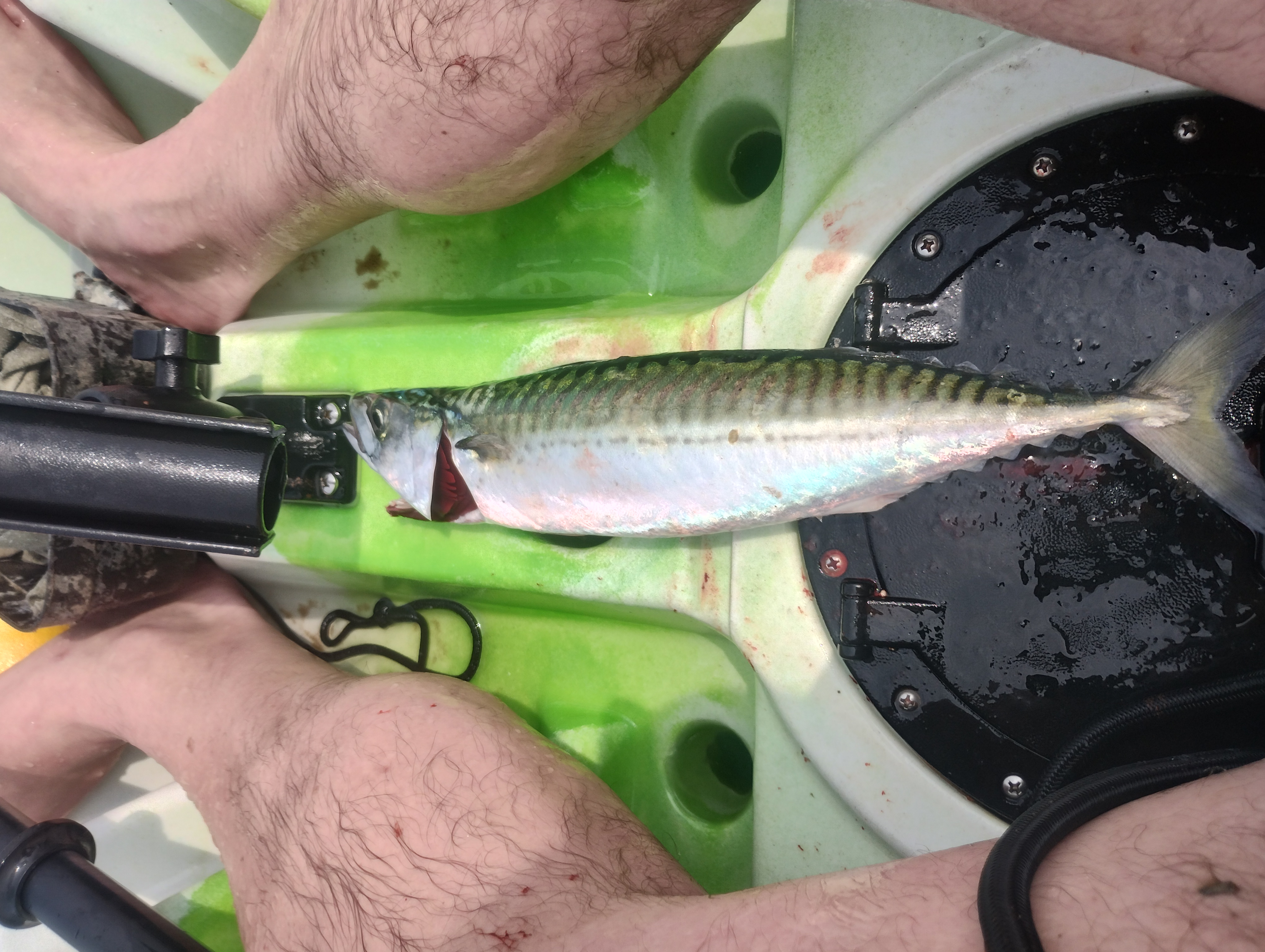
A Kayak caught mackerel.
Kayak Safety Comes First
Sea conditions can change quickly and even a relatively sheltered coastline can become dangerous when wind and tide work against you.
Always wear a properly fitted personal flotation device and check the weather, wind direction and tides before launching. Carry a reliable means of communication and tell someone where you're going and when you expect to return.
A kayak should also be properly equipped for sea fishing, and important equipment needs to be secured so that a capsize doesn't leave you separated from essential gear.
Most importantly, don't allow feeding fish to tempt you farther offshore than you're comfortable paddling back from. A shoal can continually move away from the coast, and following it without noticing how far you've travelled is easily done.
Keep It Simple
Mackerel fishing from a kayak doesn't need to become complicated.
A suitable rod and reel, a few sets of feathers and several weights will cover most situations. Spend more time looking for feeding fish and understanding the drift than worrying about having the perfect colour of feather.
When you find a shoal, the action can be immediate.
For anyone starting kayak sea fishing around the UK coast, mackerel are difficult to beat: they're accessible, fight hard on sensible tackle and provide exactly the sort of fast, uncomplicated fishing that kayaks are particularly good at.