
Margin Fishing for Carp: How to Catch Carp Close to the Bank
Some of the best carp fishing opportunities are right beneath your feet. Discover how to find productive margins, approach feeding carp without disturbing them, choose effective baits and rigs, and catch more fish close to the bank.
23 September 2026 · 6 min read
Some links in this guide are affiliate links. If you buy through them we may earn a small commission at no extra cost to you — it never influences what we recommend.
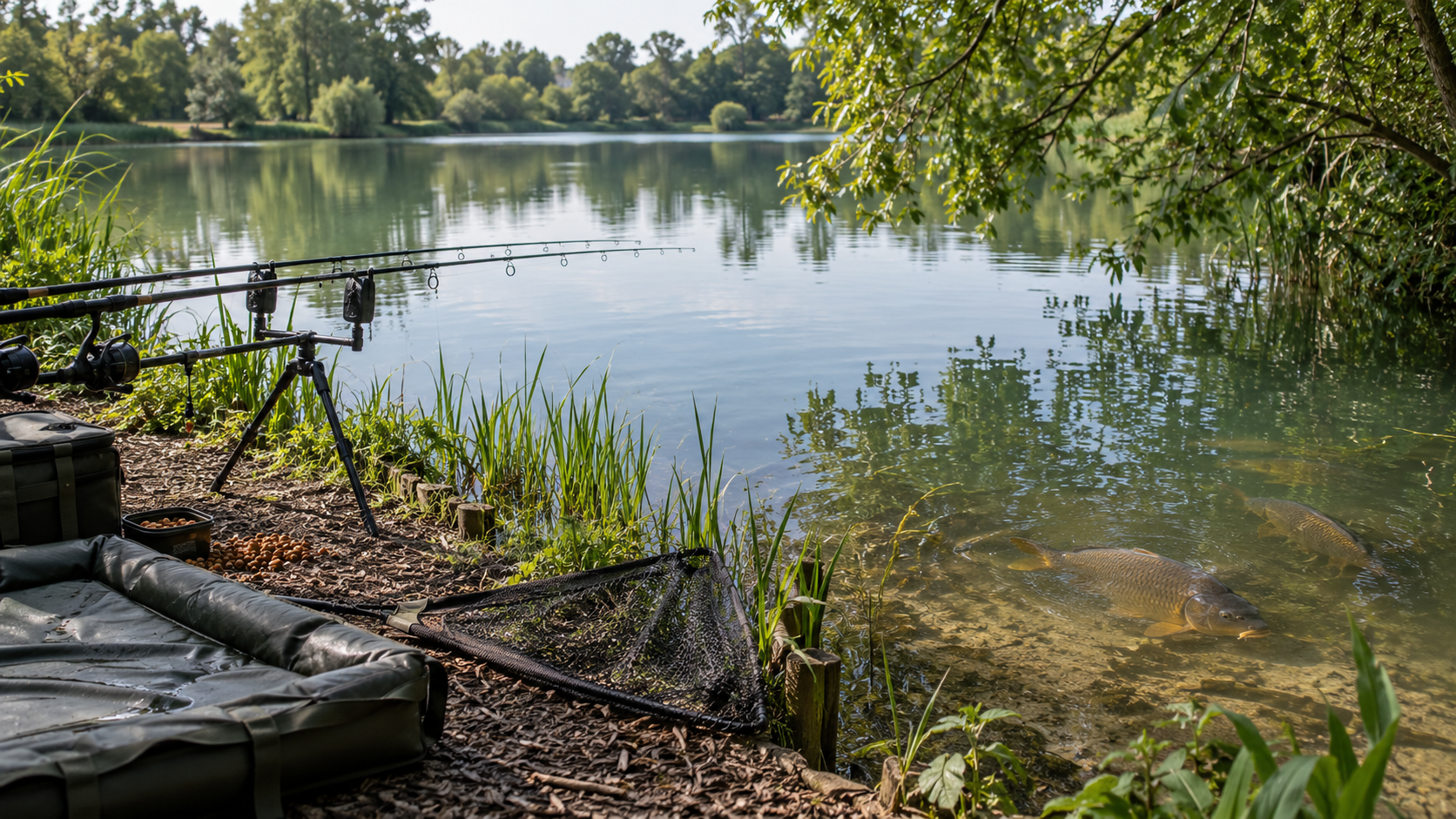
One of the most overlooked areas in carp fishing is often the water immediately in front of you. While many anglers concentrate on casting towards distant islands, gravel bars and other underwater features, some of the most productive feeding opportunities can be found just a few feet from the bank. Carp regularly visit the margins in search of natural food, particularly around overhanging trees, reed beds and areas where vegetation meets open water. These locations can provide shelter, warmth and an abundance of food.
Margin fishing also offers one significant advantage over fishing at distance: you can often observe the fish and their feeding behaviour before deciding how to approach them. However, successful margin fishing requires careful preparation. Carp feeding close to the bank can be surprisingly easy to disturb, and an otherwise productive swim can quickly become lifeless if you approach it carelessly.
Understanding how to locate fish, introduce bait and present your rig without alarming them is essential to making the most of these opportunities.
Tackle worth buying
Shop rods, reels, terminal tackle and more at Total Fishing Tackle.
Why Carp Feed in the Margins
The margins of a lake provide carp with several reasons to visit throughout the day. Overhanging vegetation creates shade and shelter, while submerged roots, weed beds and other natural features offer protection. These areas can also contain substantial quantities of natural food. Insects, freshwater snails, worms and other small organisms are frequently found among the vegetation and sediment close to the bank.
During the warmer months, carp may spend considerable time patrolling the margins, particularly in areas where they can move between deeper water and sheltered feeding spots. Overhanging trees are particularly interesting locations. Insects and other food items regularly fall from the branches, creating opportunities for carp to feed beneath them.
Reed beds and marginal weed can be equally productive, especially where the vegetation borders a relatively clear area of lakebed. However, carp do not necessarily remain in the same marginal areas throughout the day. Their movements can change with water temperature, sunlight, angling pressure and the availability of food.
Learning to recognise these patterns is an important part of successful margin fishing.
Finding the Right Margin Fishing Spot
Before setting up your tackle, spend some time walking around the lake and examining the water close to the bank. Polarised sunglasses can be particularly useful, allowing you to see through surface reflections and identify fish, underwater features and changes in the lakebed. Look for clear patches among marginal weed, gaps between reed beds and areas beneath overhanging trees. These can provide natural feeding opportunities while offering relatively straightforward places to position a rig.
Signs of carp activity are often subtle. Small clouds of disturbed sediment, occasional bubbles rising from the lakebed or vegetation moving unexpectedly can indicate feeding fish. However, bubbles alone are not proof that carp are present, as gases can also be released naturally from the sediment. On clear lakes, you may be able to see carp moving along the margins or feeding directly on the bottom. Observing their movements can reveal whether they are following a regular patrol route or simply passing through.
Depth is another consideration. Although carp frequently feed in shallow water, slightly deeper margins can be particularly productive when fish are reluctant to enter very shallow areas. If you cannot see the lakebed, carefully exploring the swim with a marker float or suitable plumbing arrangement can help identify changes in depth and bottom composition.
Ideally, this should be done before you intend to fish, rather than repeatedly disturbing an area where carp are already feeding.
Approaching the Margins Without Disturbing Carp
One of the biggest mistakes anglers make when margin fishing is failing to appreciate how easily carp can detect activity on the bank. Heavy footsteps, shadows moving across the water and equipment being dropped near the water's edge can all disturb fish feeding in shallow areas. If you have identified a promising margin, approach it carefully and avoid standing directly above the water whenever possible.
Setting up your tackle a short distance from the edge can also help reduce disturbance. When stalking visible carp, it is often better to prepare your rig before approaching the fish. This allows you to concentrate on presenting the bait rather than making unnecessary movements. Keep your silhouette low and avoid casting a shadow across the feeding area. There is also considerable value in allowing a swim to settle. If you have disturbed the margins while exploring, leaving the area undisturbed for a while may encourage carp to return.
Early mornings and evenings can provide excellent opportunities, particularly during warmer weather when carp may move into the margins to feed. However, there is no universal feeding time. Some lakes produce excellent margin fishing throughout the day, especially where the fish are accustomed to regularly visiting sheltered areas.
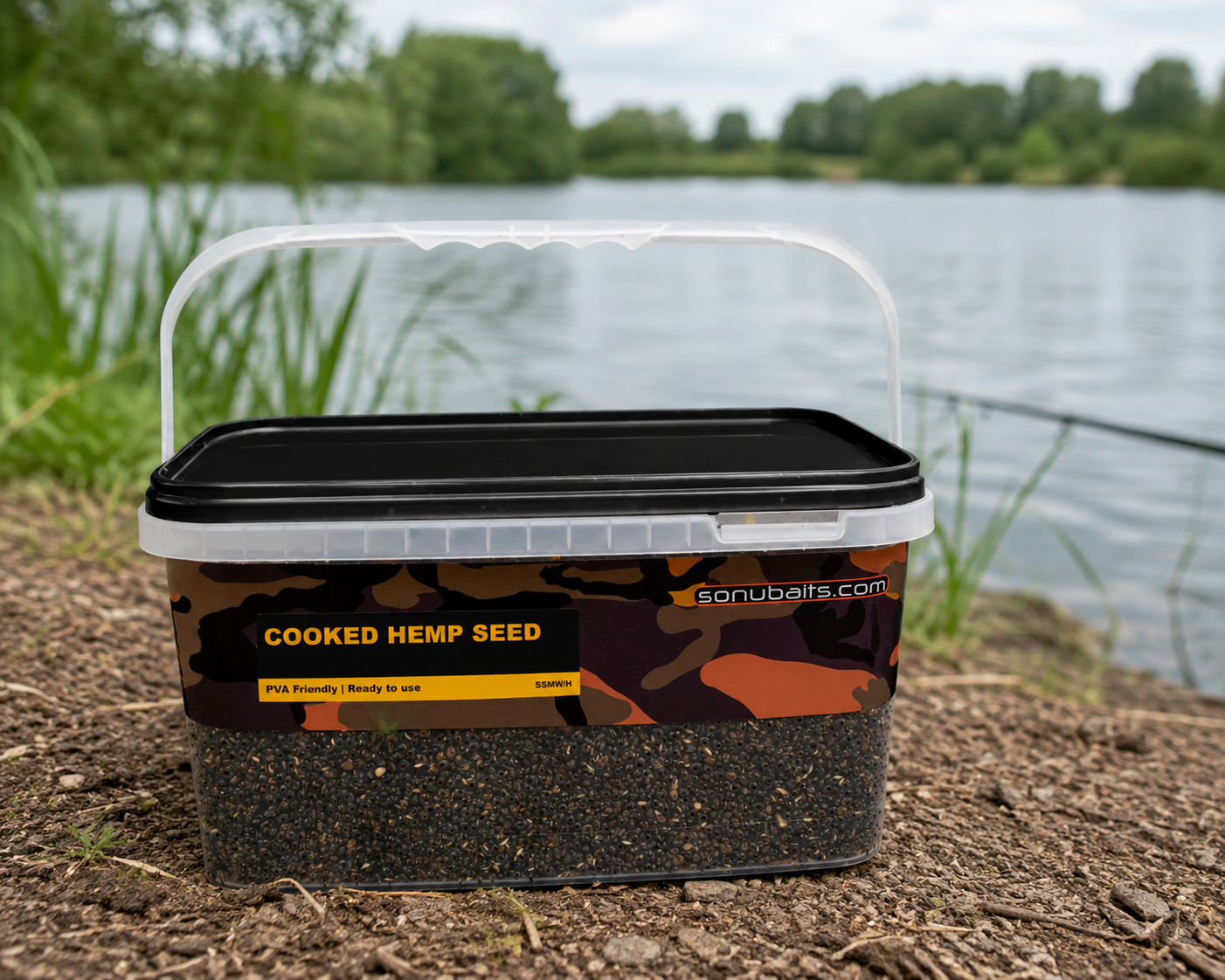
Sonubaits - Cooked Hemp Spod Mix 2.5kg
Ready-prepared cooked hemp seed packed with natural oils and flavour. Convenient and ready to use straight from the bucket, making it an easy way to introduce hemp when feeder fishing, spod fishing or building a particle-based swim.
Best for: Roach, tench, bream, barbel and carp fishing; ideal for feeder mixes, loose feeding, spod mixes and particle fishing.
What we like
- Ready to use straight from the bucket
- Rich in natural oils and attraction
- Excellent for roach and other coarse fish
- Can be added to groundbait and feeder mixes
- PVA friendly
- No preparation or cooking required
- Good 2.5kg quantity
Worth knowing
- More expensive than preparing dry hemp yourself
- Large bucket may be excessive for occasional anglers
How it scored
- Fish Attraction
- 94
- Quality
- 91
- Convenience
- 96
- Versatility
- 91
- Value for Money
- 82
Prices checked 2 Sept 2026. We may earn a commission if you buy through these links — it never changes what we recommend.
Baiting and Feeding Strategies for Margin Fishing
One of the advantages of margin fishing is the ability to introduce bait accurately without relying on long-distance casting equipment. A small baiting spoon can be used to place particles, pellets or boilies directly into the feeding area. This allows you to concentrate the bait precisely where you intend to position your hookbait. However, it is important not to introduce too much bait before establishing whether carp are present. A few handfuls of prepared hemp, sweetcorn or mixed particles can be sufficient to attract fish and encourage them to investigate the area.
Particles are particularly effective because they encourage carp to search the lakebed for individual food items, potentially keeping them feeding in a small area for an extended period. Boilies can also work extremely well, either as whole baits or broken into smaller pieces. If you are fishing a water where carp regularly encounter boilies, introducing a small quantity of the same bait that you intend to use on your rig can help create a natural feeding situation.
On clear lakes, you may be able to observe how the fish respond to your loose feed. If they begin feeding confidently, you can introduce your hookbait once they appear settled. Alternatively, baiting a promising margin and returning later can be extremely effective, provided the fishery rules permit this approach.
The key is to introduce enough bait to encourage feeding without creating unnecessary competition for your hookbait.
Choosing the Right Rig and Tackle
Margin fishing does not necessarily require complicated rigs, but your tackle should be appropriate for the conditions. A simple hair rig with a bottom bait or balanced wafter can be an excellent choice when fishing over a clear patch of lakebed. If you are using particles, a grain of maize or several grains of sweetcorn can provide a hookbait that closely matches the surrounding loose feed.
When fishing over soft silt or light weed, a carefully balanced presentation may help ensure that your hookbait remains accessible. The most important consideration is ensuring that your rig can be presented effectively without becoming tangled in vegetation or buried in debris. Tackle selection should also reflect the proximity of potential snags. Carp hooked close to reeds, submerged branches or overhanging trees may immediately attempt to reach cover.
A suitable rod, reliable main line and appropriately adjusted reel are therefore essential. However, fishing immediately beside dense snags should only be attempted when you can safely control and land a hooked fish. If the location presents an unacceptable risk of the carp becoming trapped, choose a safer presentation. Use a fish-safe rig that allows the lead to be released if necessary, particularly when fishing near weed or other underwater obstructions. Although it can be tempting to use extremely short hooklinks when fishing over a concentrated area of bait, the correct length should be determined by the lakebed and your chosen presentation.
A simple, reliable rig positioned accurately is generally more useful than a complicated arrangement that does not suit the conditions.
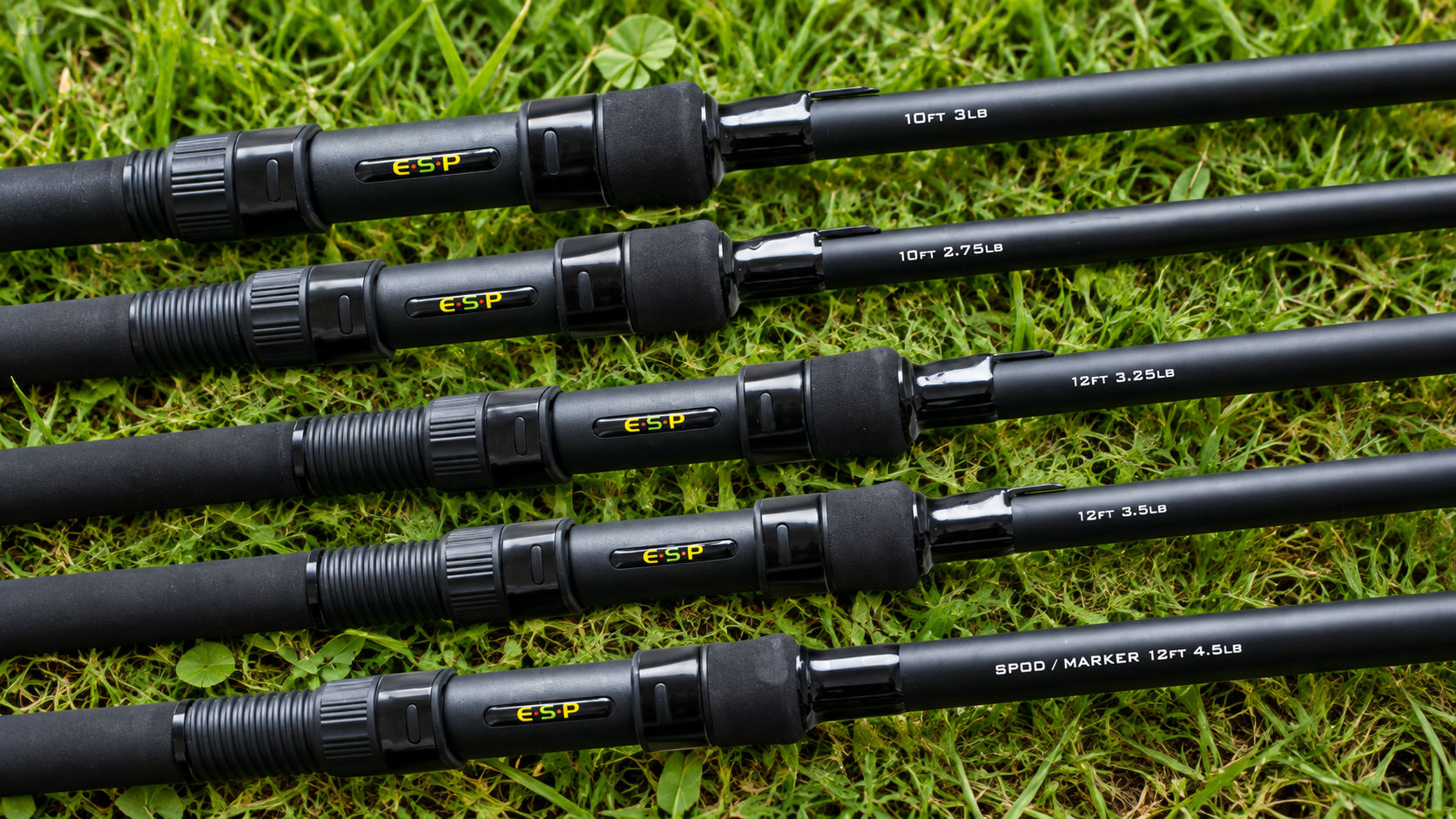
ESP Tectrix Carp Rods
A versatile range of ESP carp rods offering quality components, clean understated styling and a choice of lengths and test curves. The Tectrix range covers everything from shorter-range fishing through to more powerful distance work, without the price tag of many high-end carp rods.
Best for: All-round carp fishing, value for money and anglers wanting quality without a high-end price
What we like
- Very good value for money
- Quality ESP components and finish
- Multiple lengths and test curves
- Suitable for a wide range of carp fishing
- Dedicated Spod/Marker model available
- - Understated styling
Worth knowing
- Several models can make choosing the right test curve less straightforward for beginners
- - More specialised anglers may prefer a rod designed specifically for extreme-range casting
Prices checked 1 Oct 2026. We may earn a commission if you buy through these links — it never changes what we recommend.
Playing and Landing Carp from the Margins
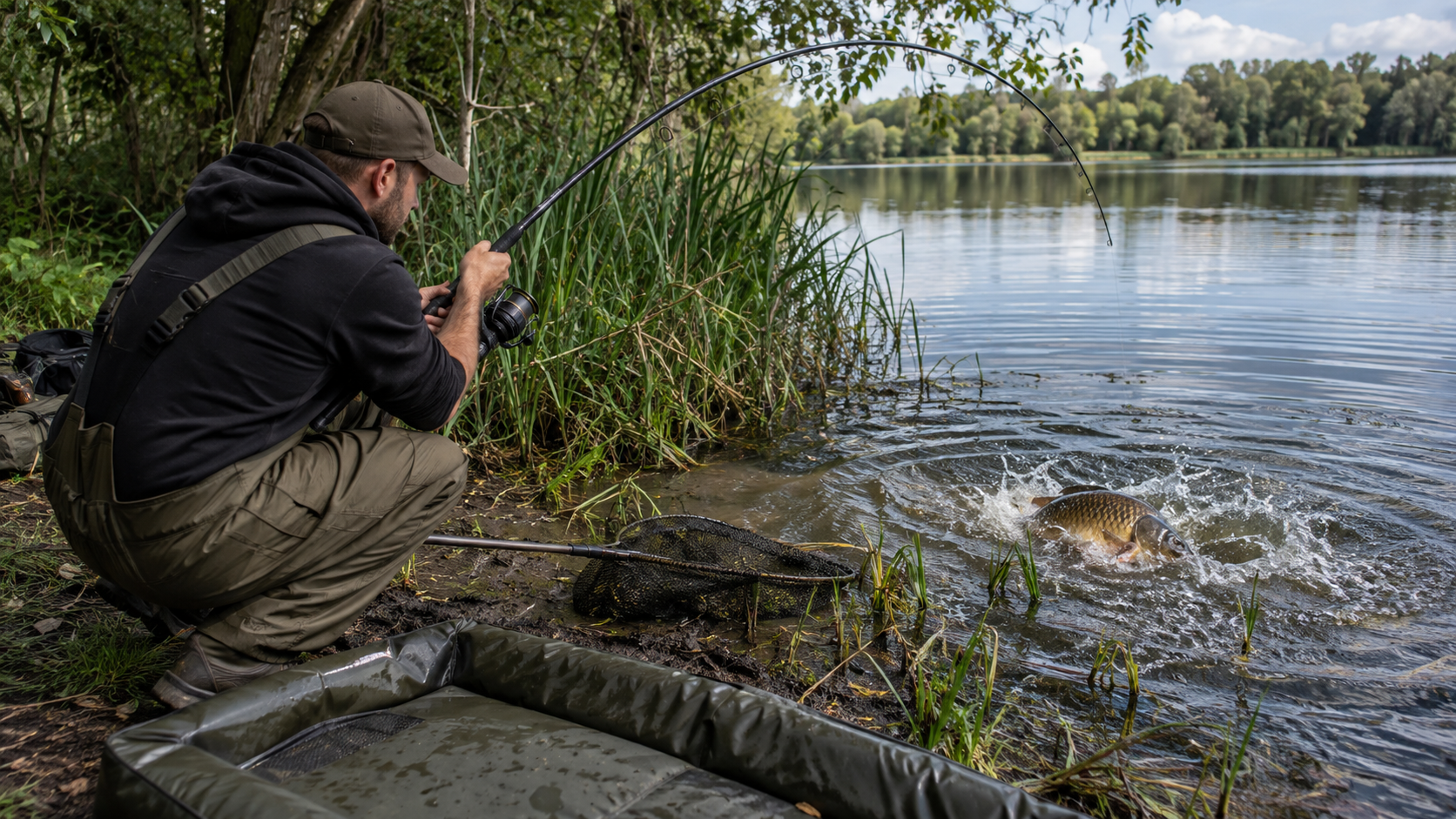
Hooking a carp close to the bank can produce an exceptionally powerful initial run. Unlike a fish hooked at distance, a margin-caught carp may have very little line between itself and the rod when it first attempts to escape. For this reason, your rod should be positioned securely, with the reel's drag adjusted appropriately. Never leave a rod unattended when fishing close to snags. When a fish takes the bait, maintain steady pressure and try to guide it away from any nearby obstructions.
Avoid attempting to stop a powerful carp abruptly, as excessive pressure can result in tackle failure or a hook pull. If you are fishing close to vegetation, it is sensible to have your landing net assembled and positioned before casting. An appropriately sized, fish-friendly landing net and a suitable wet unhooking mat should always be ready before fishing begins.
Once the carp is safely landed, minimise the time it spends out of the water and return it carefully after any necessary photographs.
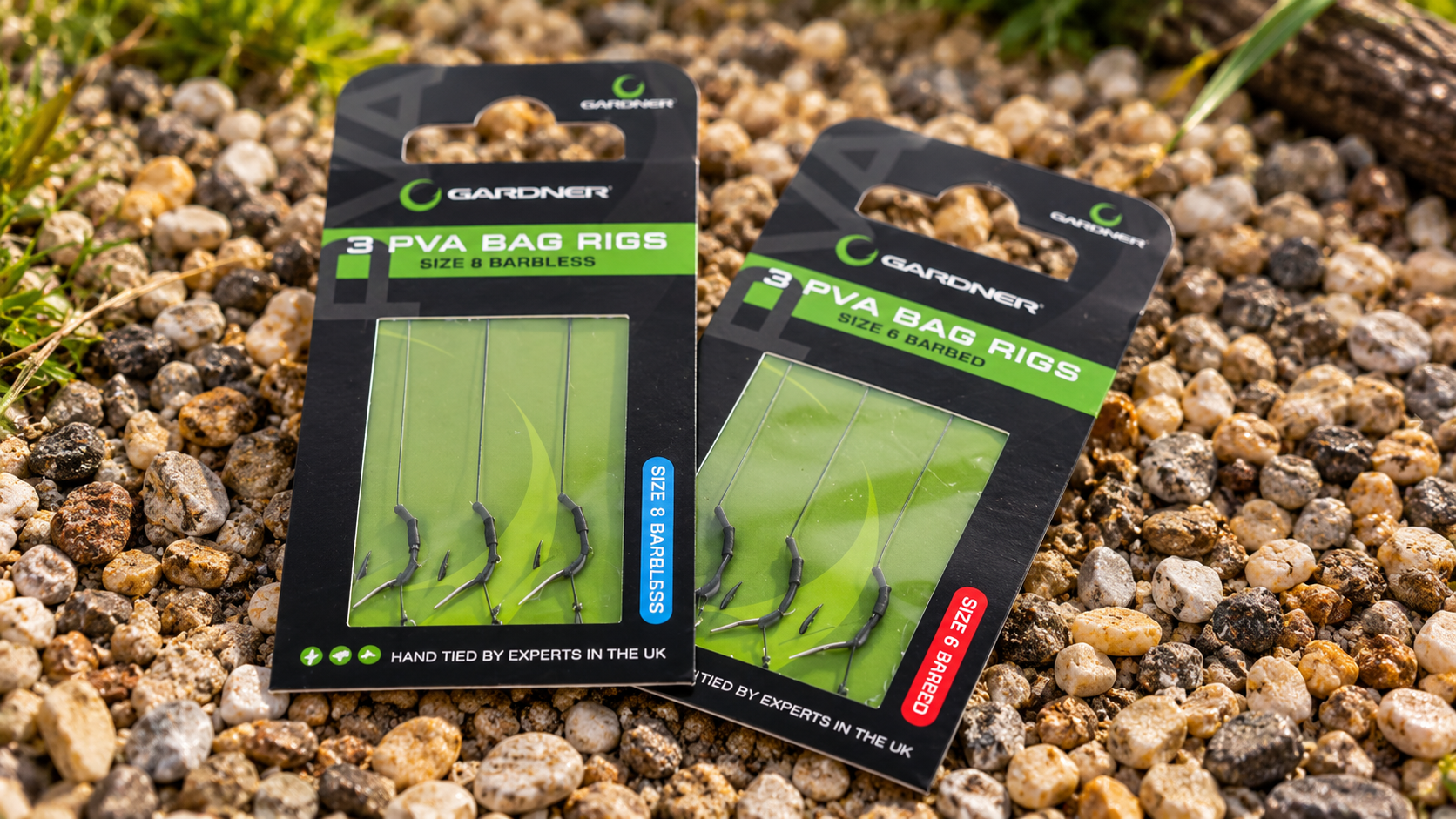
Gardner - Pva Bag Ready Rigs x3
A pack of three professionally tied carp rigs designed specifically for solid PVA bag fishing. Ready to use straight from the packet, they provide a simple and convenient option for anglers who want a compact, effective presentation without tying their own rigs.
Best for: Solid PVA bag fishing, quick setup and anglers who prefer ready-tied carp rigs
What we like
- Ready tied and immediately usable
- Designed specifically for solid PVA bags
- Good value at around £5.99 for three
- Saves time tying short bag rigs
- Available in different hook sizes and barbed/barbless options
- - Made by an established UK carp tackle brand
Worth knowing
- Less flexibility than tying your own rigs
- Only three rigs per pack
- - Experienced anglers may prefer their own hooklink and hook combinations
Prices checked 4 Oct 2026. We may earn a commission if you buy through these links — it never changes what we recommend.
Making the Most of Margin Fishing
Margin fishing rewards observation, patience and accurate presentation rather than casting distance. By learning where carp naturally feed and approaching these areas without unnecessary disturbance, you can create excellent opportunities with relatively simple tackle.
Start by identifying a promising margin, introduce a small quantity of bait and observe how the fish respond. If carp begin feeding confidently, a carefully positioned hookbait may be all that is required. Perhaps the most important lesson is to avoid assuming that the best fishing opportunities are always on the opposite side of the lake.
Sometimes, the carp you are looking for are feeding almost directly beneath your rod tips.
The monthly catch-up
One email a month: new guides, tackle worth buying and waters we've fished.
Related guides
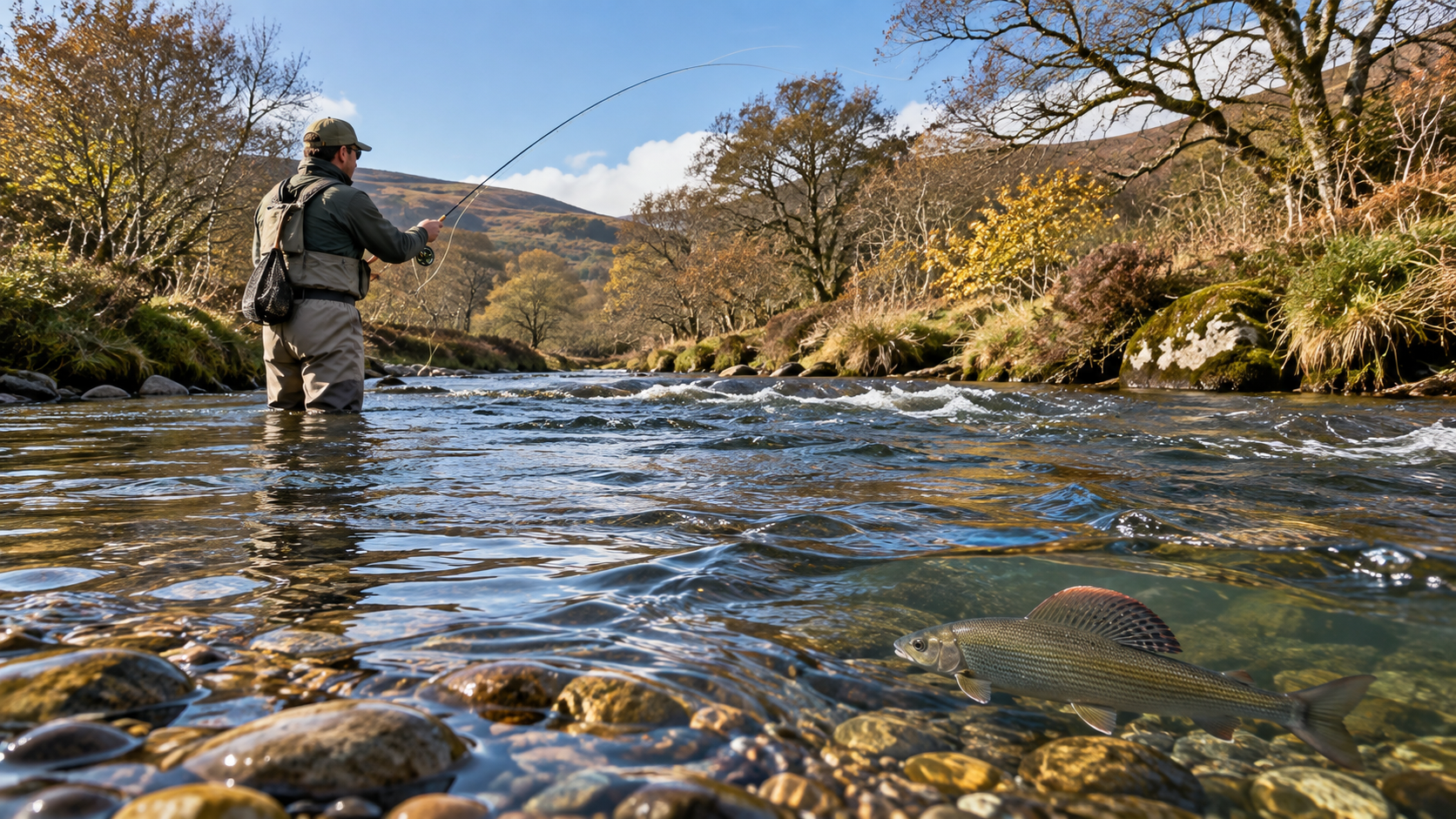
A Beginner’s Guide to Fly Fishing for Grayling
New to grayling fishing? This beginner’s guide explains the essential tackle, flies and techniques you need to start fly fishing for grayling on rivers, from finding fish to making a natural drift.
26 Sept 2026 · 7 min read
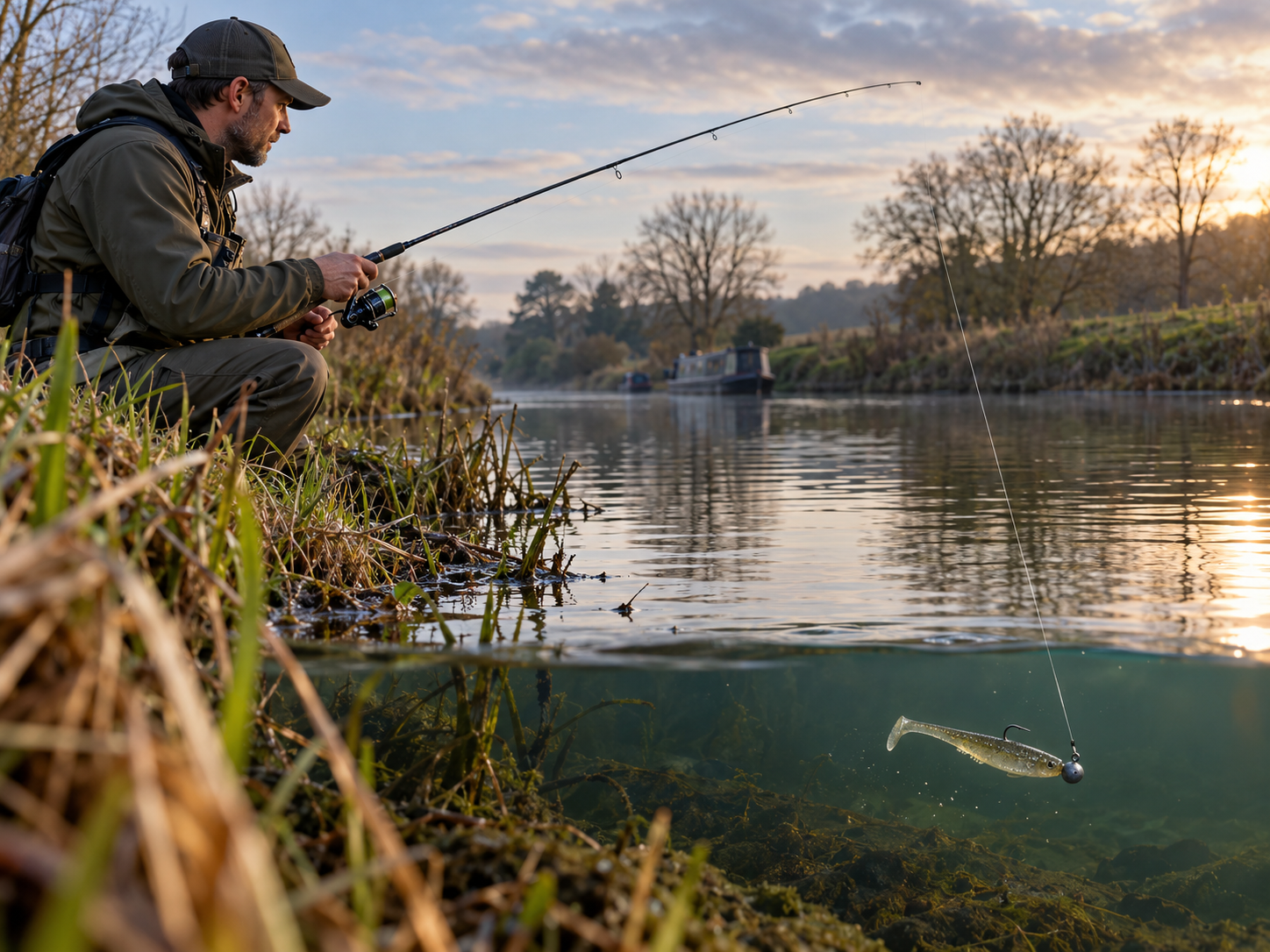
How to Fish Soft Plastic Lures: A Beginner’s Guide
A beginner-friendly guide to fishing soft plastic lures, covering depth control, jigging, steady retrieves, working the bottom and adapting your presentation to catch more predatory fish.
24 Sept 2026 · 6 min read
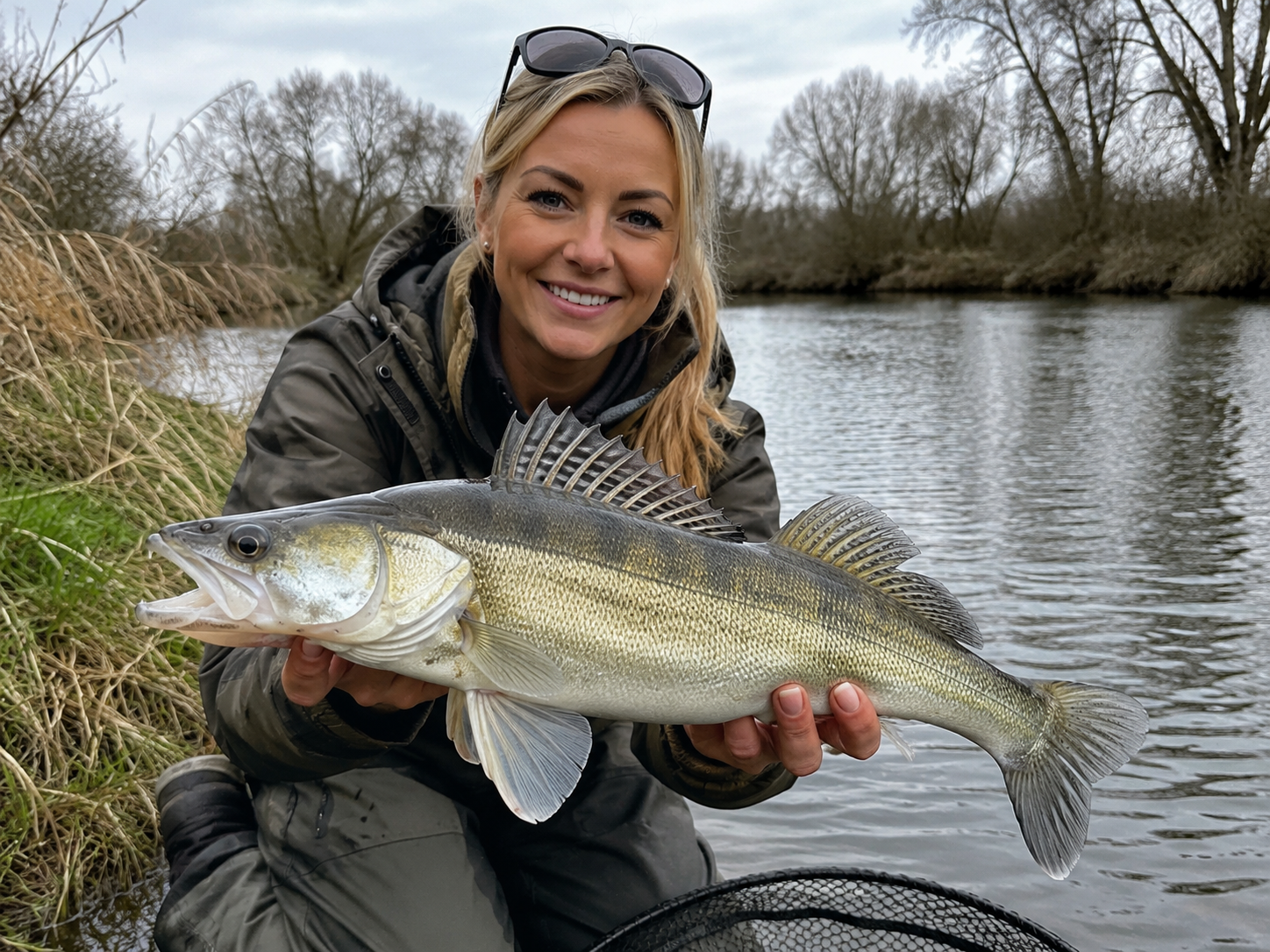
A Beginner’s Guide to Zander Fishing
New to zander fishing? This beginner’s guide explains where to find zander, how to fish soft plastics and deadbaits, what tackle to use and how to improve your chances of catching this fascinating predator.
24 Sept 2026 · 6 min read