Learn how to use lugworm for UK sea fishing, including how to hook and present it properly and how to target flatfish, bass, whiting and codling from the shore.
7 September 2026 · 4 min read
Lugworm is one of the classic baits for UK sea fishing and, despite the huge range of specialist baits now available, it remains one of the most dependable choices for shore anglers. It is particularly useful because so many different species naturally encounter marine worms while feeding over sand, mud and mixed ground.
You can fish lugworm on its own, combine it with other baits or use several worms to create a larger offering. It works from beaches, estuaries, harbour walls and many other shore marks, making it an excellent bait for anyone starting sea fishing. The important part is learning how to hook it properly and match the presentation to the fish you're trying to catch.
Advertisement
Tackle worth buying
Shop rods, reels, terminal tackle and more at Total Fishing Tackle.
Lugworms live beneath the surface of sandy and muddy areas around the coast. The familiar coiled casts that appear across beaches as the tide retreats are produced by worms living in burrows underneath the sand. Their natural abundance helps explain why they are such an effective bait.
Flounder, plaice and dabs will readily take lugworm, but its usefulness extends well beyond flatfish. Bass, whiting, codling, pouting and several other shore species can all be caught on it. This makes lugworm particularly useful when you arrive at a mark without knowing exactly what will be feeding.
There are different types of lugworm available to anglers, including common blow lug and the larger black lug. Blow lug is a good general-purpose bait and is widely used fresh. Black lug is larger and tougher and is particularly useful when you want a substantial bait or need something capable of surviving a powerful cast.
How to Put Lugworm on the Hook
One of the biggest mistakes when starting with lugworm is simply pushing the hook through the middle of the worm several times and leaving most of it hanging loose. It can still catch fish, but the bait often casts poorly and can slide down the hook.
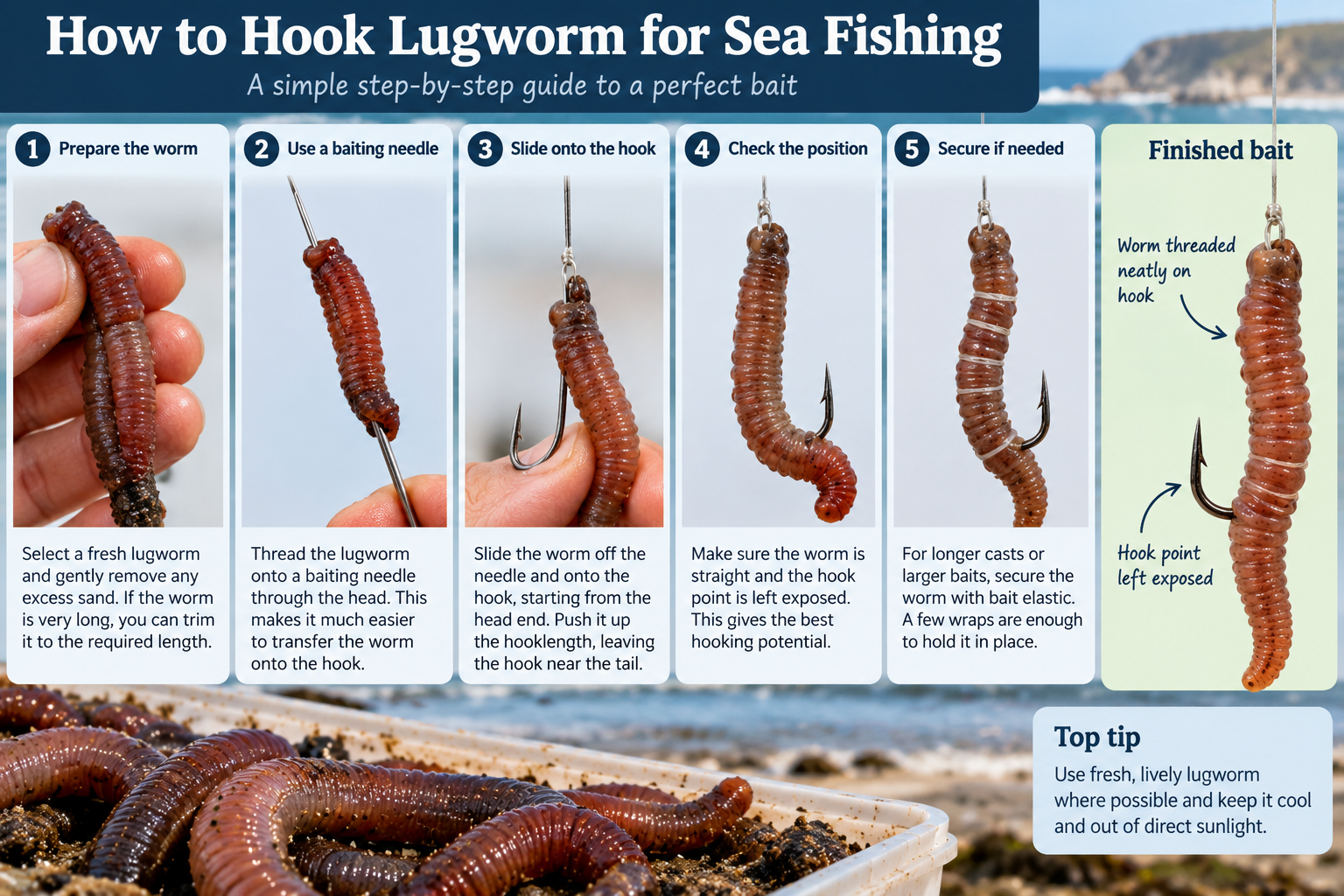
A baiting needle makes presenting lugworm much easier. Thread the worm onto the needle before transferring it over the hook and up onto the hooklength. This produces a relatively straight bait with the hook positioned towards its lower end.
For smaller flatfish, you don't necessarily need a huge bait. One reasonably sized worm or part of a larger worm can be enough. When targeting bass or codling, several worms can be threaded together to produce a considerably larger scent-filled bait.
Leave the hook point exposed. Completely burying the point inside a mass of worm can make it more difficult for the hook to take hold when a fish picks up the bait.
A step-by-step guide showing how to thread lugworm onto a hook using a baiting needle and secure it for shore fishing.
Keeping Lugworm on the Hook
Fresh lugworm is soft, which is part of what makes it attractive to fish but can also make it difficult to cast. A powerful cast can cause poorly presented worms to bunch up or even fly off the hook.
Elastic bait thread is extremely useful here. Once the worm has been threaded onto the hook, lightly wrap the bait elastic around it. You don't need to compress the worm into a solid lump; just use enough to hold everything together.
Another option is to create a cocktail bait. Lugworm combined with a small strip of squid is a particularly useful shore bait because the squid helps hold the softer worm together. A strip of mackerel can be used in a similar way while adding additional scent.
When distance is important, a clipped-down rig also helps protect the bait during the cast. The hook is secured close to the lead while travelling through the air and releases when the rig reaches the water. This can make a significant difference when trying to deliver a delicate worm bait beyond the breakers.
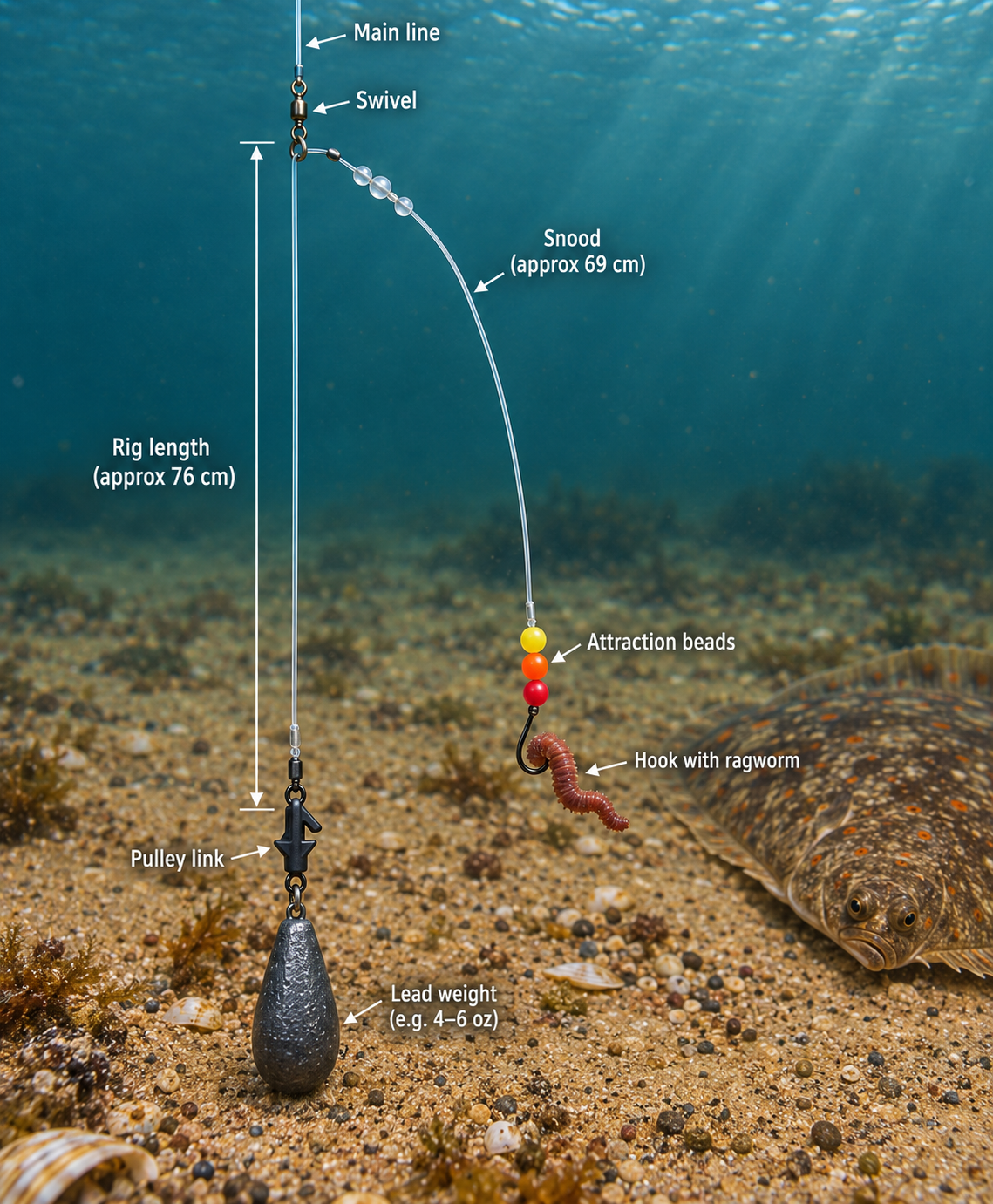
A pulley rig can aid long distance casting from the shore by hooking up the bait next to the weight keeping it all streamline.
Fishing Lugworm for Flatfish
Lugworm is particularly well suited to flatfish because you're presenting something they naturally search for along the seabed.
A simple running ledger can be extremely effective. Allow the lead to settle before tightening the line gently. The hooklength can then move naturally with the tide while keeping the worm close to the bottom.
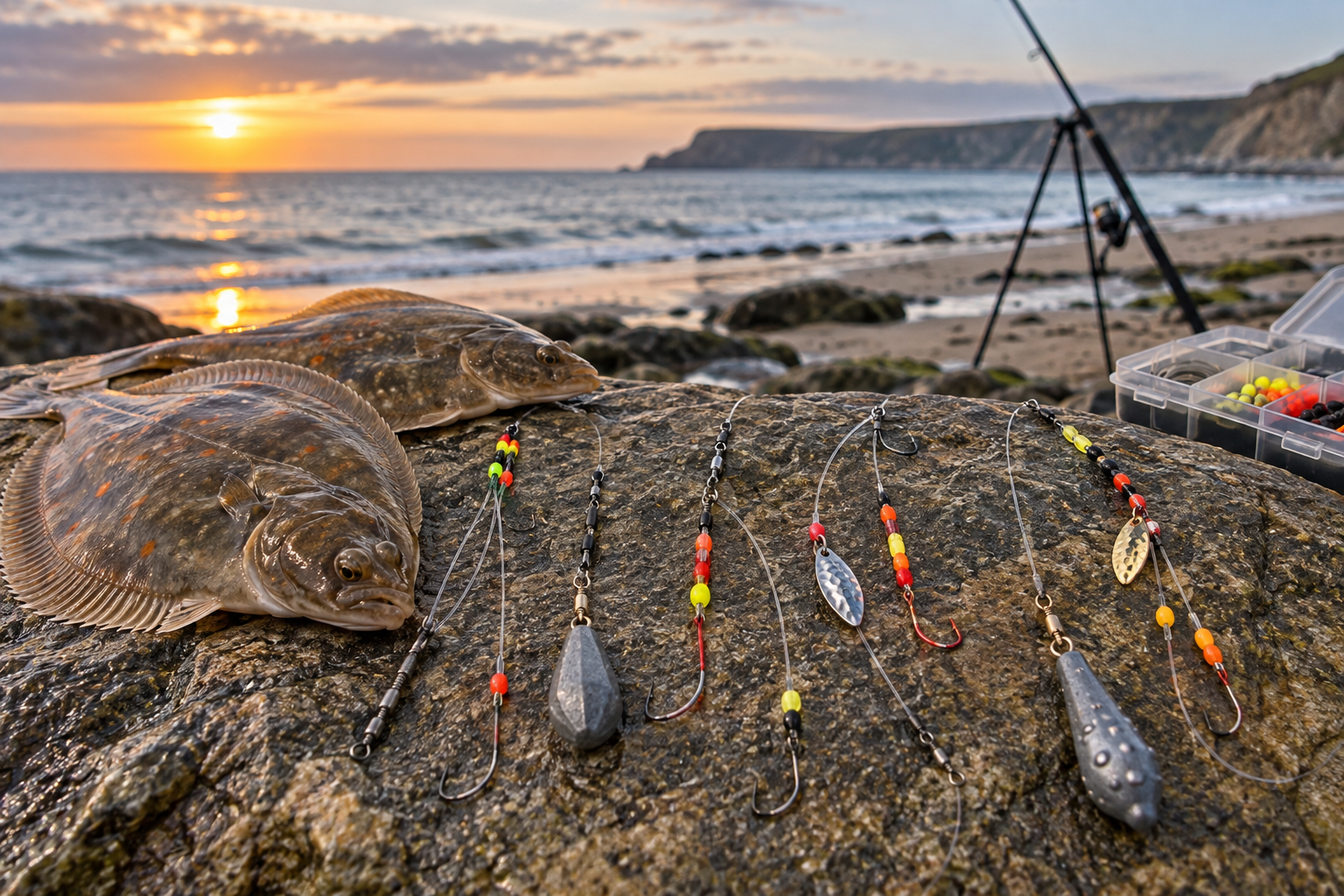
You can also add a few coloured beads above the hook. Plaice in particular are often attracted to brightly coloured beads, sequins and small spoons. Yellow, orange, red and black are all popular choices.
Don't assume that you need to cast a huge distance. Flounder regularly feed surprisingly close to shore, particularly in estuaries, while plaice may patrol sandy areas, gullies and changes in depth.
Occasionally moving the rig can also work well. Wind in a few turns of the reel, allow the bait to settle again and wait. The movement can attract attention while allowing you to gradually search a larger area of seabed.
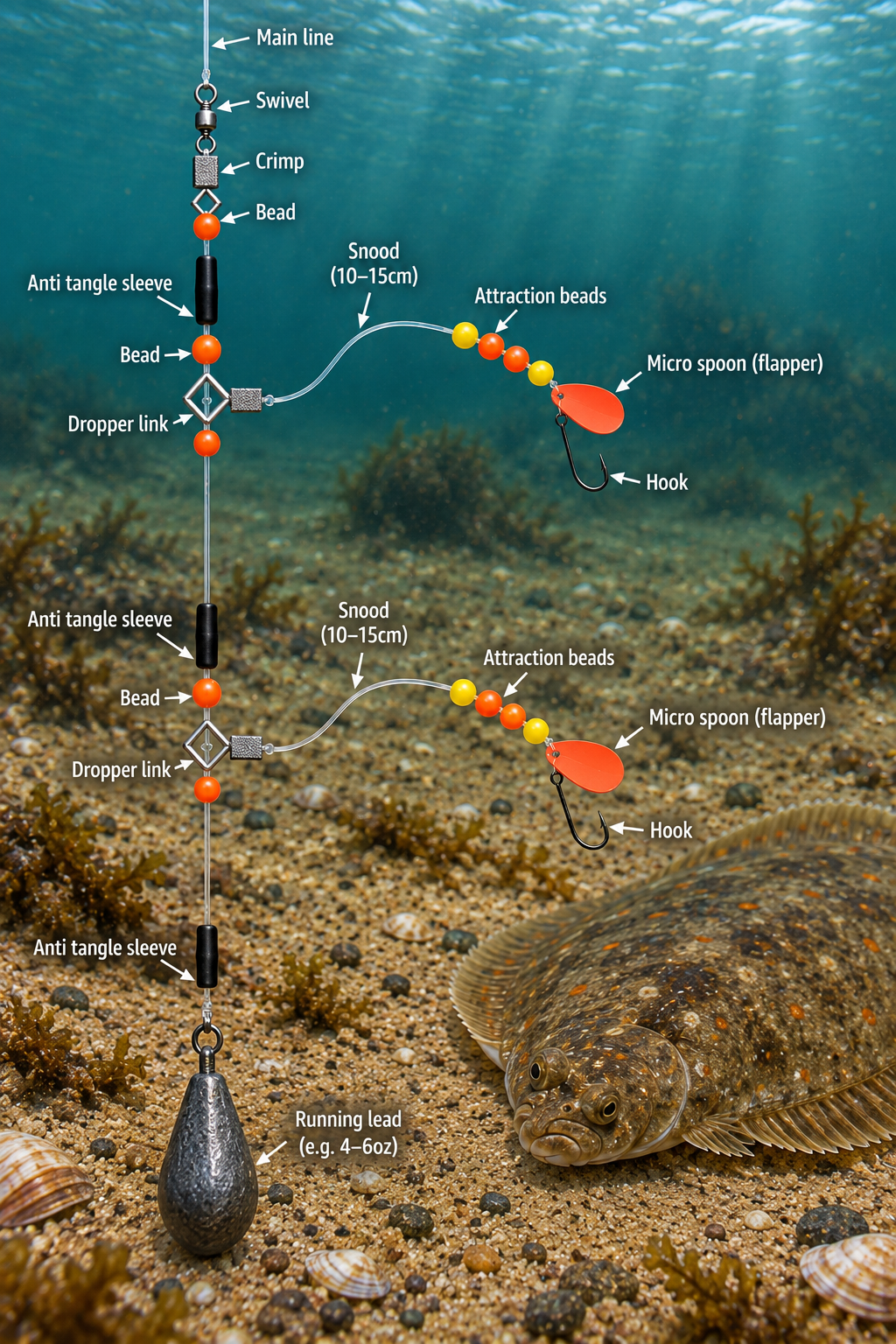
The Flattie Flapper rig. This particular setup show's 2 hooks with beads and micro spoons.
Fishing Lugworm for Bass, Whiting and Codling
Changing the size and presentation of the bait allows the same packet of lugworm to target very different fish.
For bass, a larger lugworm bait can be excellent when fishing surf beaches and estuaries. Bass frequently search disturbed shallow water for worms and other food uncovered by waves and currents. You often don't need to cast beyond the surf; fish may be feeding inside the first few breakers.
Whiting are generally less demanding. A smaller worm bait presented on a two-hook rig can be very effective, particularly during autumn and winter when numbers of whiting move within casting range.
Codling will also readily take lugworm, particularly when it is combined with another bait. Lugworm and squid is a classic combination, producing plenty of scent while creating a bait that stays on the hook reasonably well. Larger black lug baits are also commonly used when specifically targeting cod and better codling.
Rather than automatically using the biggest bait possible, match its size to the species you're expecting. A neat, properly presented bait is usually more useful than an enormous bundle of worms masking the hook.
Keeping Lugworm Fresh and Getting the Most From It
Fresh bait makes a difference, so look after your lugworm from the moment you get it. Keep it cool and out of direct sunlight while fishing. During warm weather, leaving a packet of worms exposed on the beach can quickly ruin otherwise excellent bait.
If you've bought fresh lugworm, follow the supplier's storage advice, as different types and preparations can require slightly different treatment. Removing damaged or dead worms can also prevent them affecting the rest of your bait.
Don't automatically throw away unused lugworm at the end of a session. Depending on its condition and type, it may be possible to prepare it for freezing and use it on another trip. Frozen lug can become softer than fresh bait, but bait elastic or a squid strip can make it perfectly usable.
Lugworm isn't sophisticated, expensive or particularly glamorous, but that's exactly why it deserves a place in almost every shore angler's bait selection. Learn how to present it neatly and you have a bait capable of catching everything from small dabs and flounder to bass and codling.
For a beginner wondering which sea fishing bait to learn first, lugworm is very difficult to beat.