The Hair Rig: A Beginner’s Guide to Modern Carp Fishing
The hair rig transformed modern carp fishing by separating the bait from the hook. Learn how this simple but highly effective rig works, how to tie it and how to use it effectively.
13 September 2026 · 6 min read
Some links in this guide are affiliate links. If you buy through them we may earn a small commission at no extra cost to you — it never influences what we recommend.
Few rigs have influenced modern carp fishing as much as the hair rig. It is a remarkably simple idea: instead of placing the bait directly onto the hook, the bait is positioned on a short length of line extending beyond it. This small change transformed the way anglers could present boilies and other relatively large baits to carp.
Today, the basic principle of the hair rig can be found in countless carp rigs. Some have become considerably more complicated, but for anglers beginning carp fishing, a straightforward hair rig remains one of the most useful and reliable presentations to learn.
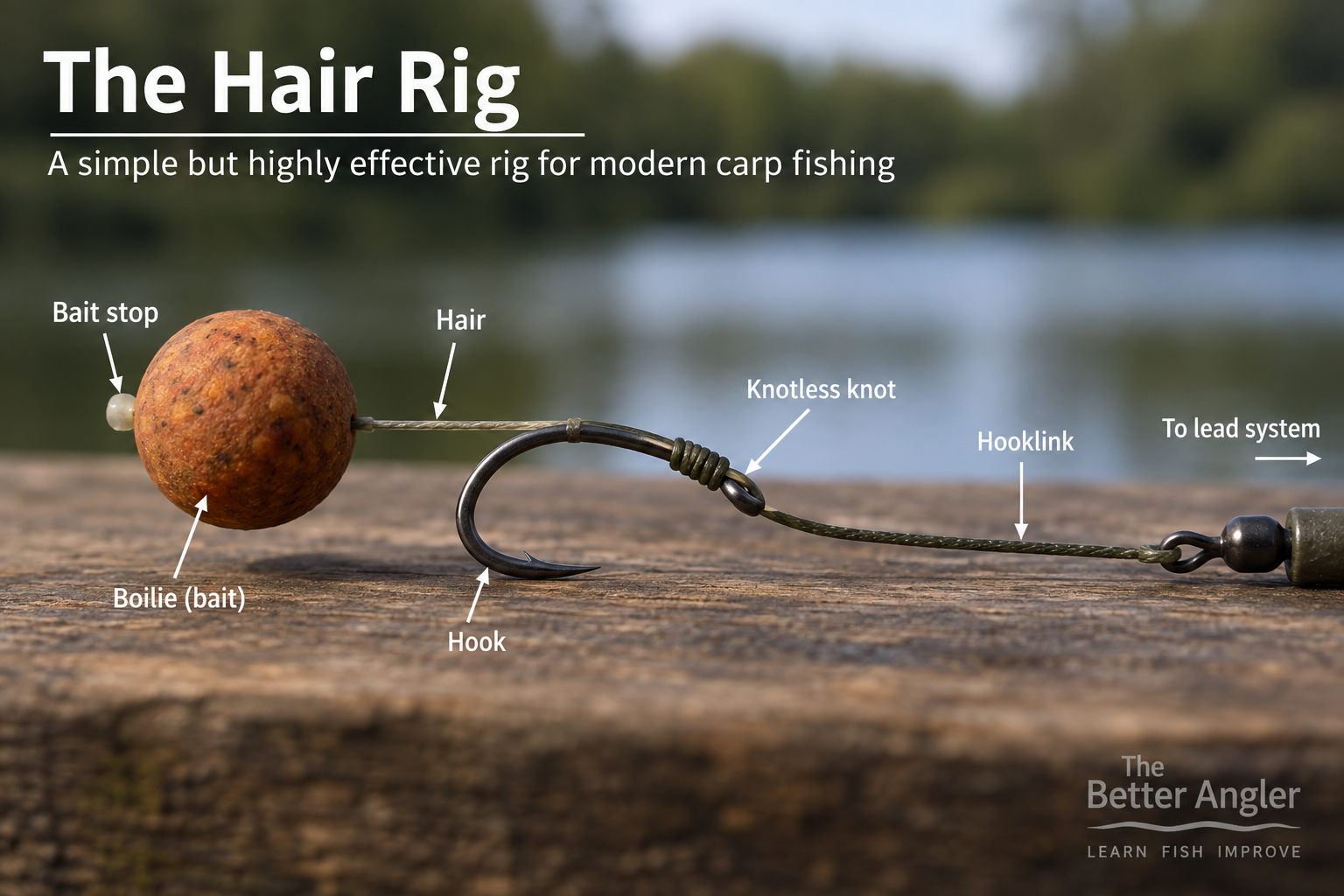
A simple hair rig showing how the boilie is mounted away from the hook, leaving the hook point exposed for an effective carp fishing presentation.
Advertisement
Tackle worth buying
Shop rods, reels, terminal tackle and more at Total Fishing Tackle.
A hair rig gets its name from the short length of line extending from the hook. The bait is mounted onto this section, known as the hair, rather than being pushed directly onto the hook itself.
At the end of the hair is normally a small loop. A baiting needle is passed through a boilie, pellet or other suitable bait and attached to this loop. The bait is then pulled down the hair and secured with a small bait stop.
This leaves the hook completely exposed.
It may initially seem strange to fish with the bait hanging away from the hook, particularly if you are accustomed to traditional coarse fishing methods where maggots, worms or sweetcorn are placed directly onto the hook. However, separating the hook from the bait is precisely what makes the hair rig so effective.
Why Did the Hair Rig Change Carp Fishing?
The hair rig became established in carp fishing during the late 1970s and early 1980s and is generally associated with anglers Kevin Maddocks and Len Middleton.
The idea developed from observations of how carp fed. Rather than simply biting pieces of food, carp can draw potential food items into their mouths using suction. They can then investigate them before either swallowing or rejecting them.
A large hook buried inside a bait could make that bait behave unnaturally. By moving the bait away from the hook, anglers could offer something that a carp could take into its mouth much more naturally.
The hook would follow behind the bait.
Once the carp attempted to reject the bait, the exposed hook had an opportunity to catch hold in the fish's mouth. Combined with a suitable lead system, this helped create the basis of the self-hooking rigs that dominate modern carp fishing. The concept was simple, but its influence was enormous.
How Does a Hair Rig Work?
Understanding how the rig works is more useful than simply copying somebody else's measurements.
Imagine a carp approaching a boilie resting on the bottom. The fish draws the boilie into its mouth. Because the boilie is attached to the hair, the hook follows.
If the carp decides to reject the bait, it attempts to blow the boilie back out. The relatively heavy hook behaves differently from the bait and can drop towards the bottom of the mouth.
As the carp moves away, the hooklink begins to tighten against the weight of the lead. The hook point catches hold and the resistance of the lead helps drive it home.
This is why an extremely sharp hook is so important when using this type of rig. The distance between the bait and hook also matters. If the hair is extremely short, the bait can interfere with the hook's ability to turn and take hold. If it is excessively long, the presentation can become awkward and may produce less consistent hooking.
There is no single perfect hair length because hook size, bait size and presentation all influence how the rig behaves. For a beginner, however, leaving a modest gap between the bend of the hook and the bait provides a good starting point.
Gardner
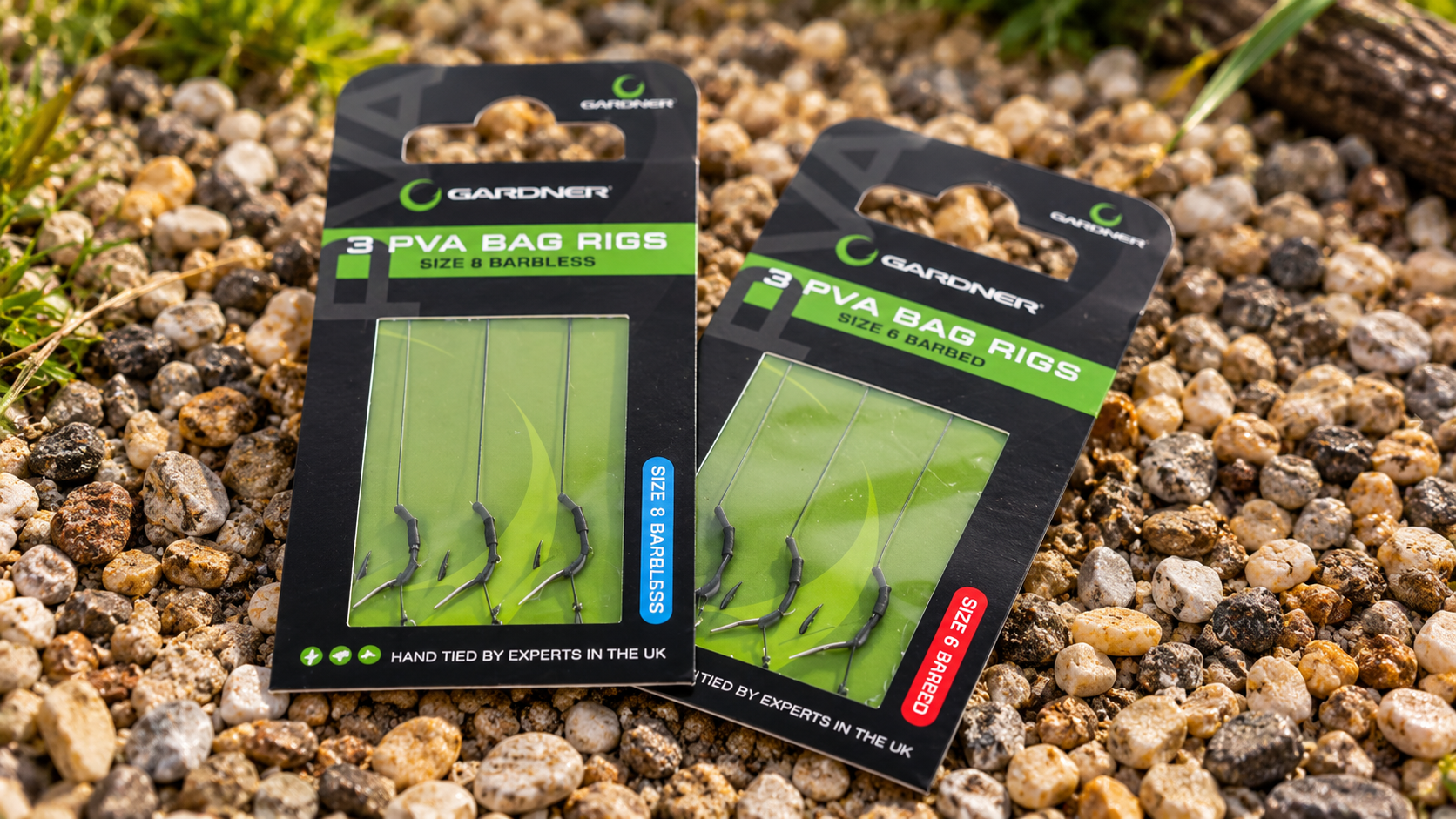
Gardner - Pva Bag Ready Rigs x3
A pack of three professionally tied carp rigs designed specifically for solid PVA bag fishing. Ready to use straight from the packet, they provide a simple and convenient option for anglers who want a compact, effective presentation without tying their own rigs.
Best for: Solid PVA bag fishing, quick setup and anglers who prefer ready-tied carp rigs
90/100Our verdict score
What we like
✓Ready tied and immediately usable
✓Designed specifically for solid PVA bags
✓Good value at around £5.99 for three
✓Saves time tying short bag rigs
✓Available in different hook sizes and barbed/barbless options
✓- Made by an established UK carp tackle brand
Worth knowing
−Less flexibility than tying your own rigs
−Only three rigs per pack
−- Experienced anglers may prefer their own hooklink and hook combinations
Prices checked 4 Oct 2026. We may earn a commission if you buy through these links — it never changes what we recommend.
How to Tie a Simple Hair Rig
One of the advantages of the hair rig is that you don't need a complicated collection of rig components to make one. A basic version can be tied using a suitable carp hook and hooklink material. Start by creating a small loop at the end of the hooklink. This becomes the loop used for attaching the bait stop.
Thread the other end of the hooklink through the eye of the hook, leaving enough material beyond the hook to form the hair. Position the hair so that your chosen bait will sit just beyond the bend of the hook. The hook can then be secured using a knotless knot.
Wrap the hooklink several times around the shank of the hook before passing it back through the hook eye. When tightened correctly, this creates a neat rig while leaving the hair running down the back of the hook.
You can then attach the other end of the hooklink to your chosen lead arrangement.
Before casting, always test the rig. Mount a bait and check that it sits correctly behind the hook. Make sure the hook point is completely exposed and extremely sharp.
It is also worth checking the hook regularly during a session. Gravel, stones and other debris can damage a hook point surprisingly quickly.
What Baits Can You Use on a Hair Rig?
Boilies are probably the bait most closely associated with hair rigs, and the two work extremely well together. A baiting needle can easily pass through a boilie, allowing it to be mounted securely on the hair without damaging the hook point.
However, hair rigs are far more versatile than simply being boilie rigs.
Pellets can be excellent carp baits and can either be drilled or purchased ready for hair rigging. Hard particles such as tiger nuts can also be mounted on a hair, provided they have been prepared correctly before fishing.
Sweetcorn and maize can also be presented this way. Several grains can be mounted together to produce a larger bait, while artificial corn is frequently combined with natural baits to alter the buoyancy of the presentation.
A hair rig can also be used to create a simple snowman presentation. This normally combines a sinking bottom bait with a smaller buoyant bait. The result is a presentation that still sits close to the lakebed but is lighter for the carp to pick up.
Whatever bait you choose, the important thing is that the hook remains free to do its job.
Using Hair Rigs Effectively
Although hair rigs are simple, they still need to be matched to the conditions.
A straightforward sinking boilie presented on a hair can be extremely effective over clean gravel, sand or firm clay. If you are fishing over weed, soft silt or heavy debris, you may need to alter the presentation or use a different rig altogether. Hooklink length can also make a difference.
A relatively short hooklink can provide a very direct connection between the hook and lead. Longer hooklinks give the bait more freedom of movement and can sometimes be useful over softer lakebeds.
There is no need to constantly change rigs simply because another angler is using something different. If your rig is presenting the bait properly, isn't tangling and is producing good hook holds, there may be little reason to change it.
One of the best habits a beginner can develop is testing the rig before casting. Place it in shallow water where you can see it and watch how the hook and bait settle. You can also gently pull the hooklink to see how the hook reacts.
Doing this teaches you considerably more about rigs than simply copying photographs.
From the Hair Rig to Modern Carp Rigs
Modern carp fishing contains an enormous number of specialised rigs. Blowback rigs, D-rigs, multi rigs, Ronnie rigs and many other presentations have been developed to solve particular problems or change the way the hook and bait behave.
Many still rely on the same fundamental principle introduced by the hair rig: separating the hook from the bait.
Modern rig components can make carp fishing appear unnecessarily complicated to somebody starting out. Hook beads, swivels, kickers, shrink tube and numerous specialist components all have legitimate uses, but you don't need all of them to start catching carp.
A basic hair rig tied correctly with a sharp hook and appropriate bait remains highly effective.
Learning this rig also gives you a useful foundation for understanding more advanced carp rigs later. Once you understand why the bait is positioned away from the hook and how the hook is supposed to turn and take hold, the purpose of many modern rig designs becomes much easier to understand.
A Rig Every Carp Angler Should Understand
The hair rig is one of those rare fishing developments that genuinely changed the way anglers approached their quarry. Its effectiveness comes not from complexity, but from understanding how carp feed and allowing the hook and bait to perform separate jobs. For beginners, it is an ideal first carp rig to learn.
Tie it carefully, use a sharp hook, match the bait and hook size sensibly and make sure the presentation reaches the bottom without tangling. Most importantly, spend some time watching how your rig behaves in shallow water.
There will always be newer and more complicated carp rigs to experiment with, but the basic hair rig remains just as relevant to modern carp fishing.
More than four decades after its development, that simple piece of line extending beyond the hook continues to form the foundation of many of the rigs carp anglers use today.
ESP
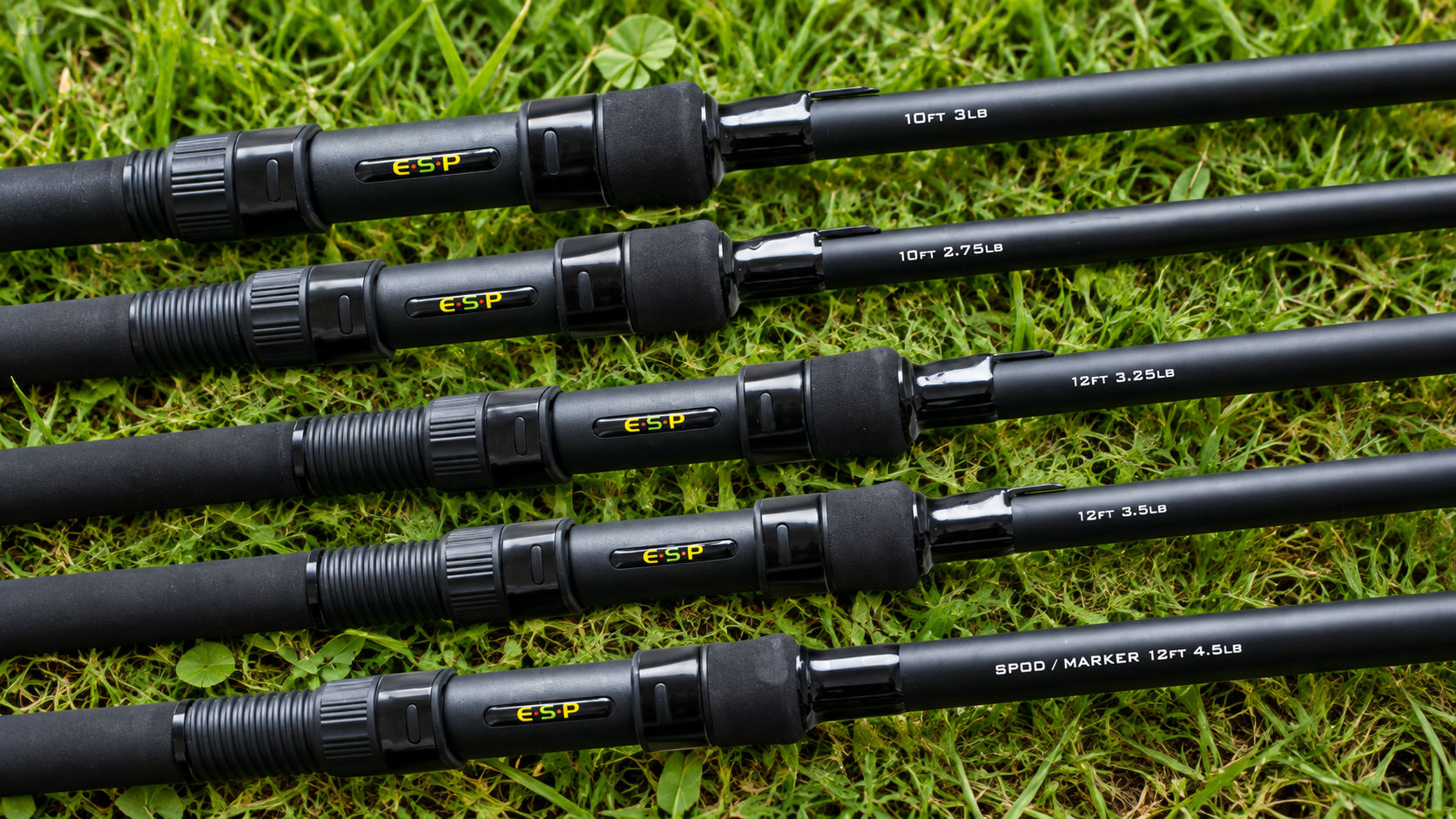
ESP Tectrix Carp Rods
A versatile range of ESP carp rods offering quality components, clean understated styling and a choice of lengths and test curves. The Tectrix range covers everything from shorter-range fishing through to more powerful distance work, without the price tag of many high-end carp rods.
Best for: All-round carp fishing, value for money and anglers wanting quality without a high-end price
What we like
✓Very good value for money
✓Quality ESP components and finish
✓Multiple lengths and test curves
✓Suitable for a wide range of carp fishing
✓Dedicated Spod/Marker model available
✓- Understated styling
Worth knowing
−Several models can make choosing the right test curve less straightforward for beginners
−- More specialised anglers may prefer a rod designed specifically for extreme-range casting