The Humble Minnow: Small Fish, Big Importance
The humble minnow may be small, but it plays an important role in our rivers and lakes. Discover its place in the food chain, its traditional use as live and dead bait, and why healthy minnow populations can help support bigger predatory fish.
3 September 2026
Tackle worth buying
Shop rods, reels, terminal tackle and more at Total Fishing Tackle.
Meet the Common Minnow
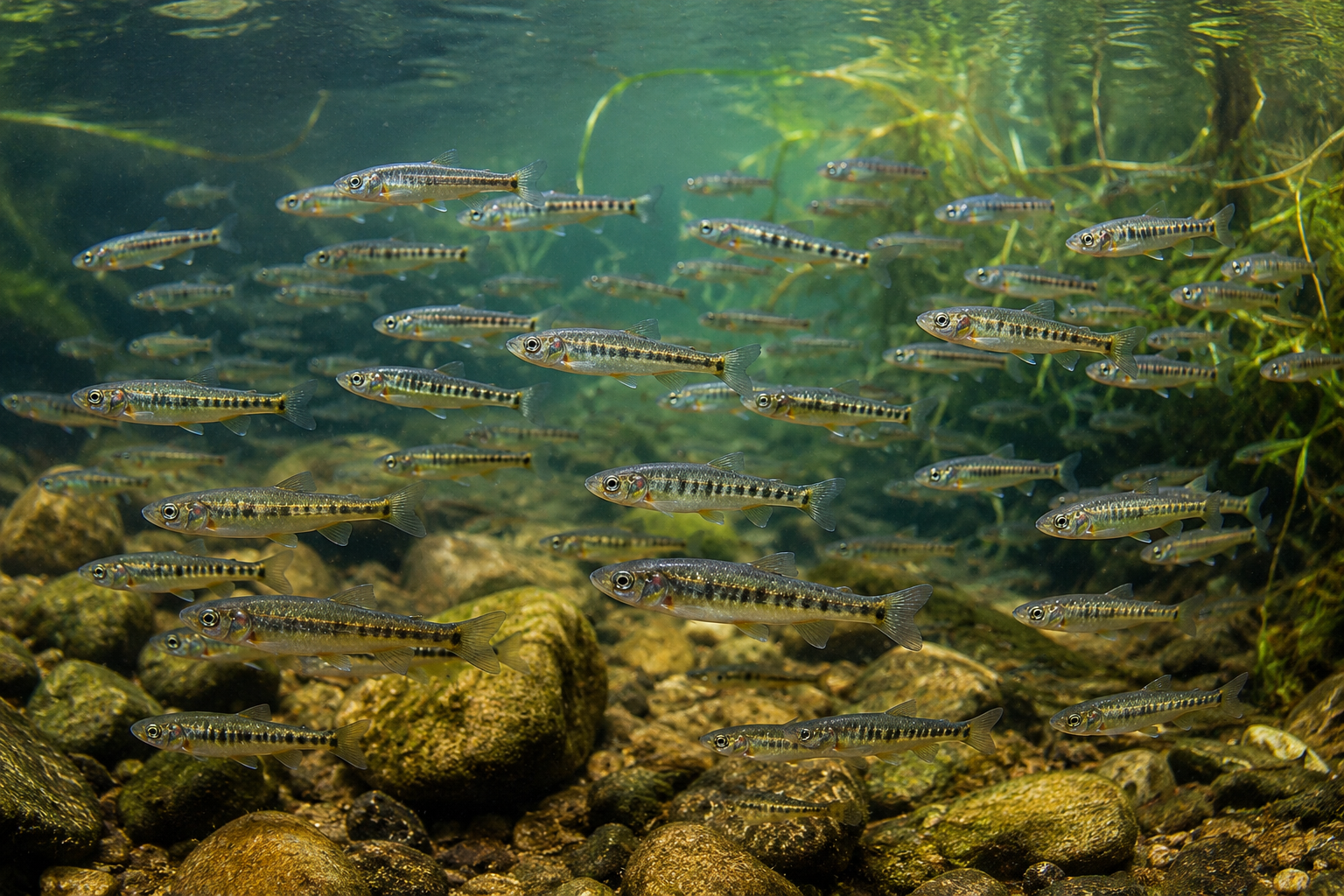
Common minnows are small, streamlined fish found across much of Britain. They are particularly associated with clean rivers and streams but can also occur in lakes and other suitable waters.
They rarely reach anything approaching the size that would interest an angler fishing for specimens. Most are only a few inches long.
Minnows generally live in shoals, sometimes containing large numbers of fish. Watch a shallow river on a warm day and you may see these shoals moving around gravel, stones and weed.
Their small size makes shoaling an important defence against predators.
Individually, a minnow is vulnerable. As part of a large shoal, there are many more eyes watching for danger and a predator has a harder time concentrating on an individual fish.
The Minnow's Place in the Food Chain
Minnows sit in an interesting position because they are both predator and prey.
They feed on small aquatic organisms including insect larvae, tiny crustaceans and other invertebrates. They can also consume plant material and other small food particles available within their environment.
In turn, minnows become food for larger animals.
This transfer of energy through the freshwater ecosystem is one reason small fish shouldn't be considered unimportant simply because anglers aren't interested in catching them.
A healthy river needs food at different levels.
Tiny aquatic organisms support small fish. Small fish support larger predators. Those predators may eventually become the specimen fish anglers travel considerable distances to catch.
Remove too much from the bottom and middle of that chain and the effects can eventually be felt further up.
Minnows Mean Food for Predators
Think about the amount of food required to produce a big perch, chub, trout or pike.
These fish don't become large without access to sufficient food.
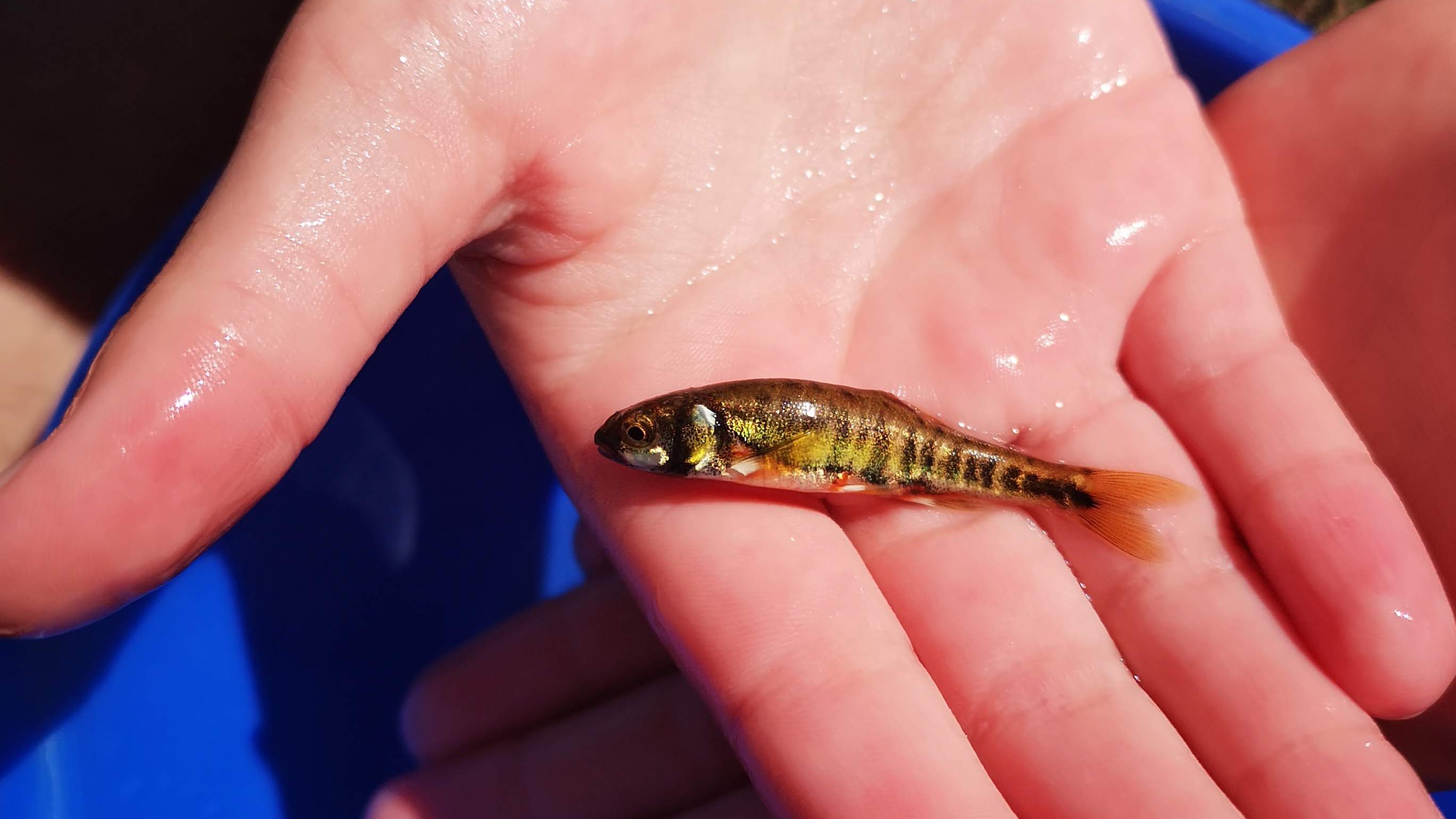
Minnows are perfectly sized prey for many predators. They're small enough to swallow easily, often occur in shoals and can be extremely abundant where conditions suit them.
Perch will readily hunt minnows, particularly as they become larger and increasingly predatory.
Chub are opportunistic feeders and won't ignore a shoal of vulnerable small fish.
Trout regularly consume small fish alongside their diet of aquatic and terrestrial insects.
And pike, particularly smaller pike, can also take advantage of abundant shoals of small prey fish.
Minnows are certainly not the only prey involved. Roach, dace, bleak, gudgeon and young fish of numerous species can all contribute to the available food supply.
But a thriving population of small fish is generally something an angler should be pleased to see.
Can Lots of Minnows Mean Bigger Fish?
It isn't quite as simple as saying that a river containing thousands of minnows must contain huge predators.
Water quality, habitat, temperature, spawning success, fishing pressure and numerous other factors influence fish populations.
Nevertheless, abundant prey is one of the ingredients required for predators to grow.
A stretch of river containing large populations of minnows and other small fish effectively has a substantial natural food supply.
This is useful information for anglers.
If you walk along a river and repeatedly see clouds of minnows scattering from the margins, don't dismiss them as nuisance fish.
Ask what might be feeding on them.
Watch the Minnows
Minnows can actually help you locate predators.
Imagine a quiet summer river with a large shoal of minnows holding in shallow water. Suddenly the shoal explodes in different directions.
Something caused that reaction.
It could be a perch attacking from underneath, a chub moving through the shoal or another predator making an attempt.
Repeated disturbances can be particularly interesting.
Instead of immediately casting into the middle of the river, spend a few minutes watching what the small fish are doing.
Sometimes prey fish tell you more about the location of predators than the predators themselves.
Using Minnows as Livebait
Minnows have traditionally been used as livebait for predatory fish.
A live minnow provides movement, vibration and scent while also looking completely natural to a predator accustomed to feeding on them.
Perch are an obvious target. A lively minnow presented in an area where perch naturally hunt small fish can be extremely effective.
However, livebaiting is subject to fishery rules and legal restrictions, and moving live fish between waters can create serious ecological and disease risks. Never assume that because minnows are present somewhere they can be collected and transported elsewhere.
Always check the current rules for the water you're fishing and the relevant regulations before using live fish as bait.
Where livebaiting is permitted, responsible fish handling is just as important for the bait fish as it is for the predator you're hoping to catch.
Dead Minnows as Bait
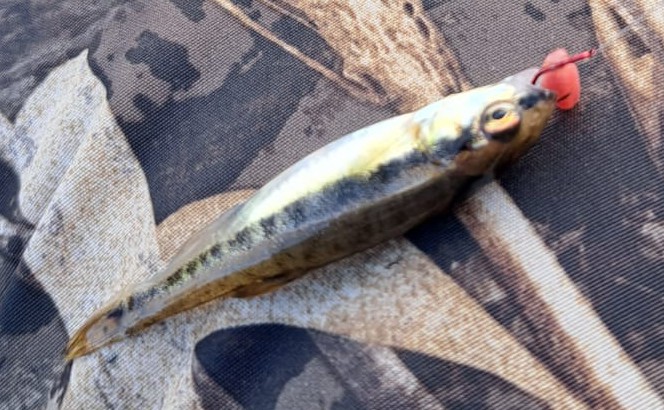
A dead minnow can be equally interesting, and in some situations it is the more practical option.
Predatory fish don't exclusively chase healthy living prey. An easy meal lying on or moving close to the bottom can be difficult to ignore.
Dead minnows can be presented beneath a float, fished on the bottom or carefully worked through the water where appropriate.
Their major advantage is authenticity.
A minnow has the profile, scent and appearance of something the predator already recognises as food.
There is no need to imitate a fish when you're actually presenting one.
Again, anglers should check fishery rules and relevant bait regulations rather than assuming dead freshwater fish can be transported or used anywhere.
Minnows Aren't Just Bait
It is easy to discuss minnows purely in terms of their usefulness to anglers, but their ecological importance goes beyond that.
They are part of a much larger freshwater community.
They consume smaller organisms and are themselves consumed by fish, birds and other predators. Their shoals represent stored energy moving through the ecosystem.
They can also provide anglers with clues.
If a river contains plenty of minnows alongside healthy populations of other small fish, there is clearly food available for predators. That doesn't guarantee a monster perch or chub behind the next tree, but it gives those fish an important ingredient they need to thrive.
Conversely, if a previously productive stretch suddenly appears devoid of small fish, it is worth wondering why.
Never Underestimate the Small Fish
The monthly catch-up
One email a month: new guides, tackle worth buying and waters we've fished.
Related guides
The Best Baits for Chub: What to Use and When
Discover the best baits for catching chub and when to use them. From bread and maggots to worms, cheese and pellets, this guide covers proven chub baits for UK rivers.
13 Sept 2026 · 5 min read
A Beginner’s Guide to Chub Fishing
Learn how to catch chub with this beginner-friendly guide. Discover where to find chub, the best baits to use and simple float, ledger and surface fishing techniques.
13 Sept 2026 · 5 min read
Dace Fishing: A Simple Guide to Catching River Dace
Learn how to catch dace on rivers with this simple guide covering the best baits, tackle, swims, feeding techniques and how to trot a float for this fast, hard-fighting coarse fish.
3 Sept 2026 · 5 min read