Using Particles for Carp Fishing: Baits, Preparation and Feeding Tactics
Particle baits are a versatile and affordable way to attract carp and encourage confident feeding. Discover how to prepare and use hemp, maize, sweetcorn and tiger nuts, create effective feeding mixes and choose the right hookbait presentation.
23 September 2026 · 7 min read
Some links in this guide are affiliate links. If you buy through them we may earn a small commission at no extra cost to you — it never influences what we recommend.
Particle baits have been used in carp fishing for decades and remain one of the most effective ways to encourage fish to feed confidently. From the unmistakable smell of freshly cooked hemp to the bright yellow grains of sweetcorn, particles offer anglers an affordable and versatile alternative to feeding exclusively with boilies.
One of their greatest advantages is the way they encourage carp to search for individual food items across the lakebed. Rather than picking up a few large baits and moving on, fish can spend considerable time investigating a well-prepared bed of particles.
However, successful particle fishing involves more than introducing a bucket of mixed seeds into a swim.
Understanding which particles to use, how to prepare them safely and how much bait to introduce can make a considerable difference to your results.
Advertisement
Tackle worth buying
Shop rods, reels, terminal tackle and more at Total Fishing Tackle.
Carp are naturally adapted to searching through sediment and vegetation for food. They regularly feed on small organisms, plant material and other food items found on or within the lakebed.
Particle baits take advantage of this feeding behaviour by providing numerous small food items that encourage carp to remain in an area.
Hemp is particularly effective because its small size means that fish must spend time picking up individual seeds. As they feed, carp may disturb the bottom, releasing clouds of sediment and potentially attracting the attention of other fish.
A bed of particles can also encourage carp to feed more confidently, particularly on heavily pressured waters where fish have become cautious around conventional boilie presentations.
Another advantage is cost. Buying dry particles in bulk and preparing them yourself can be considerably cheaper than introducing large quantities of premium boilies. This makes particles particularly useful for anglers who regularly bait established feeding areas or fish longer sessions.
Nevertheless, particles should not simply be regarded as a cheap alternative to boilies. They are an effective bait in their own right and can be used to complement almost any carp fishing approach.
The Most Popular Particle Baits for Carp
Hemp is arguably the most widely used particle in carp fishing. When correctly prepared, the dark outer shell splits to reveal the pale inner kernel. Cooked hemp also releases natural oils and produces a distinctive smell that anglers have long associated with successful carp fishing.
Its small size makes it particularly effective for creating a feeding area, although it is usually combined with a larger hookbait rather than being presented directly on the hook.
Sweetcorn is another extremely popular option. Its bright yellow colour makes it easily visible against many lakebeds, while its soft texture allows carp to pick it up readily. Tinned sweetcorn is particularly convenient because it can be used straight from the tin without additional cooking.
Maize offers many of the same advantages as sweetcorn but is generally larger and firmer. Once properly prepared, it can withstand attention from smaller fish more effectively and makes an excellent alternative hookbait.
Tiger nuts are particularly popular among anglers targeting larger carp. Despite their name, they are actually small tubers rather than true nuts. Their naturally sweet flavour and firm texture make them an effective hookbait, particularly where smaller fish or crayfish regularly interfere with softer offerings. However, tiger nuts should be used sparingly, and some fisheries prohibit them altogether.
Other useful particles include maple peas, chickpeas, tares and commercially prepared seed mixtures. Each offers different characteristics, allowing anglers to create feeding mixes suited to particular waters and conditions.
Preparing Particles Safely
Correct preparation is essential when using dry particles. Many seeds, grains and pulses absorb considerable amounts of water as they soak, while some also require cooking to make them suitable for fish to eat.
Introducing dry or inadequately prepared particles can harm fish. For this reason, anglers should always follow the preparation instructions provided by a reputable bait supplier.
Hemp is normally soaked before being brought to the boil and simmered until the outer shells begin to split. Depending on the product, soaking may take approximately 12–24 hours, followed by around 30 minutes of cooking.
Dry maize generally requires a longer soaking period, often around 24 hours, before being boiled until the grains are properly hydrated and softened.
Tiger nuts also require thorough soaking and cooking. Preparation times vary according to their size and the supplier's instructions, so there is no universal cooking time that should be applied to every batch.
If you are unfamiliar with preparing tiger nuts, buying them ready-prepared from a reputable bait manufacturer is a sensible option.
After cooking, particles can be left to cool in their cooking liquid, which contains some of the natural sugars, oils and other substances released during preparation.
Prepared particles should be stored hygienically and kept refrigerated or frozen when necessary. Discard any bait that has become mouldy or spoiled.
Always check the fishery rules before using particles, particularly nuts, as restrictions vary considerably between venues.
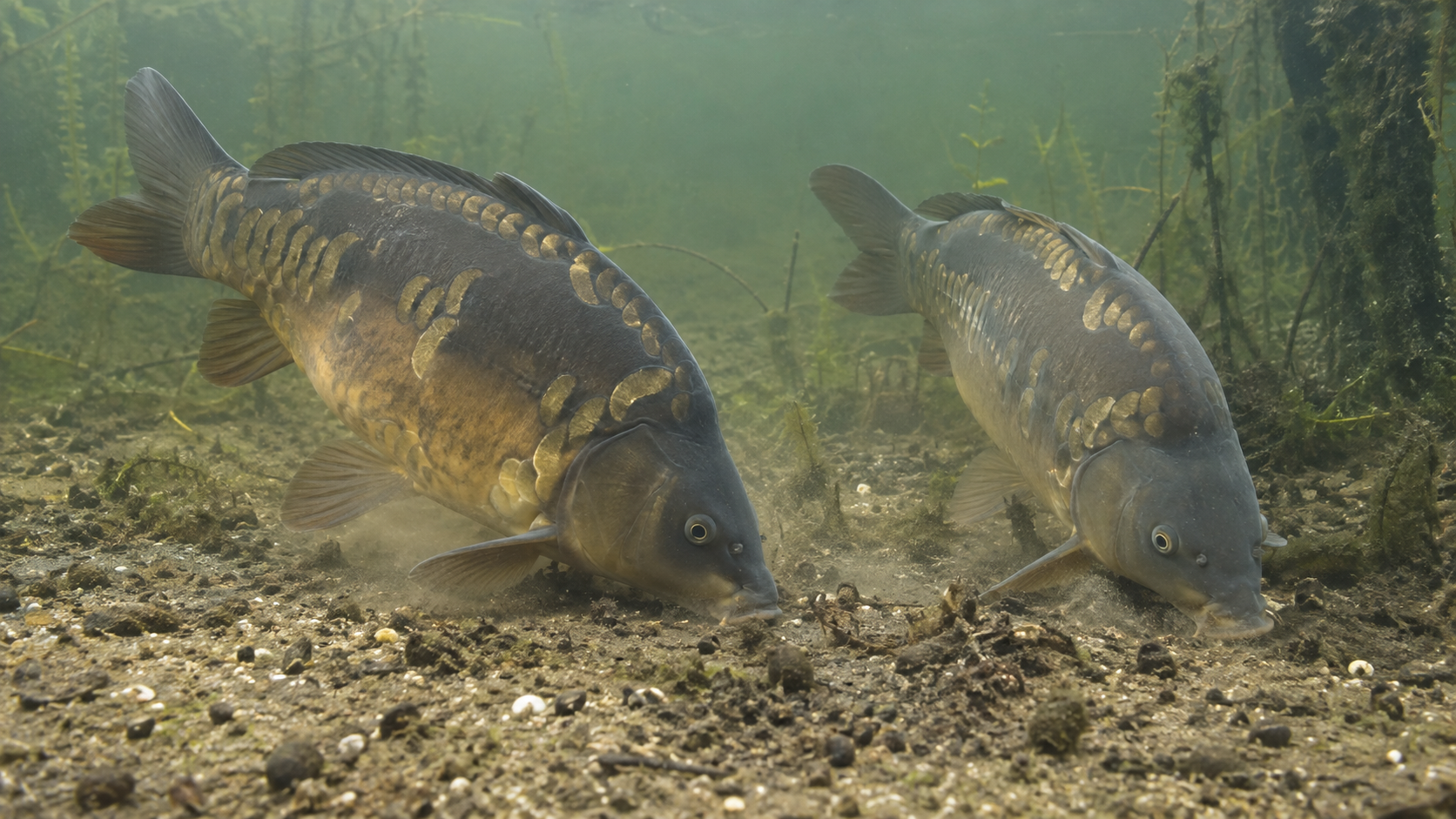
Two mirror carp feeding on the lakebed. Particle baits encourage this natural foraging behaviour, keeping carp searching for food across a baited area.
Creating an Effective Particle Feeding Mix
Although individual particles can be extremely effective, combining several varieties allows anglers to create a feeding mix with different sizes, colours and textures.
A mixture of prepared hemp, maize and sweetcorn provides an excellent starting point. The hemp creates a carpet of small food items, while the larger grains offer more substantial mouthfuls for feeding carp.
A few crushed or whole boilies can be added to introduce fish to the hookbait you intend to use. This can be particularly effective when fishing a boilie over particles, as the carp encounter familiar food items while searching through the feeding area.
Small quantities of pellets can also be incorporated, although their breakdown rate should be considered when preparing bait for longer sessions.
There is rarely any need to add large quantities of artificial flavourings. Properly prepared particles already contain natural attractants, and their effectiveness often comes from the feeding behaviour they encourage rather than an exceptionally strong smell.
A little of the liquid retained from cooking hemp or maize can help keep a mixture moist and distribute its natural attraction throughout the bait.
The most important consideration is ensuring that every ingredient has been prepared correctly before it is introduced into the water.
How Much Particle Bait Should You Introduce?
One of the most common mistakes in particle fishing is introducing too much bait before establishing whether carp are present and actively feeding.
Although particles can encourage prolonged feeding, a large quantity of bait can also satisfy the fish without producing a bite.
For a short session, a few handfuls of prepared hemp and sweetcorn may be sufficient to establish a feeding area. If carp begin feeding confidently, additional bait can be introduced gradually.
On heavily stocked commercial fisheries, fish may respond well to more regular feeding. However, on quieter waters with relatively few carp, a much smaller quantity may be appropriate.
Water temperature should also influence your approach. During warmer conditions, carp may feed actively for extended periods, particularly when several fish are competing for food.
In colder water, feeding activity often becomes less predictable, making a small, carefully positioned quantity of bait a more sensible starting point.
Location is equally important. Introducing several kilograms of particles into an area that carp rarely visit is unlikely to produce results, regardless of how attractive the bait might be.
Look for signs of feeding activity, patrol routes and areas where carp are already spending time before committing to a substantial baiting campaign.
Sonubaits
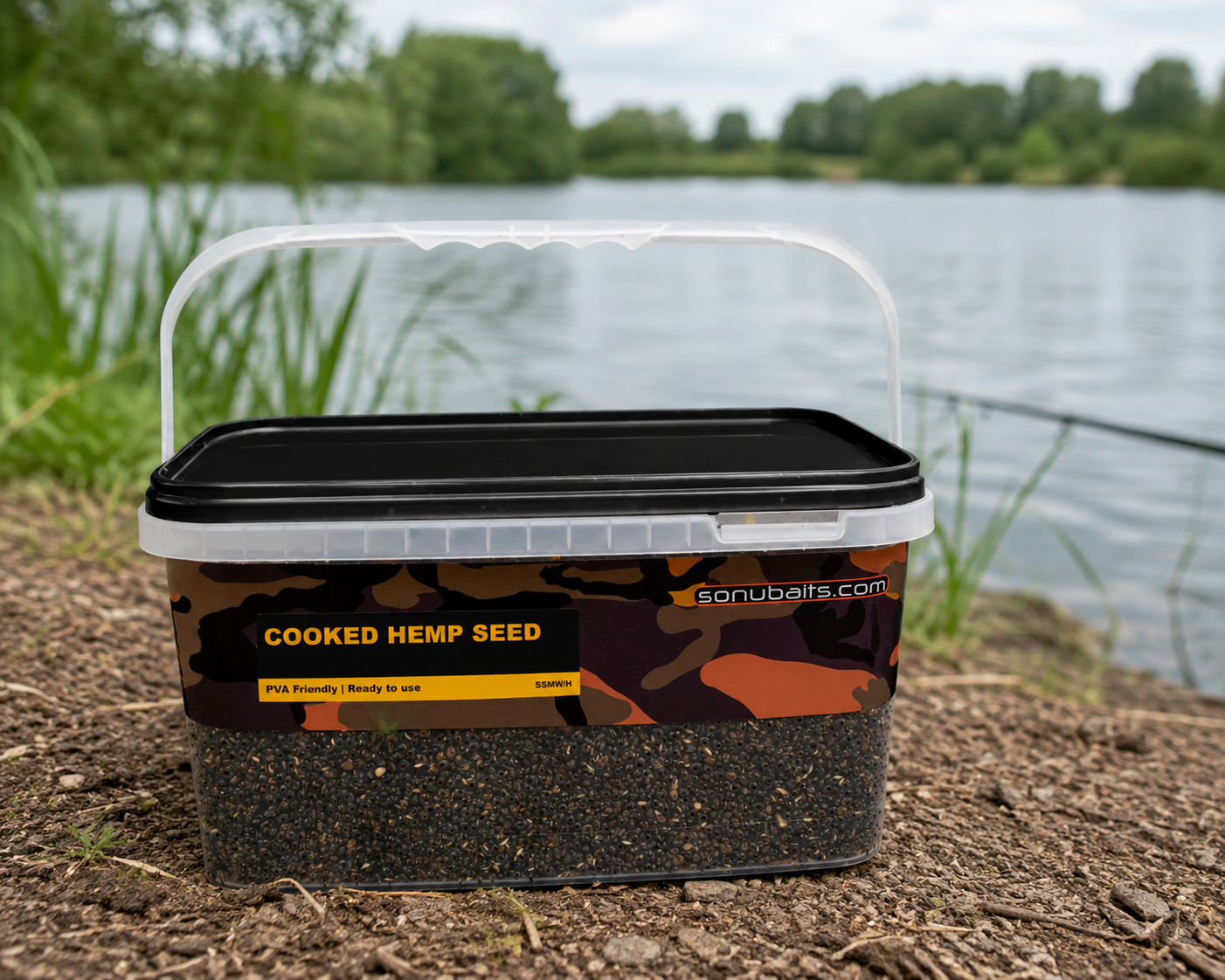
Sonubaits - Cooked Hemp Spod Mix 2.5kg
Ready-prepared cooked hemp seed packed with natural oils and flavour. Convenient and ready to use straight from the bucket, making it an easy way to introduce hemp when feeder fishing, spod fishing or building a particle-based swim.
Best for: Roach, tench, bream, barbel and carp fishing; ideal for feeder mixes, loose feeding, spod mixes and particle fishing.
90/100Our verdict score
What we like
✓Ready to use straight from the bucket
✓Rich in natural oils and attraction
✓Excellent for roach and other coarse fish
✓Can be added to groundbait and feeder mixes
✓PVA friendly
✓No preparation or cooking required
✓Good 2.5kg quantity
Worth knowing
−More expensive than preparing dry hemp yourself
−Large bucket may be excessive for occasional anglers
Prices checked 2 Sept 2026. We may earn a commission if you buy through these links — it never changes what we recommend.
Presenting Your Hookbait Over Particles
Fishing over particles does not necessarily mean using a particle as your hookbait.
A single boilie or balanced wafter can be extremely effective when presented over a bed of hemp and maize. The contrasting size of the hookbait makes it easy for carp to locate while they search through the smaller food items.
Alternatively, a grain of maize or several grains of sweetcorn can be mounted on a hair rig to create a presentation that closely matches the surrounding loose feed.
Where permitted, a properly prepared tiger nut can also make an excellent hookbait. Its firmness allows it to remain on the hair for extended periods, and it can be balanced with a small piece of buoyant material to improve its presentation.
When fishing over a tightly concentrated bed of particles, accurate casting becomes particularly important. Ideally, the hookbait should settle among the loose feed rather than several metres away from it.
A baiting spoon, catapult or baiting rocket can help introduce particles accurately, depending on the distance involved.
Always consider the nature of the lakebed before choosing your rig. A presentation that works effectively on firm gravel may be unsuitable for deep silt or thick weed.
Making Particles Part of Your Carp Fishing
Particle baits offer carp anglers considerable flexibility. They can be used to establish long-term feeding areas, encourage fish to remain in a swim or provide a small amount of attraction around a single hookbait.
Their effectiveness comes from understanding how carp feed and adapting your approach to the conditions rather than relying on large quantities of bait.
For anglers new to particle fishing, a simple mixture of prepared hemp and sweetcorn is an excellent starting point. As your confidence develops, maize, tiger nuts and other particles can be introduced to suit the water and your preferred fishing methods.
Above all, correct preparation and sensible feeding should remain priorities. Used responsibly, particles can become one of the most valuable additions to your carp fishing bait selection.
ESP
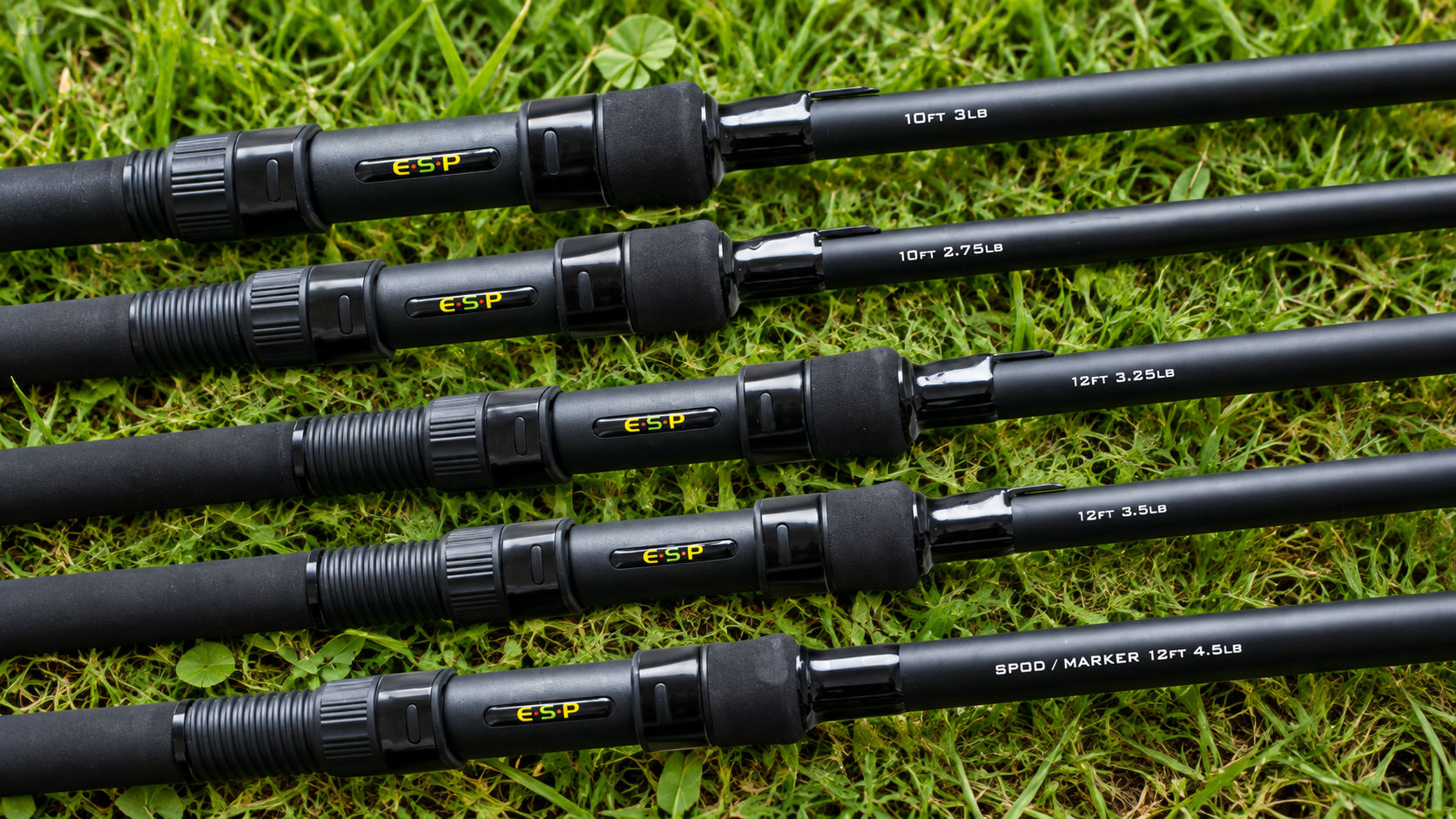
ESP Tectrix Carp Rods
A versatile range of ESP carp rods offering quality components, clean understated styling and a choice of lengths and test curves. The Tectrix range covers everything from shorter-range fishing through to more powerful distance work, without the price tag of many high-end carp rods.
Best for: All-round carp fishing, value for money and anglers wanting quality without a high-end price
What we like
✓Very good value for money
✓Quality ESP components and finish
✓Multiple lengths and test curves
✓Suitable for a wide range of carp fishing
✓Dedicated Spod/Marker model available
✓- Understated styling
Worth knowing
−Several models can make choosing the right test curve less straightforward for beginners
−- More specialised anglers may prefer a rod designed specifically for extreme-range casting