What Bait to Use for River Fishing: A Beginner’s Guide
Not sure what bait to use for river fishing? This beginner’s guide covers maggots, sweetcorn, bread, worms, pellets and meat, plus which baits to use for popular UK river fish.
8 August 2026 · 3 min read
Some links in this guide are affiliate links. If you buy through them we may earn a small commission at no extra cost to you — it never influences what we recommend.
Choosing a bait for river fishing can seem complicated when you first start. Walk into a tackle shop and you’ll find shelves full of pellets, boilies, groundbaits, pastes and artificial baits. The good news is that you really don’t need much of it.
For general coarse fishing on UK rivers, a handful of simple baits will catch almost everything you’re likely to encounter.
Here are some of the best river fishing baits for beginners and when to use them.
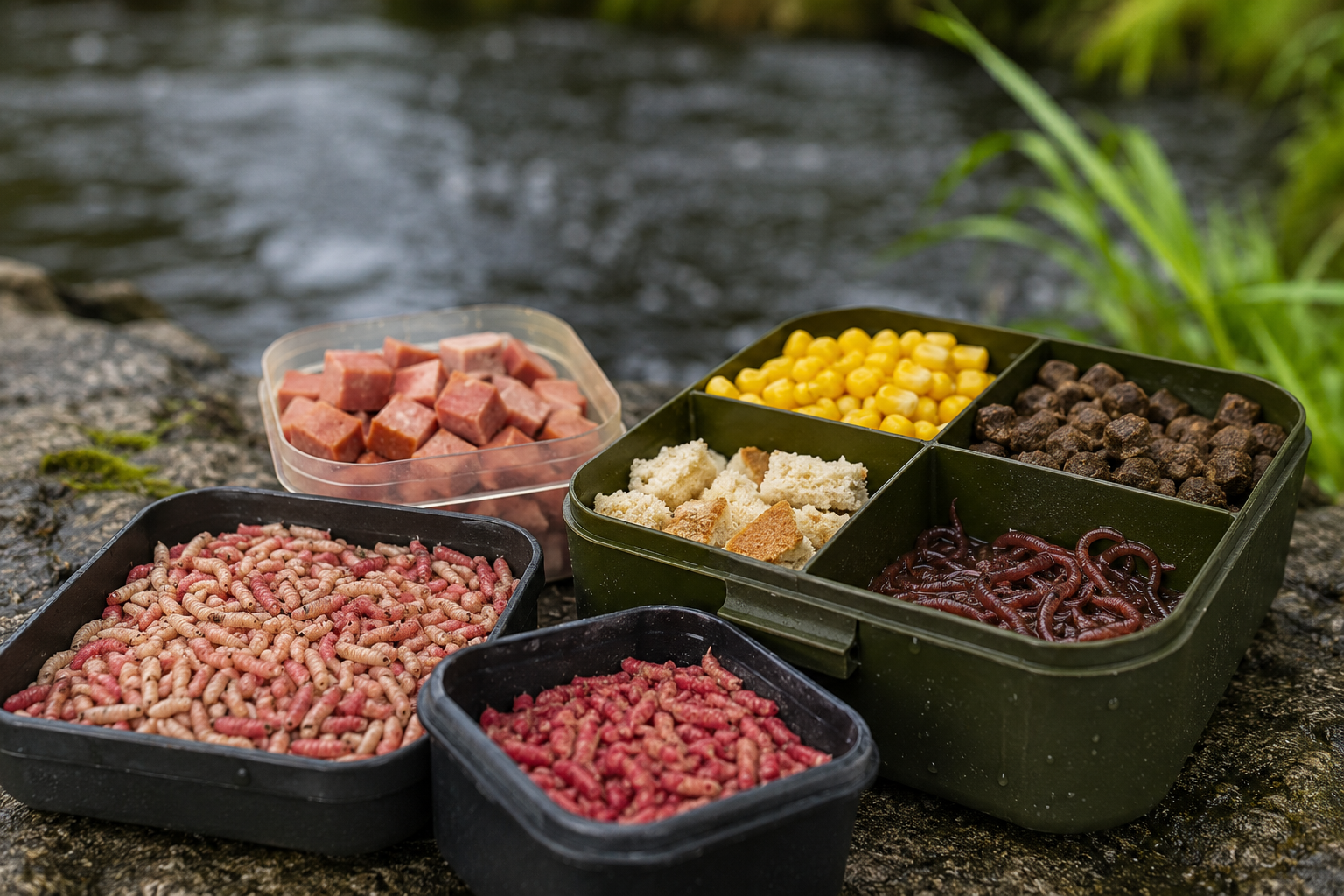
Maggots
If you only take one bait on your first river fishing trip, a pint of maggots is difficult to beat.
Maggots will catch roach, dace, perch, chub, gudgeon, bream and even the occasional barbel. They’re particularly effective when float fishing or trotting a bait downstream.
Start with one or two maggots on a relatively small hook. Regularly feeding a few loose maggots upstream of your float can gradually bring fish into your swim.
One of the biggest mistakes beginners make is feeding too much. On smaller rivers especially, feeding little and often is normally a better starting point.
Sweetcorn
Sweetcorn is cheap, convenient and surprisingly effective.
It’s particularly useful when you want a slightly larger bait that stands out among smaller fish. Chub, barbel, bream, roach and carp can all be caught on corn.
A single grain can be used for roach and other smaller species, while two or three grains make a substantial bait for larger fish.
Sweetcorn is also useful alongside maggots. You can begin with maggots to see what is in the swim before switching to corn if you want to target better fish.
Tackle worth buying
Shop rods, reels, terminal tackle and more at Total Fishing Tackle.
Bread
Never underestimate bread on a river.
A loaf of white bread can provide hook bait, loose feed and groundbait for very little money.
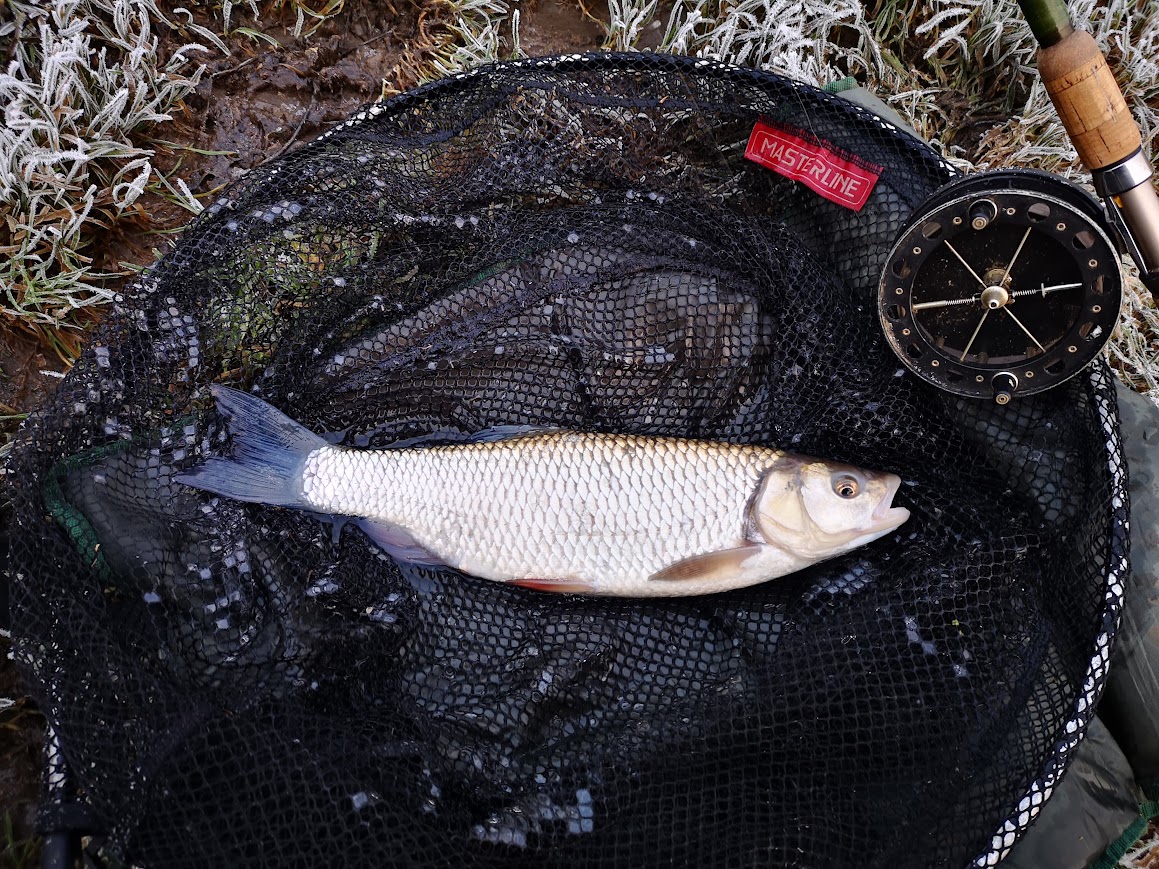
Small pieces of bread punch or flake can catch roach and dace, while a large piece of bread flake is an excellent bait for chub. Trotting bread flake is my favourite method for catching chub in winter. Feeding small balls of lquidised bread or crumb every few casts often brings results.
Floating crust can also be extremely effective when chub are feeding near the surface.
Bread is particularly useful on rivers running through towns and villages where fish may regularly encounter bread thrown into the water.
Worms
Worms are one of the oldest fishing baits and remain one of the best.
Small redworms and pieces of lobworm will catch numerous species, while a large lobworm is a superb bait when targeting bigger perch and chub.
Worms really come into their own when a river is carrying extra water or has become coloured after rain. Their movement and scent help fish locate the bait when visibility is poor.
If I were fishing a coloured river for perch, a lobworm would be one of my first choices.
Luncheon Meat
When you're looking for something more substantial, luncheon meat is worth carrying.
Cut it into cubes and fish it on the bottom for chub, barbel and carp.
Meat has a strong smell and can work particularly well in warmer conditions, although it can catch throughout much of the year.
The main disadvantage is that softer meat can come off the hook when casting. Cutting it into suitable cubes and keeping casts reasonably gentle helps.
Pellets
Pellets are particularly useful when targeting barbel, chub and carp.
They can be fished directly on the hook or, more commonly, attached using a hair rig. Pellets can also be introduced through a feeder or mixed with other loose feed.
For your first few river sessions, however, don't feel that you need dozens of different sizes and flavours. A simple packet of suitable coarse-fishing pellets is enough.
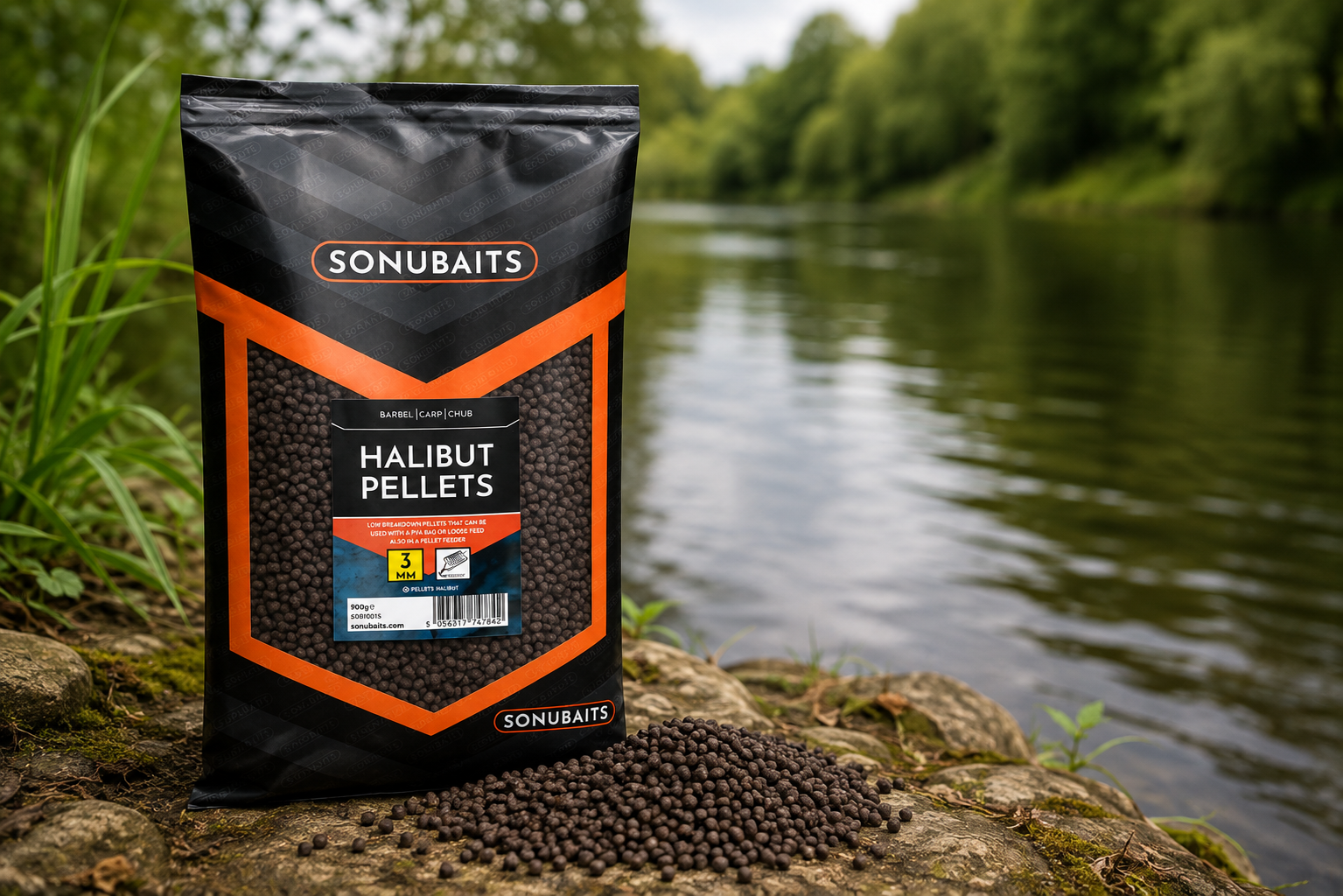
Sonubaits - Halibut Pellets
A reliable high-protein pellet designed for barbel, carp and chub. Sonubaits Halibut Pellets can be used as loose feed, through a feeder or alongside a matching hook bait, making them a useful choice for both river and stillwater fishing.
Best for: Barbel, chub and carp fishing on rivers and stillwaters.
What we like
- Good attraction for barbel, carp and chub
- Versatile for feeders, loose feed and PVA
- Strong fishmeal-based scent
- Available in useful pellet sizes
- Good value for regular fishing
Worth knowing
- Can attract smaller fish in some venues
- Fishmeal pellets may be less effective in very cold water
- Not always the best choice where fish see heavy pellet pressure
How it scored
- Attraction
- 90
- Versatility
- 88
- Value for money
- 88
- Ease of use
- 90
- Cold-water performance
- 80
Prices checked 19 Oct 2026. We may earn a commission if you buy through these links — it never changes what we recommend.
What Bait Should a Beginner Start With?
Keep things simple.
For a first general river fishing session, I would take maggots and sweetcorn.
Maggots give you an excellent chance of catching whatever happens to be in front of you, while sweetcorn provides a larger alternative if small fish are becoming a nuisance.
Once you've gained some experience, start experimenting with bread, worms, meat and pellets depending on the species you're trying to catch.
A simple guide is:
| Target fish | Good baits to try |
|---|---|
| Roach | Maggots, bread, sweetcorn |
| Dace | Maggots, casters, bread |
| Chub | Bread, maggots, worms, meat |
| Perch | Worms, maggots |
| Barbel | Pellets, meat, sweetcorn, worms |
| Bream | Maggots, sweetcorn, worms |
| Carp | Sweetcorn, pellets, meat |
Match Your Bait to the River
There isn't one bait that will always be best.
On a clear river with plenty of small fish, maggots can produce bites almost immediately. If those small fish become a problem, switching to corn, bread or a larger bait can help.
After heavy rain, when the river is coloured and carrying extra water, worms and other strongly scented baits can become particularly effective.
You should also think about what you're trying to catch. A single maggot might be perfect for trotting for dace, but it's unlikely to be your first choice when specifically targeting a large barbel.
Don't Take Too Much Bait
Beginners often assume successful anglers carry huge amounts of bait. For ordinary river fishing, that isn't necessary.
A small selection that you know how to use is far more useful than carrying ten different baits and constantly changing between them.
Start with maggots and sweetcorn. Learn how the fish respond to them and how feeding affects your swim. Then gradually introduce bread, worms, pellets and meat as you gain experience.
River fishing doesn't need to be complicated.
Sometimes a few maggots running naturally downstream beneath a float are all you need.
The monthly catch-up
One email a month: new guides, tackle worth buying and waters we've fished.
Related guides
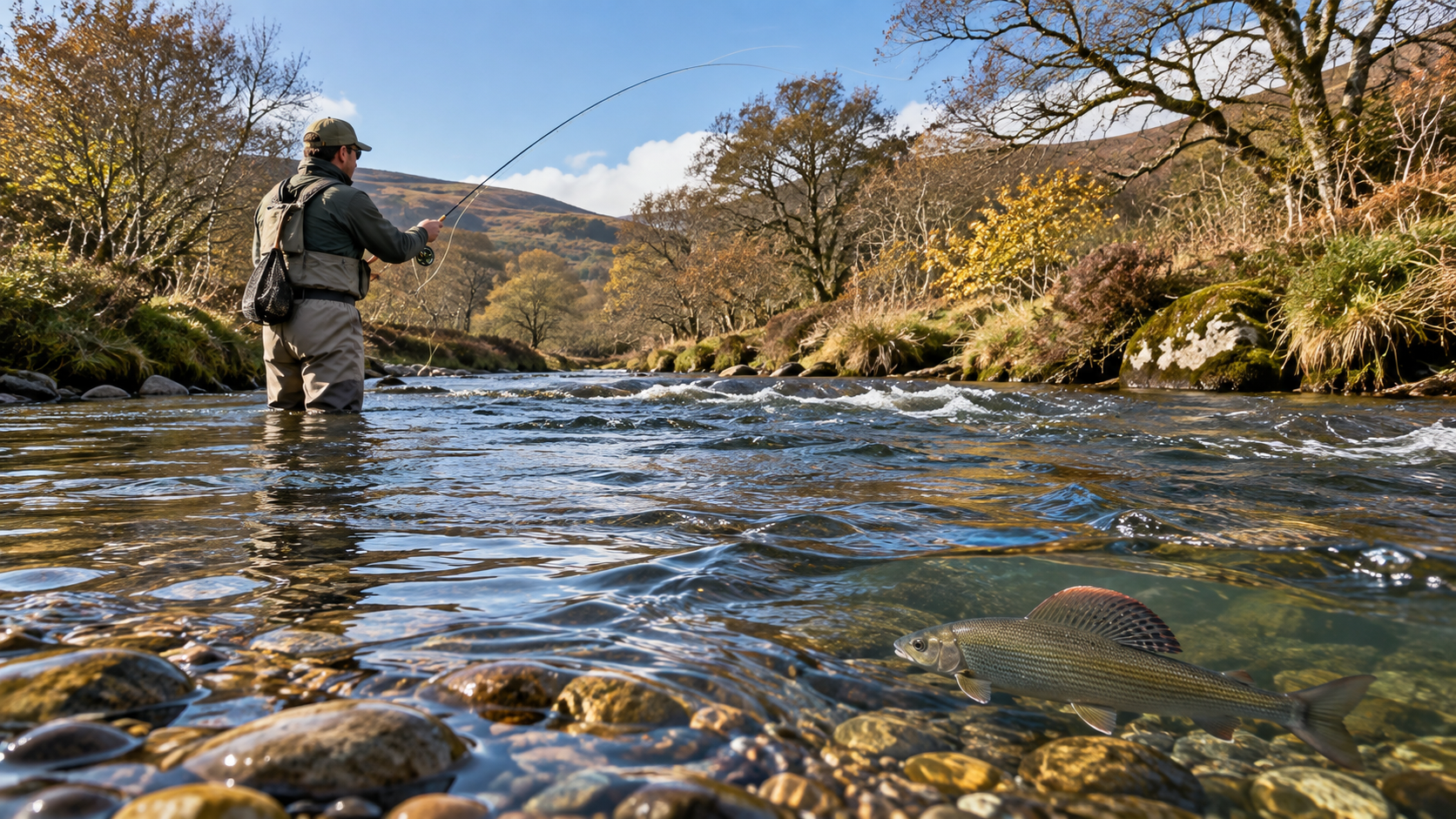
A Beginner’s Guide to Fly Fishing for Grayling
New to grayling fishing? This beginner’s guide explains the essential tackle, flies and techniques you need to start fly fishing for grayling on rivers, from finding fish to making a natural drift.
26 Sept 2026 · 7 min read
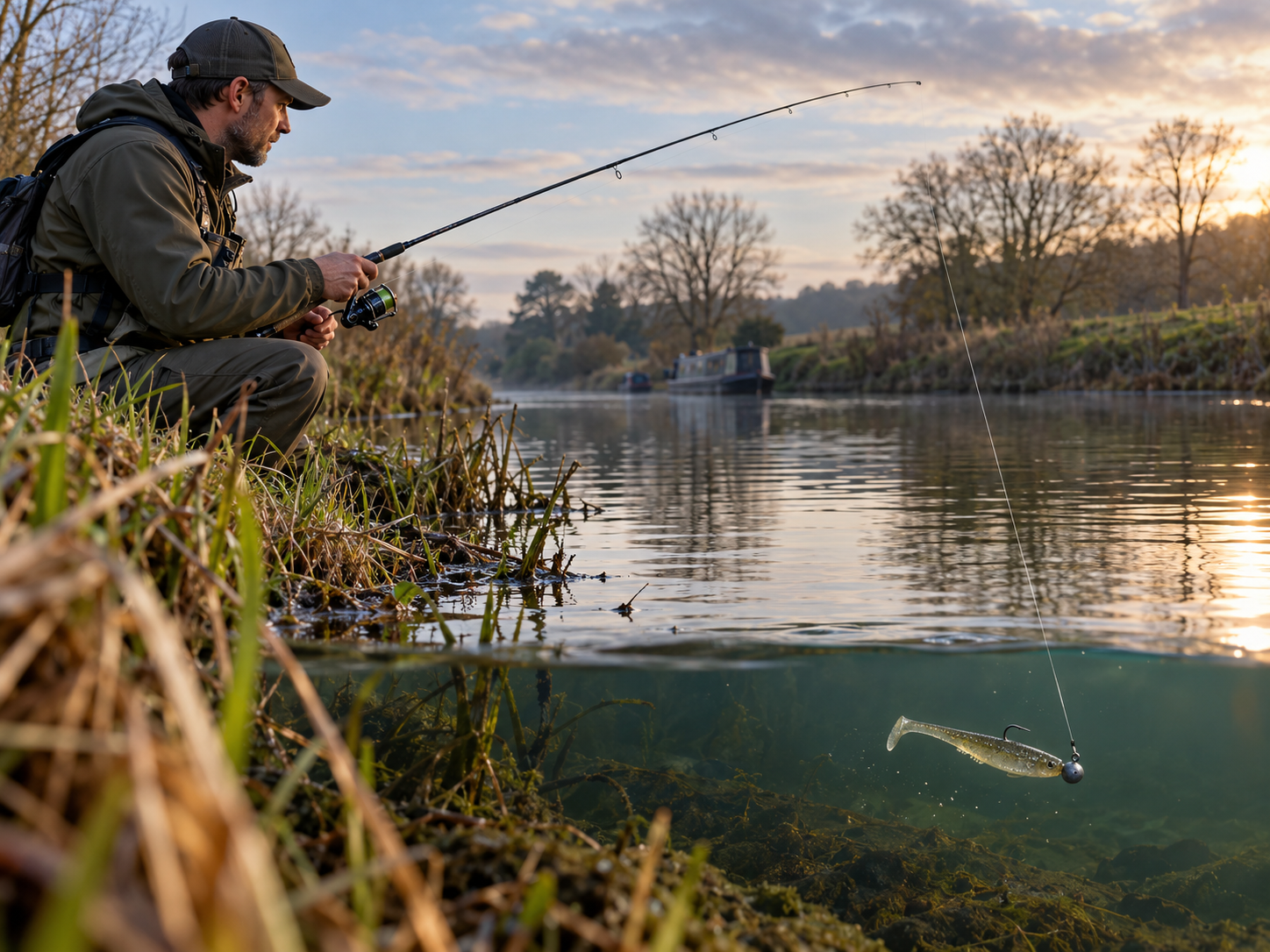
How to Fish Soft Plastic Lures: A Beginner’s Guide
A beginner-friendly guide to fishing soft plastic lures, covering depth control, jigging, steady retrieves, working the bottom and adapting your presentation to catch more predatory fish.
24 Sept 2026 · 6 min read
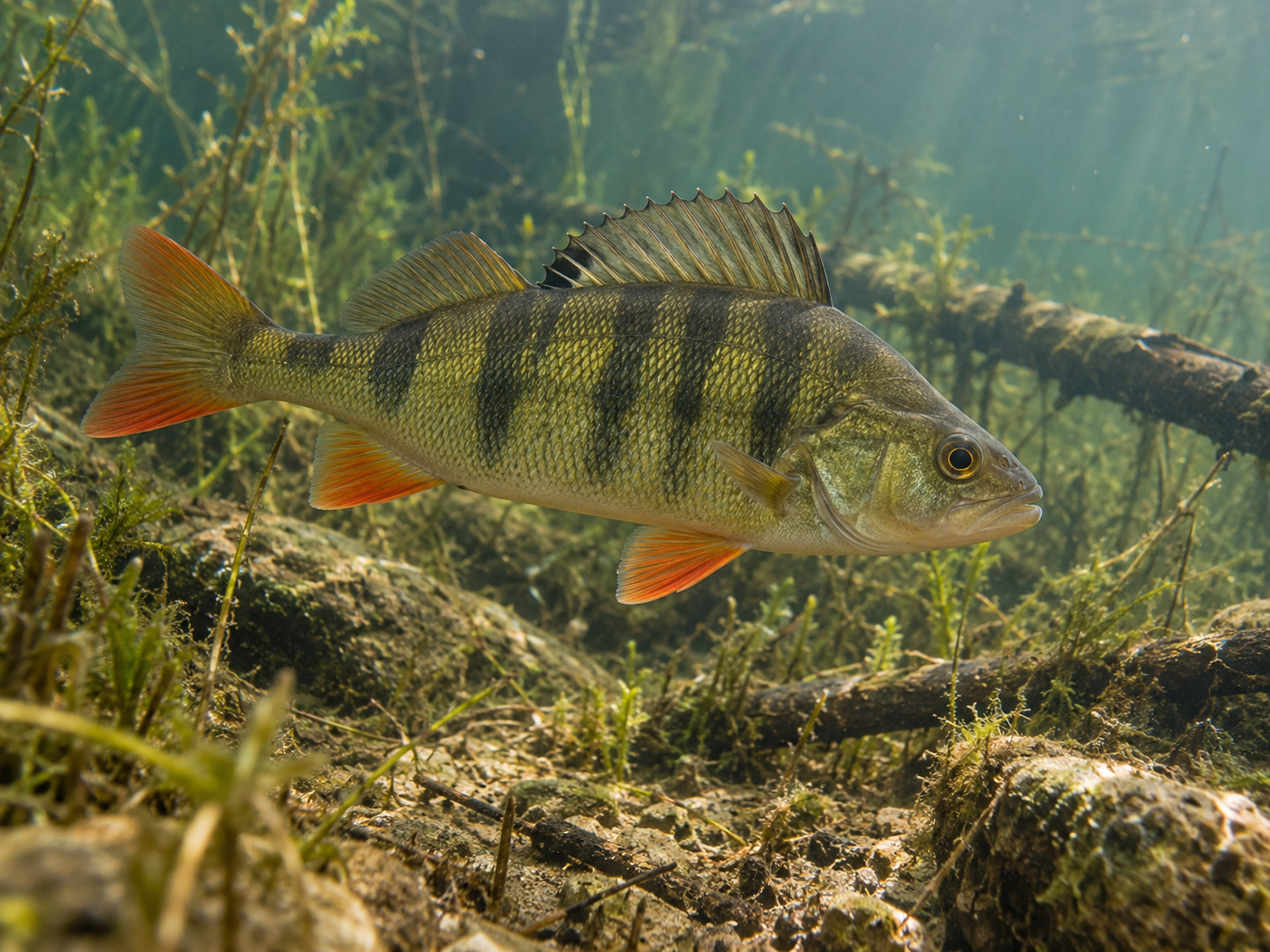
Lure Fishing for Perch
Learn the basics of lure fishing for perch, including how to find fish, choose the right tackle and work soft plastics, spinners and hard lures effectively.
24 Sept 2026 · 6 min read